8 Subtle Signs Your Cat Loves You (Even When They Act Like You're Invisible)
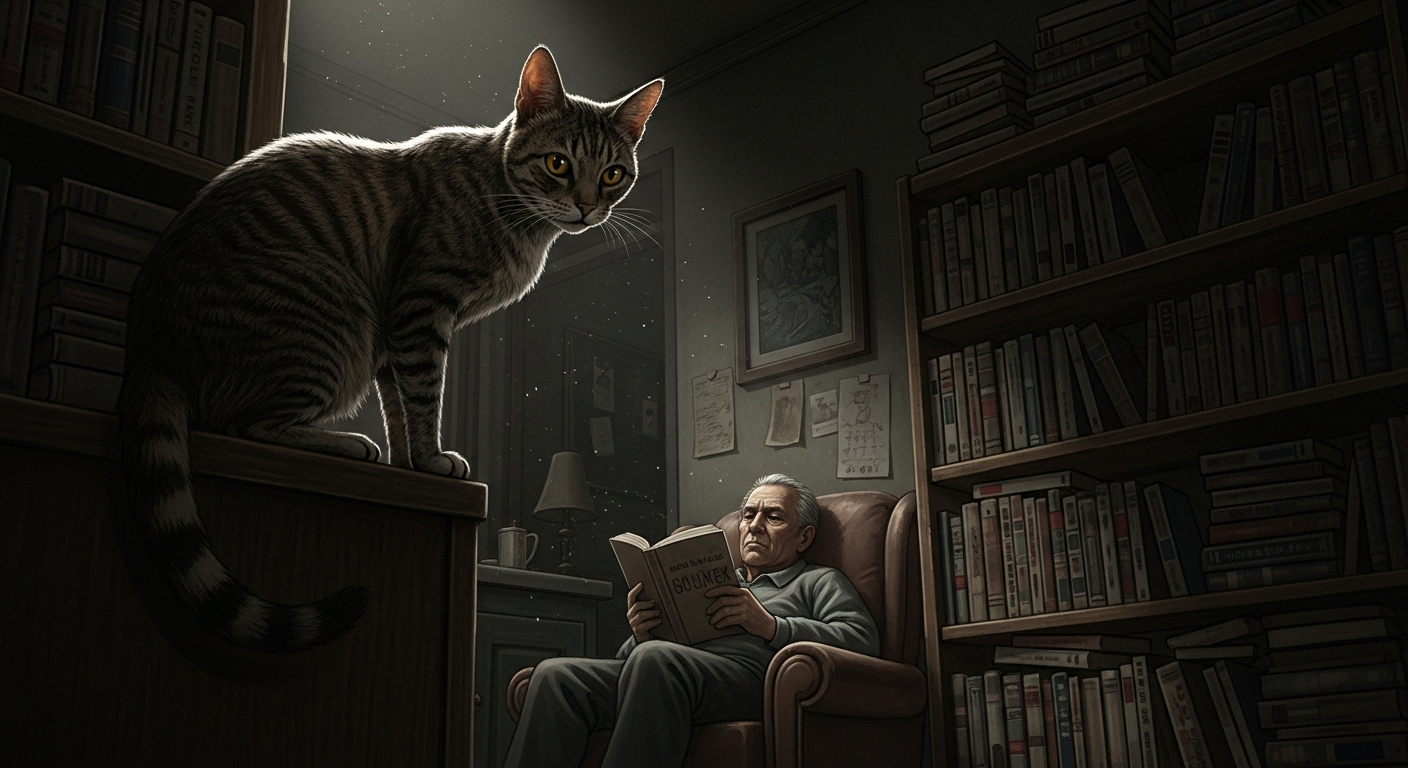
Many well-meaning owners fundamentally misunderstand feline behavior because they expect a golden retriever in a cat's body.
They want an animal to wag a tail, fetch a tennis ball, and beg for attention the second the key turns in the lock. However, cats do not owe anyone a performance.
Earning their trust requires patience, understanding, and a willingness to learn a completely different biological language. If someone is looking for a cheerleader, they should buy a foam finger, but if they are looking for subtle signs a cat actually loves them, they need to stop expecting a canine parade and start observing feline reality.
The pet industry is finally catching up to the scientific reality of feline cognition.
Society has slowly stopped treating cats like defective dogs and started reading their actual language. The American Pet Products Association released comprehensive data showing tens of millions of households now own cats, prompting a surge in behavioral research. People are finally waking up to the fact that feline communication happens in the margins, you just need to know where to look and what to measure.
Most owners miss the signals entirely because they are too busy forcing interactions.
A cat operates on a strict economy of energy and vulnerability, their evolutionary history as both predators and prey means every move they make is calculated for survival first and comfort second.
When they drop that guard, it is a deliberate, calculated choice, and recognizing that choice is the only path to actually understanding the small predator sleeping on the couch. You will not get a sloppy kiss or a frantic dance at the door, you get a quiet acknowledgment that you are not a threat to their existence.
In the feline world, that is the highest compliment available.
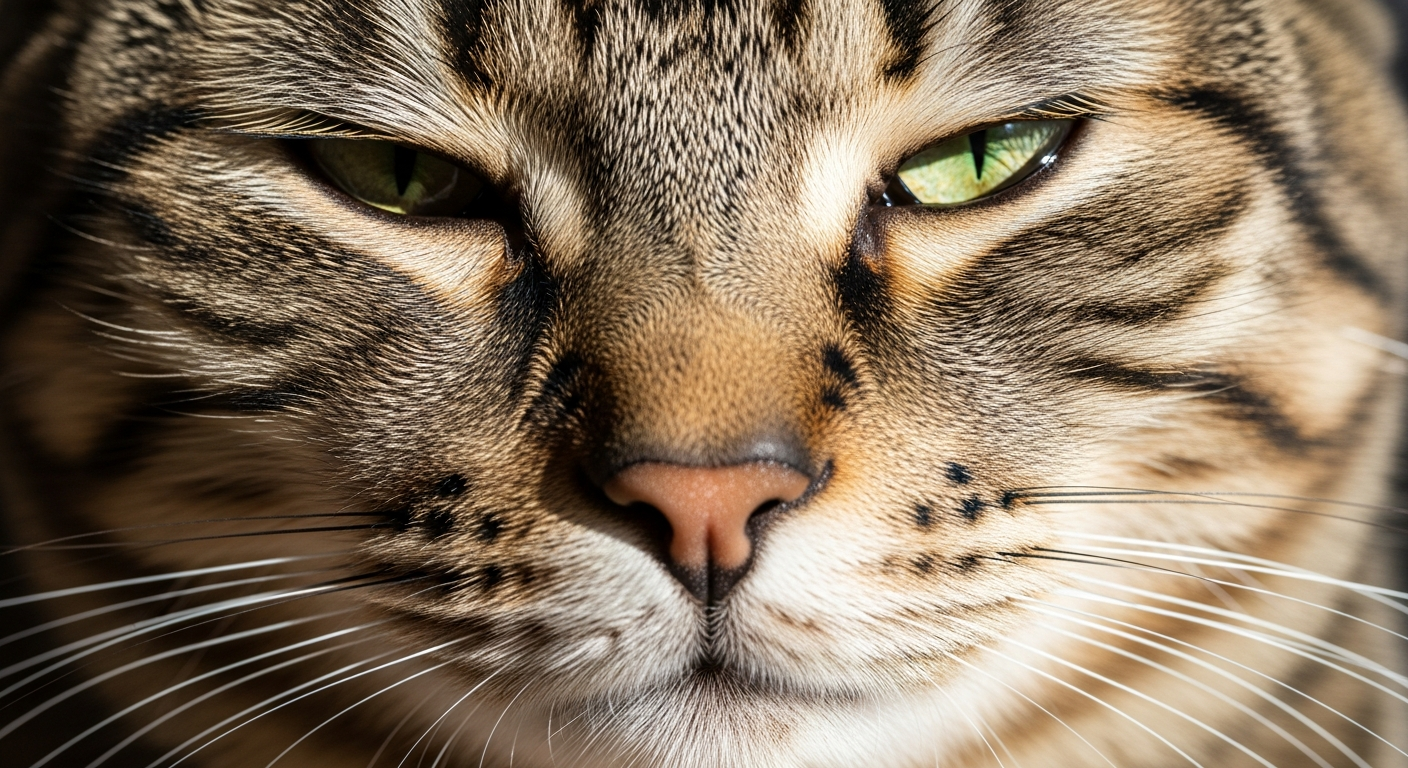
1- The Feline Slow Blink
Eye contact in the animal kingdom is usually a prelude to violence or a direct challenge.
Staring down a strange dog is a great way to trigger an aggressive response, but cats operate on a similar wavelength regarding visual threats.
A wide, unblinking stare from a feline usually means they are calculating a predatory angle or feeling intensely threatened. Breaking that stare safely takes a massive amount of instinctual override.
Researchers at the University of Sussex nailed this down perfectly in a groundbreaking peer-reviewed study. They proved the power of the "slow blink" paradigm in a clinical setting. When a cat narrows its eyes and blinks slowly, it is actively choosing vulnerability. They are communicating that they feel safe enough to voluntarily close their eyes in your presence, momentarily blinding themselves to potential danger, It is a micro-behavior that speaks volumes about their internal neurological state.
You can actually test this yourself without needing a lab coat.
Sit across the room from your cat when they are in a relaxed baseline state, catch their eye, narrow your own eyes, and blink smoothly like you are fighting off sleep.
If they return the gesture, you have just engaged in cross-species diplomacy, and you are speaking their language on their terms, bypassing human communication barriers.
This interaction is not just symbolic; it triggers a very real biochemical response in both species. It actively lowers cortisol levels and spikes oxytocin production. You are literally altering their brain chemistry through a simple, non-threatening facial movement.
This biological feedback loop proves that establishing trust is a physical process, not just a psychological one.
The Biochemical Feedback Loop
Oxytocin is the chemical glue that holds mammalian relationships together.
When a human slow-blinks at a cat, the feline brain registers safety and releases this bonding hormone. The human brain does the exact same thing in response to the cat's blink, it is a shared chemical state built entirely on mutual trust and observation.
This loop provides empirical evidence that feline affection is biologically genuine and measurable.
Conversely, high cortisol levels mean an animal is stressed, flooded with adrenaline, and ready to bolt. A slow blink cuts through that stress response efficiently, because the cat recognizes the benign intention and physically relaxes, lowering their resting heart rate.
Disarming a heavily armed, instinct-driven predator simply by changing eyelid velocity is a testament to the power of feline communication.
Moving Beyond the Stare
It is crucial not to force eye contact if the cat is already agitated, hissing, or displaying flattened ears.
Forcing the issue will only escalate the situation, trigger a fight-or-flight response, and ruin any previously built-up trust. Owners must wait for moments of calm, such as after a meal or during routine grooming, because the context of the interaction matters just as much as the action itself.
Timing is everything in behavioral modification.
Feral or rescue cats transitioning to indoor environments often guard their vulnerability fiercely. It can take months of consistent, passive interaction before they feel secure enough to return a slow blink. Patience pays off when humans stop demanding immediate results and allow the animal to dictate the pace of the relationship.
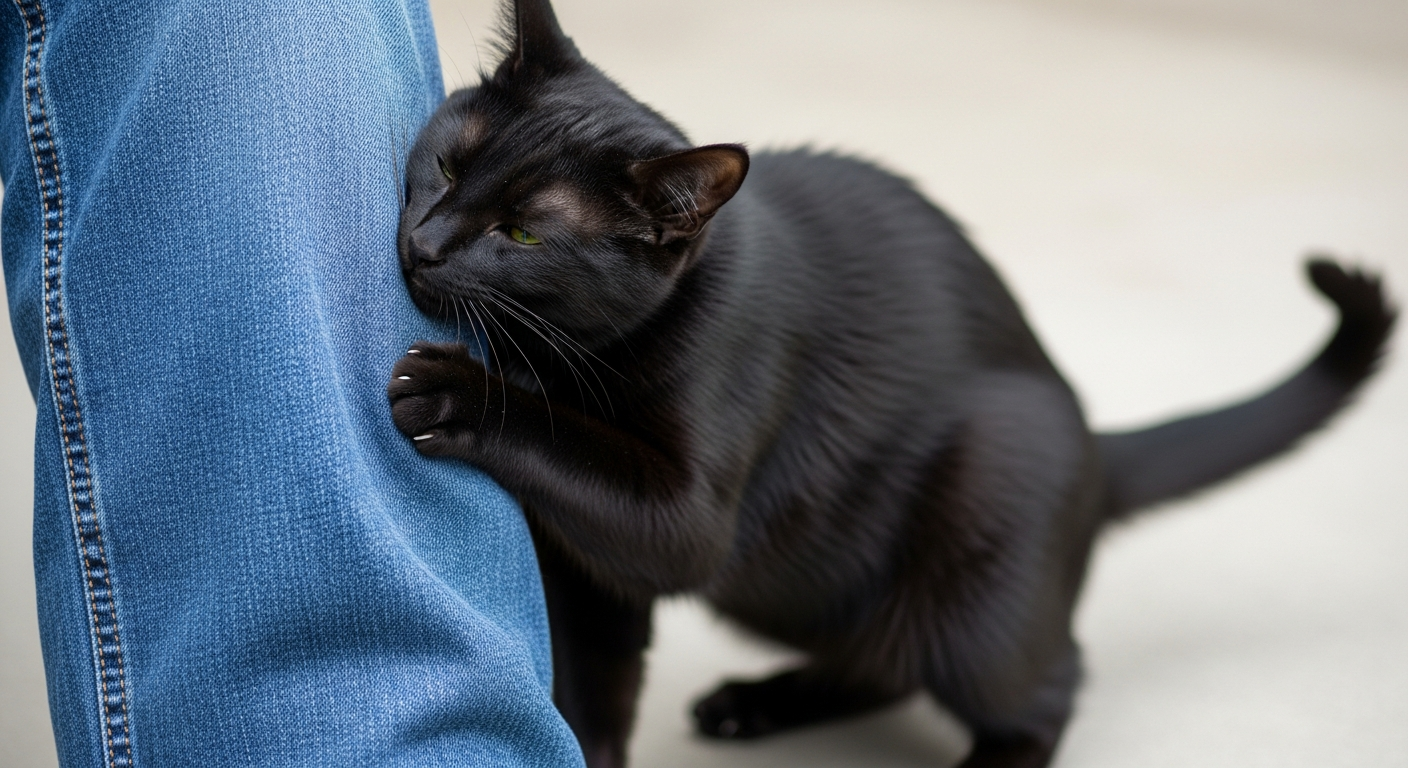
2- Pheromone Warfare and Clan Acceptance
Cats are highly complex chemical communicators.
They map and understand the world through an intricate grid of scents and pheromones, heavily relying on their vomeronasal organ (Jacobson's organ) to process chemical signals. When a cat rubs its head against a human shin, it is not merely scratching an itch or asking for food, they are actively claiming the human as property and kin.
Dr. Zazie Todd, an expert in animal psychology, emphasizes that this behavior, called "bunting," is a foundational pillar of their social world.
Felines possess concentrated scent glands located around their cheeks, chin, and forehead, which secrete the F3 facial pheromone. Pressing those glands into a human body deposits a unique, identifying chemical signature.
They are actively masking the foreign human smell with their own familiar, comforting scent, and this creates a cohesive "group scent" that marks the human as part of their established clan. From a biological standpoint, the human is no longer a random roommate; they are integrated family.
This behavior serves as a direct contradiction to the outdated myth that cats are entirely solitary creatures.
While wild feline ancestors may have hunted alone, domestic cats have evolved to build complex, nuanced social structures. Bunting is the physical and chemical manifestation of that social bond. If a cat consistently refuses to bunt a human, they likely still view that individual as an outsider or a potential threat.
Earning that scent mark requires time, spatial respect, and consistent, non-threatening behavior.
Washing hands immediately after a cat rubs against them literally scrubs away their hard-earned declaration of trust. While hygiene is important, letting the pheromones linger acknowledges the animal's communication effort, and respecting the chemical strategies they use to maintain clan cohesion is essential for long-term bonding.
3- Proximity Without Contact: The Silent Guardian
Veterinary behaviorists frequently hear complaints from owners frustrated that their cats refuse to sit on their laps, interpreting this as a lack of affection.
However, proximity is one of the most misunderstood and undervalued indicators of feline trust.
Dr. Mikel Delgado, a renowned feline behavior consultant, points out that shy or independent cats show immense love simply by choosing to occupy the same room as their human counterparts.
A cat's deeply ingrained survival instinct demands they stay on high alert at all times to avoid larger predators. Choosing to sleep or rest near a massive, unpredictable bipedal primate is a massive calculated risk. If they remain within a human's immediate radius, they trust that human not to step on them, startle them, or attack them while they rest. They do not need to be physically touching the human to feel connected or secure, the shared spatial territory is the connection itself.
This is particularly evident in cats with traumatic pasts, they will often meticulously map out a room and find a resting spot exactly out of arm's reach. They observe workflows, monitor sleep patterns, and secure the perimeter. It is a highly calculated display of trust from an animal biologically wired to expect the worst, they are guarding the shared territory in their own instinctual way.
Forcing an independent cat into a lap breaks that fragile trust instantly.
It is vital to let the animal dictate the physical distance, and if they prefer to observe from the top of a bookshelf or the back of a sofa, that choice must be respected. Their voluntary presence is the ultimate compliment.
Demanding physical contact against their will proves a fundamental misunderstanding of their bodily autonomy.
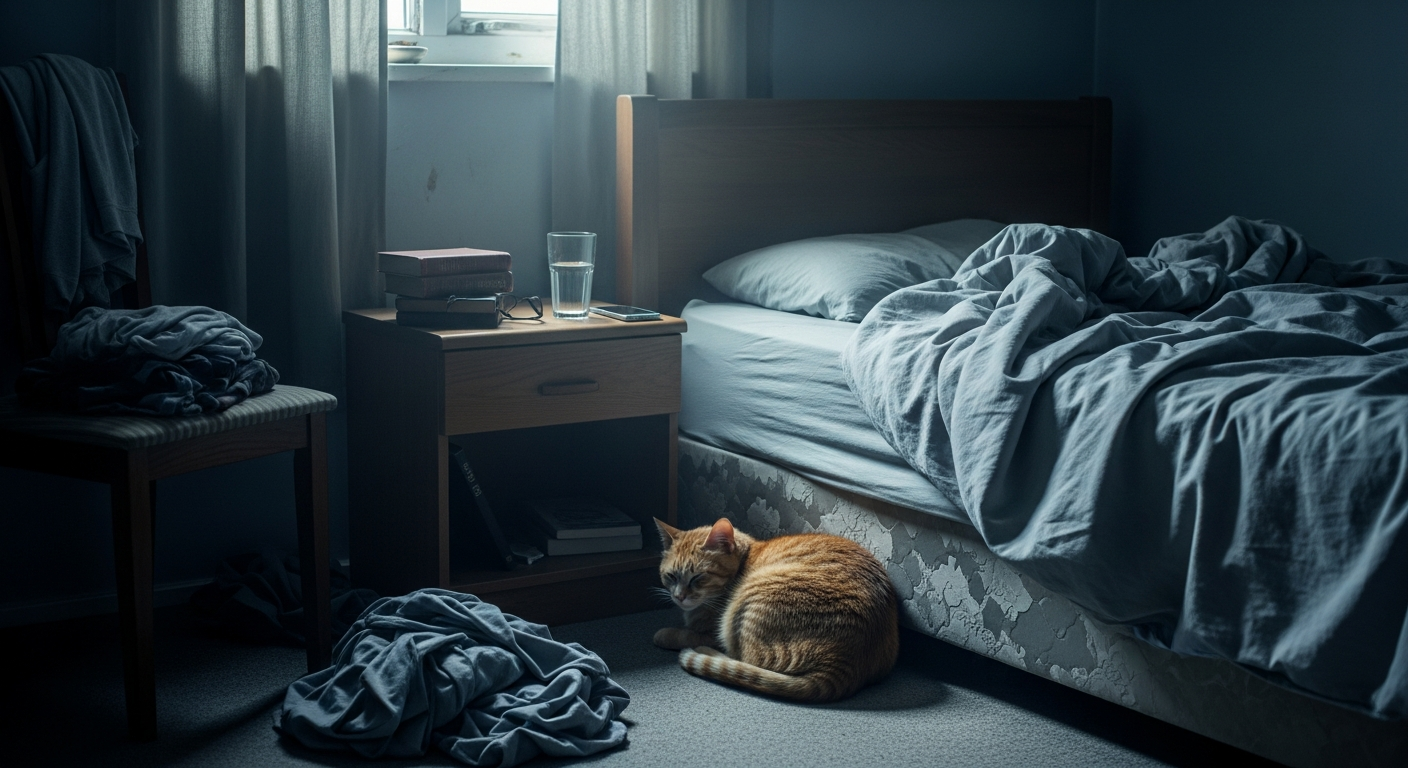
4- The Bedroom Sentinel
Sleeping at the foot of a bed is a classic sentinel behavior rooted in wild pack dynamics.
By sleeping there, the cat is strategically positioning themselves between the clan member and the primary access point, the door. It is a defensive, protective posture meant to secure the environment while the human is unconscious and vulnerable.
Because cats are crepuscular (most active at dawn and dusk), they are naturally equipped to take the night watch.
Suddenly banning a cat from the bedroom often causes massive separation anxiety and behavioral issues, and it isolates them from their primary clan member during the hours they are biologically driven to be protective. If allergies or sleep disruptions are an issue, experts recommend setting up a dedicated, elevated pet bed just outside the open door.
This compromises on the physical location but maintains the crucial visual and auditory connection, they need to verify the environment is secure.
5- The "Butt Presentation" Compliment
Many owners feel insulted when a cat jumps onto their lap or desk and immediately turns around, shoving its backside toward their face.
From a human perspective, it feels dismissive, but ethologically, it is actually the highest form of feline flattery.
Turning their back on a larger creature means they trust that creature absolutely, they are exposing their most vulnerable angle, their blind spot, because they are entirely confident they will not be attacked.
In the wild, turning your back on a potential threat is a fast way to get killed. Cats only display this behavior with deeply trusted clan members.
By facing outward, they expect the human to watch their vulnerable flank while they survey the rest of the room for potential threats, it is a cooperative defensive strategy. A face full of fur is officially a promotion to bodyguard status.
AI Translators and The Tech Revolution of Feline Care
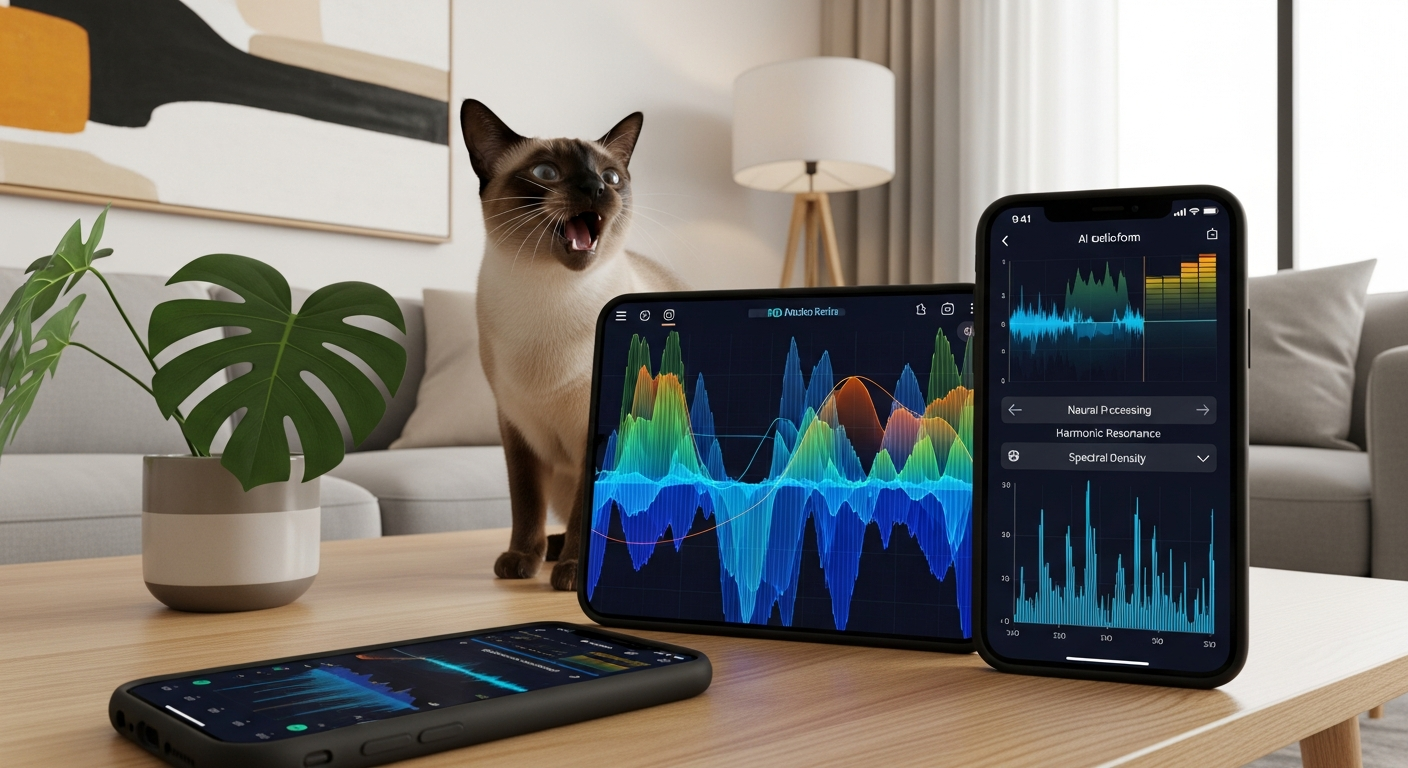
The intersection of veterinary science and machine learning has created a revolution in how humans interpret feline vocalizations.
Applications like MeowTalk utilize complex algorithms to translate audio frequencies into recognizable emotional states. While initially viewed as a novelty, the underlying data science is robust, and by training neural networks on hundreds of millions of recorded feline vocalizations, researchers have identified distinct, repeatable acoustic patterns tied to hunger, pain, stress, and affection.
Tech giants like Baidu have pushed this further, developing biometric translation systems that monitor physical vital signs alongside audio processing.
By cross-referencing pitch and frequency with heart rate and thermal imaging, these systems capture deep emotional nuances that simple microphones miss.
This level of granular data is becoming incredibly useful for early-stage veterinary diagnostics.

6- A Dedicated Vocabulary (Meowing Specifically at Humans)
Acoustic researchers have compiled extensive Feline Glossary Classifications, identifying dozens of distinct cat call types with high statistical accuracy.
These studies definitively prove that domestic cats have developed a massive vocal vocabulary dedicated almost entirely to manipulating and communicating with human beings. Feral adult cats rarely meow at each other; their intraspecies communication relies on scent, body language, and yowling, they save the specific, varied "meow" exclusively for human ears.
Evolutionary biologists note that cats effectively developed a secondary language just to communicate their needs to humans, who are notoriously bad at reading subtle body language.
Direct word-for-word translation remains impossible, but AI categorization helps identify emotional states and immediate needs faster, it removes the guesswork from daily interactions, bridging the interspecies communication gap with hard data rather than human projection.
AI Behavioral Health Monitors
The latest generation of smart pet cameras goes far beyond simple live streaming. Integrated AI tracks subtle behavioral shifts over time, learning a cat's specific baseline for movement patterns, grooming frequency, and litter box usage.
If a cat begins hiding 15% more than usual or shows a microscopic hesitation in its gait, the algorithm flags the anomaly. This technology detects stress, arthritis, and internal illnesses weeks or even months before clinical physical symptoms manifest.
Cats are notorious in the veterinary world for masking pain, because in the wild, showing weakness or illness makes an animal an immediate target for predation.
As a result, cats will act perfectly normal until their organs are in active failure. AI monitoring tools strip away that stoic biological facade, forcing owners to pay attention to critical micro-deviations in daily routines that the naked eye misses.
The Limits of Silicon Empathy
However, technology cannot entirely replace basic human observation. Applications are tools, not a substitute for active engagement, and if an algorithm suggests a cat is relaxed, but the animal's pupils are dilated and it is actively hissing, the human must trust the animal over the software. Machine learning models often lack the nuanced context of a chaotic living room environment.
It is crucial for owners to put their devices down and look at the physical animal by observing tail position, ear rotation, and whisker placement, this remains the gold standard of feline behavioral analysis.
The best translation tool is a patient, observant human. Silicon empathy only extends as far as its programming; genuine bonds require active human participation.
The Multi-Cat Household Shift
Recent pet industry reports highlight a massive demographic shift in housing structures for domestic animals.
The number of single-cat households has steadily declined, while homes with two, three, or more cats have surged.
Animal welfare organizations increasingly advocate against keeping highly social domestic cats in solitary environments, because cats require interaction with their own species to develop proper physical boundaries and crucial communication skills, such as bite inhibition during play.
This rise in multi-cat homes fundamentally changes how felines interact with humans.
When a cat has constant access to feline companions, their relationship with their human owner becomes significantly less desperate, and they no longer rely on the human for 100% of their social, intellectual, and physical stimulation.
Consequently, any affection they show their owner becomes entirely voluntary and deliberate, they are actively choosing cross-species interaction over hanging out with their own kind.
The UK CATS Report shows that a vast majority of owners view their cats as primary sources of emotional support, highlighting a deep humanization of the species. However, managing multiple predators in a confined space requires a strict understanding of feline hierarchy and territorial distribution.
Proper integration is critical. Introducing a new cat requires a minimum of seven to fourteen days of strict physical isolation. Scent swapping, exchanging bedding between the established cat and the newcomer, allows them to mix pheromones before they ever make visual contact.
Owners must provide ample resources to prevent resource guarding and territorial anxiety.
Following the "N+1 rule" for litter boxes (one box per cat, plus one extra, distributed across different zones) is non-negotiable. Vertical space, such as tall cat trees, allows cats to bypass each other without direct confrontation. A peaceful environment dictates the quality of the bond the animals will form with the humans who facilitate it.
Debunking the Food-Motivated Loner Myth
The most pervasive myth in pet ownership is the belief that cats only show affection to secure their next meal.
This is a false equivalence based entirely on canine pack dynamics. Dogs evolved specifically to scavenge alongside human settlements, making food a primary, hard-wired motivator. Domestic cats, conversely, evolved to hunt independently while maintaining loose communal sleeping and raising structures, their psychological attachment to humans operates on a completely different evolutionary track.
7- Greeting You Before the Food Bowl
Behavioral studies published by researchers at Oregon State University proved definitively that felines form deep, autonomous, secure attachments to their caregivers.
In controlled behavioral tests where both the owner and a food source were present in an unfamiliar room, a significant majority of cats sought out human interaction and comfort before ever investigating the food bowl. If a cat ignores an owner, it is not simply because they are fully fed; it is because they possess a level of autonomy that allows them to decline interaction when they wish to rest.
The notion that cats do not recognize their own names has also been thoroughly debunked by cognitive researchers.
Acoustic data confirms they actively distinguish their specific names from random vocabulary words of the same length and cadence. When a cat is called and does not respond, they are not failing to comprehend; they are making a conscious, autonomous choice to ignore the stimulus in favor of their current activity.
They weight the options and make an independent decision.
By using positive reinforcement and clicker training, felines can master complex commands.
However, it requires utilizing high-value rewards (like meat purees) and abandoning the human ego. Training a cat is not about establishing dominance; it is about establishing a mutually beneficial transaction, they are partners, not subordinates.
8- The Belly Trap
Canine behavioral norms often set cat owners up for painful failures.
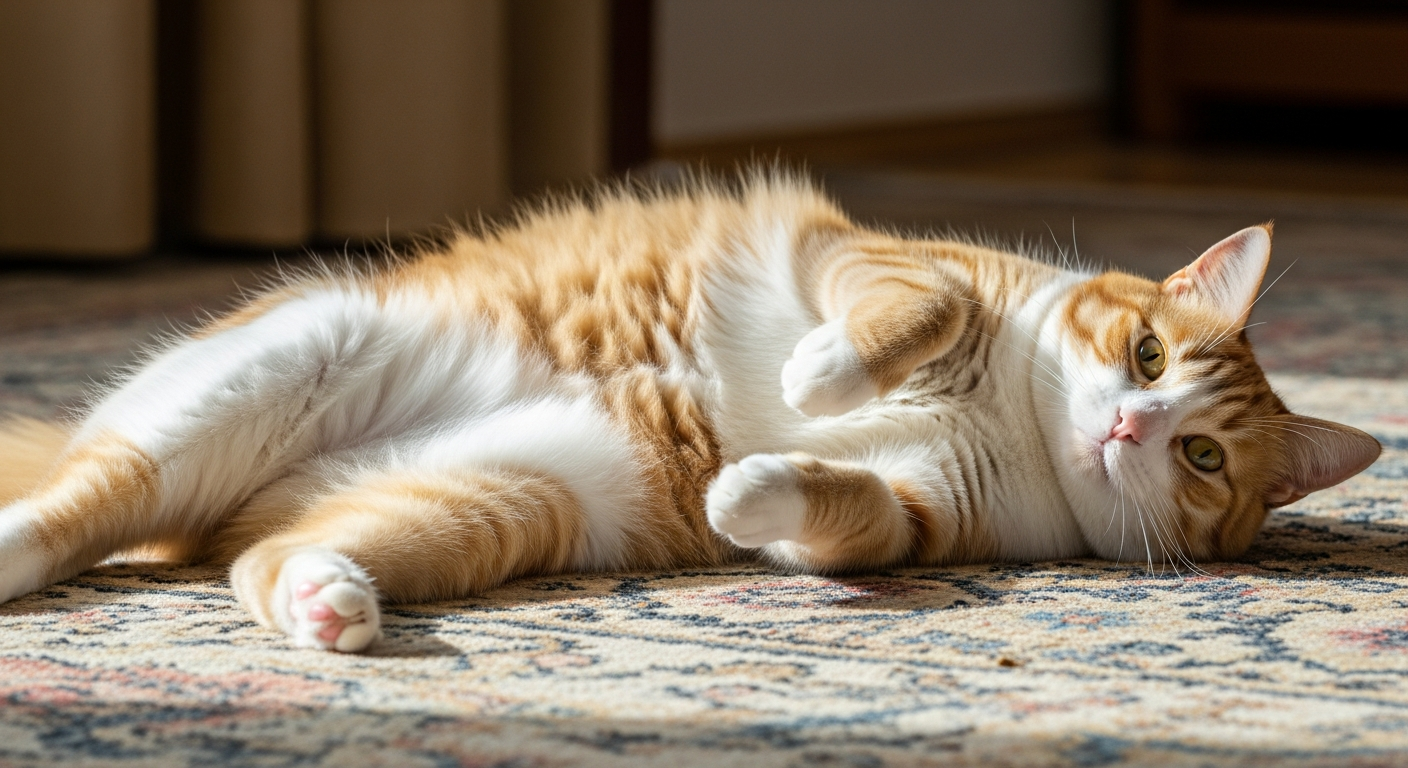
A dog typically rolls onto its back as an act of submission, explicitly asking for a physical belly rub, but when a cat exposes its belly, it is communicating something entirely different. The soft feline underbelly protects all of their most vital organs. By exposing it, the cat is demonstrating ultimate trust in the human's presence. They are stating, "I feel so safe with you that I do not need to protect my vital organs."
Reaching out to physically touch or aggressively rub that exposed belly is viewed by the cat as a direct violation of that established trust.
The instinctual defense mechanism triggers immediately, the cat will latch onto the offending arm with front claws, utilize their powerful back legs for "bunny kicks," and bite. The human broke the unspoken contract of vulnerability.
The correct response to an exposed feline belly is visual acknowledgment. Admire the posture, recognize the profound level of trust it represents, and keep hands away.
Veterinary professionals continuously emphasize that humans must stop expecting cats to act like dogs, and stop punishing them for reacting like cats.
The Final Verdict
Understanding feline communication is a masterclass in subtlety and observation.
Every single inch of ground gained in a relationship with a domestic cat must be earned through consistent respect for their boundaries and their biology. Once the human understands the rules of engagement, the entire dynamic shifts from frustration to mutual respect.
Owners must stop looking for grand, boisterous gestures of affection.
The real metrics of a feline bond are found in the quietest moments, the deliberate slow blinks from across the room, the willingness to share spatial territory, and the complex transfer of pheromones are the true indicators of cross-species love.
Recognizing and respecting these subtle signs provides a much richer, more authentic relationship than demanding a performance from an animal that was never built to perform.
🐾 Frequently Asked Questions
Q What does it mean when a cat slowly blinks at me?
A slow blink is a deliberate display of vulnerability. By closing their eyes in your presence, they are signaling trust and benign intentions. Returning the slow blink releases oxytocin in both you and the cat.
Q Why does my cat rub its head on my legs?
This behavior, called bunting, is a way for cats to deposit pheromones from their scent glands onto you. They are actively marking you with their scent to claim you as part of their family clan.
Q Is it true that cats only show affection when they want food?
No. Recent behavioral studies prove cats form deep, autonomous attachments to humans independent of food. Their social structure is communal, and they seek out human proximity for safety and bonding.
Q Why does my cat sleep at the foot of my bed instead of next to me?
Sleeping at the foot of the bed is a sentinel behavior. Your cat is positioning itself between you and the door to protect the clan while you sleep, showing affection through vigilant guarding rather than physical touch.
Q Can AI apps really translate what my cat is saying?
In 2026, AI tools like MeowTalk and new biometric systems are highly effective at categorizing emotional states and stress markers from vocalizations. While not direct English translations, they accurately interpret feline needs.

📖 Related Articles

5 Taurine-Rich Raw Diet Recipes for Cats (2026 update)

💬 Comments (0)
No comments yet. Be the first to share your thoughts! 👇
✍️ Leave a Reply