Dental Care Guide for Dogs: The Ultimate Oral Health Routine (2026)
Heads up: This post contains affiliate links. If you buy something through them, I earn a small commission at no extra cost to you. It keeps the lights on and the kibble bowl full. Read the full boring legal stuff here.
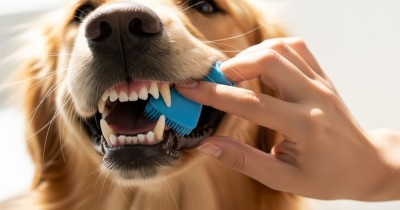
Most pet owners treat their dog's oral hygiene with a level of negligence that borders on delusional, only panicking when the vet mentions an extraction bill that rivals a mortgage payment. That willful ignorance is exactly why a comprehensive Dental Care Guide for Dogs is necessary, because relying on "nature" to clean your dog's teeth is a fast track to gum disease. I’ve spent years dealing with the fallout of rotting canines, and I’m going to show you how to fix this mess before it starts.
You aren't going to enjoy the process of scrubbing a reluctant animal's mouth, and they certainly won't thank you for it initially. However, the alternative involves systemic infections, heart valve damage, and a dog that is in constant, silent pain. This guide cuts through the marketing fluff to give you the harsh reality of what actually works.
We are going to look at the mechanics of canine dental health, the tools that aren't a waste of money, and the techniques that keep your fingers intact. Forget the cute cartoons on the packaging; this is about preventing decay. It is time to take responsibility for the animal you chose to bring into your home.
The Silent Rot: Why You Can't Ignore Oral Health
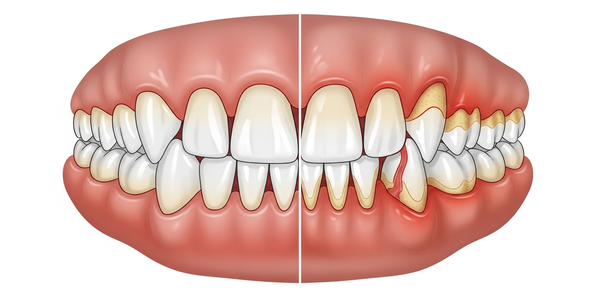
The biggest lie in the pet industry is that "dog breath" is normal. It isn't normal; it is the scent of active bacterial fermentation happening along the gumline. By the time you can smell your dog from across the room, the damage is already significant.
The Biology of Neglect
Plaque begins forming on your dog's teeth hours after they eat, just like it does on yours. The difference is that you (hopefully) brush twice a day, whereas your dog relies on you to intervene. Within 24 to 48 hours, that soft plaque hardens into tartar, a cement-like substance that a toothbrush can no longer remove.
Once tartar establishes a foothold, it pushes the gums away from the teeth, creating pockets where bacteria thrive anaerobically. This isn't just about losing a tooth; it is about chronic inflammation. This inflammation triggers an immune response that actually attacks the bone structure of the jaw.
I have seen dogs with jaws so weakened by periodontal disease that they fracture from simply jumping off a couch. It is a slow, gruesome process that is entirely preventable. Yet, most owners wait until the dog stops eating to realize something is wrong.
Systemic Consequences
The mouth is the gateway to the rest of the body, and in a dirty mouth, it is a gateway for infection. The bacteria breeding in those gum pockets don't stay put. They enter the bloodstream every time the dog chews, creating a condition called bacteremia.
These filtered toxins have a nasty habit of lodging in major organs. The heart valves, kidneys, and liver act as filters for the blood, and they catch this bacterial sludge. Over time, this leads to organ failure that looks like "old age" but is actually the result of years of poor dental care.
You might think you are saving time by skipping the brushing, but you are effectively shortening your dog's lifespan. The vet bills for kidney failure management make the cost of a toothbrush look like a rounding error. It is a simple equation of effort versus consequence.
The Pain Mask
Dogs are evolutionary experts at hiding pain because, in the wild, a wounded animal is a target. Your dog will continue to eat dry kibble even with a mouthful of abscesses. I have known dogs to chew on ropes while harboring stage-four periodontal disease.
They do not whine or point to their jaw; they suffer in silence. You might notice they are a bit more lethargic or slightly "grumpy," which you attribute to aging. In reality, they have a chronic toothache that never goes away.
When we finally fix the teeth, owners often say their dog is "acting like a puppy again." That isn't a miracle; it's just the absence of agony. Do not wait for your dog to stop eating to assume they are in pain.
7 Essential Steps: A Practical Protocol
If you want to avoid the nightmare scenarios described above, you need a protocol. This isn't a suggestion list; it is a requirement for owning a carnivore. Here are the seven critical components of a functional dental routine.
1. Daily Mechanical Brushing
Nothing replaces the friction of bristles against a tooth. Wipes, sprays, and magic powders are supplementary at best and useless at worst. You need to physically disrupt the biofilm on the teeth every single day. If you aren't doing this, you aren't providing dental care; you're just engaging in wishful thinking.
2. Enzymatic Toothpaste Application
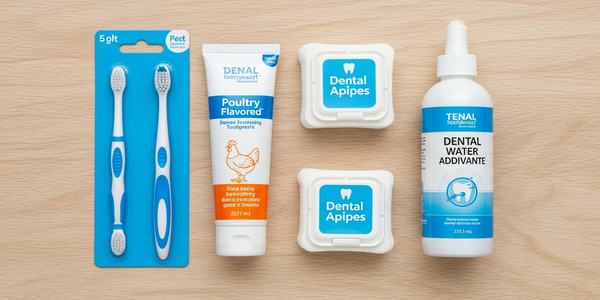
Human toothpaste is toxic to dogs due to fluoride and xylitol, so don't even think about it. You need a paste that uses enzymes to break down bacteria chemically. I rely on Virbac CET Enzymatic Toothpaste for Dogs ↗ because it actually sticks to the teeth and the poultry flavor makes the dog less likely to bite your hand off. The enzymes continue working after you finish scrubbing.
3. Water Additives for Maintenance
Think of this as mouthwash for a creature that drinks from the toilet. It won't remove tartar, but it alters the pH of the saliva to make the mouth less hospitable to bacteria. Adding Petlab Co. Dental Formula Water Additive ↗ to their bowl is the laziest, easiest way to add a layer of defense against plaque formation.
4. Mechanical Chews
Chewing is nature's toothbrush, but most commercial treats are just sugar bombs. You need a chew that has the flexibility to wrap around the tooth and the durability to scrape it. Greenies Original Teenie Dental Dog Treats ↗ are decent for maintenance because their texture allows the tooth to sink in effectively before the treat breaks apart.
5. Barrier Sealants
Some products create a wax-like barrier on the teeth to prevent plaque from sticking in the first place. These are particularly useful for dogs that already have some gum recession. Oravet Dental Hygiene Chews for Dogs ↗ release delmopinol, which creates a preventive shield, though you have to monitor your dog to ensure they don't swallow the whole chunk at once.
6. Professional Scaling
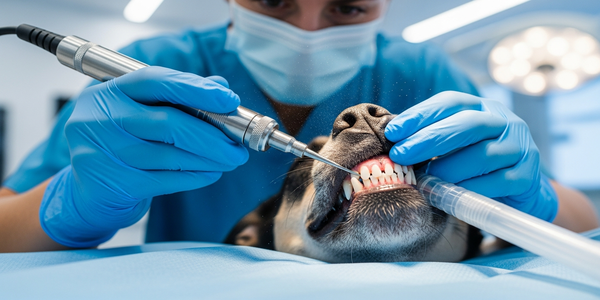
Even with perfect brushing, you will eventually need a professional cleaning under anesthesia. There is no such thing as "anesthesia-free" cleaning that actually works; it's cosmetic only and leaves infection under the gumline. Plan for this expense every 12 to 24 months depending on your breed.
7. The Flip-Lip Inspection
Once a week, you need to physically lift your dog's lip and look at the back molars. This is where the rot starts. If you see red lines along the gums or brown crust, your home care has failed and you need a vet. Ignoring this check is how you end up with surprise extractions.
Execution: How to Brush Without Bleeding
DISCLAIMER: I am a writer with years of dog handling experience, not a veterinarian. If your dog shows signs of aggression or severe pain, consult a professional immediately. Do not force your hands into the mouth of a biting dog.
The theory of brushing is simple; the execution is often a wrestling match. Most people fail because they try to do too much, too fast, with the wrong tools. You need a strategy that desensitizes the dog rather than traumatizing them.
The Setup Phase
Do not chase your dog around the house with a toothbrush. If you corner them, they will panic, and the fight is over before it begins. Choose a time when the dog is exhausted, perhaps after a long walk or a play session. You want their energy levels at zero.
You need the right equipment ready before you call the dog. Fumbling with a cap while holding a squirming terrier is a recipe for failure. I recommend the Arm & Hammer Clinical Care Dental Kit for Dogs ↗ for beginners because it includes a finger brush, which is less intimidating than a long-handled stick for most animals.
Start by simply touching the muzzle. Do not open the mouth. Just lift the lip, praise the dog, and give them a treat. Do this for three days until the dog realizes that having their lip handled results in food. If you skip this step, you will be fighting a war every morning.
The Introduction of Paste
Once the dog accepts your fingers near their mouth, introduce the flavor. Squeeze a small amount of Vibrac Toothpaste onto your finger and let them lick it off. It is essentially meat-flavored goo; they should like it.
If they recoil from the taste, try a different flavor. Do not force a flavor they hate, or they will associate the toothbrush with punishment. Once they are licking the paste willingly, rub your paste-covered finger along the gumline of the canine teeth. Again, do this for a few days before introducing the brush.
This patience is annoying, I know. You want to get it done. But investing two weeks in desensitization will buy you ten years of compliant brushing. Rush it, and you’ll spend ten years battling a snapping dog.
The Brushing Technique
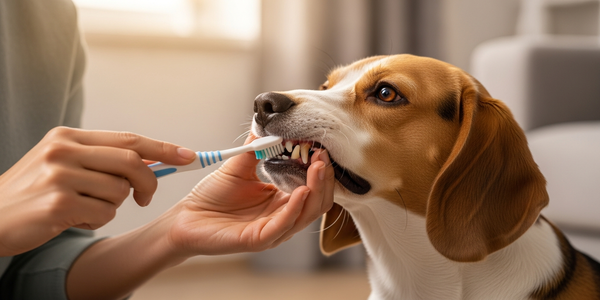
Now, introduce the brush. Use the Arm & Hammer dental dual-ended brush if you have a larger dog, or the finger brush for smaller breeds. Lift the lip and brush the outside surfaces of the teeth only.
Do not worry about the inside surfaces (the tongue side). The dog's rough tongue keeps that side relatively clean. The calculus builds up on the cheek side. Angle the bristles at 45 degrees toward the gumline to sweep bacteria out of the pocket.
Work in small circles. Focus on the back upper molars and the large canine teeth. These are the primary problem areas. You only need about 30 seconds for the whole mouth. If the dog struggles, stop immediately and try again later. Ending on a positive note is crucial for tomorrow's success.
Prevention and Maintenance Logistics
Brushing is the gold standard, but redundancy is the key to security. You need backup systems in place for the days you forget to brush or when life gets in the way. Creating a passive dental care ecosystem reduces the bacterial load significantly.
The Diet and Water Strategy
There is a myth that dry kibble cleans teeth. While it is better than wet food, which sticks like glue, standard kibble shatters upon impact and does very little cleaning. You are better off using a specially formulated dental diet if your vet recommends it, as those kibbles are designed to scrub the tooth before breaking.
Hydration is your second line of defense. Using Petlab Co. Dental Formula Water Additive ensures that every time your dog drinks, they are rinsing their mouth with an anti-bacterial solution. It costs roughly $25-$30 a bottle, but considering a single extraction costs $400, the ROI is obvious.
Beware of calories, though. Many owners overload their dogs with "dental treats" and end up with an obese dog with clean teeth. Adjust their regular meal portions to account for the calories in products like Greenies Original Teenie Dental Dog Treats. Fat dogs have a whole other set of health problems you don't want to deal with.
The Chew Toy Protocol
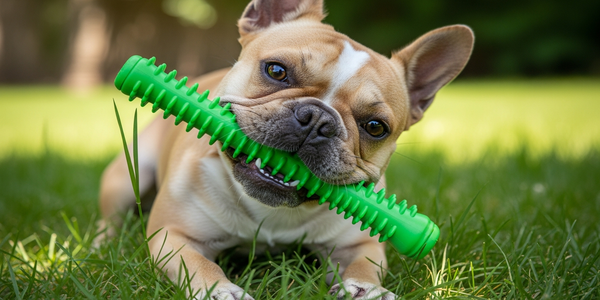
You need to be ruthless about what you let your dog chew. The general rule is: if you can't indent it with your fingernail, it is too hard. Antlers, hooves, and nylon bones are notorious for fracturing the carnassial teeth (the big shearing teeth in the back).
A fractured tooth exposes the pulp and requires immediate, expensive root canal therapy or extraction. Stick to rubber toys or digestible chews. The goal is to scrape the plaque, not break the enamel.
I have seen owners hand their dogs a soup bone thinking it’s natural, only to end up in the emergency vet clinic three hours later. Nature is brutal; don't mimic it blindly. Choose safety over durability.
Financial Expectations
Let’s talk money, because that’s what this usually comes down to. A proper home care setup (paste, brush, additives, chews) will run you about $50 to $70 a month. That sounds steep until you price out the alternative.
A veterinary dental cleaning (prophylaxis) under anesthesia ranges from $400 to $800 depending on your location and the dog's size. If extractions are needed, that price can easily triple. I once saw a bill for $2,400 for a senior dog that needed 14 teeth pulled.
By spending 15 minutes a day and $60 a month, you are potentially saving thousands of dollars and extending your dog's life by years. It is an insurance policy where the premium is effort.
Common Mistakes That Ruin Progress
Even well-intentioned owners screw this up. I see the same errors repeated constantly, usually resulting in a dog that hates the toothbrush or teeth that rot despite the owner's efforts. Here is what you need to avoid.
Using Human Products
I cannot stress this enough: Human toothpaste contains foaming agents that cause gastric distress and xylitol, which causes liver failure in dogs. Just because you ran out of dog paste does not mean you can borrow from your tube. It is literally poison to them.
Stopping at the Sight of Blood
If your dog's gums bleed a little when you brush, it means they have gingivitis. Most people stop brushing because they think they are hurting the dog. In reality, that is exactly when you need to brush more (gently) to clear the infection. Bleeding is a sign of disease, not a stop sign.
Ignoring the Back Teeth
It is easy to brush the front incisors; the dog often lets you do it. But dogs rarely lose incisors to disease; they lose the back molars and premolars. If you aren't reaching the back of the mouth where the salivary glands dump mineral-rich saliva, you are wasting your time.
Inconsistency
Brushing once a week is functionally useless. Plaque hardens into calculus in 24 to 48 hours. If you brush on Monday and then wait until Saturday, the bacteria have already built a fortress that your brush cannot penetrate. It has to be daily, or at least every other day, to matter.
Quick Reference Guide
Here is the stripped-down checklist for those of you who skimmed the important parts.
- Daily: Brush with enzymatic paste (30 seconds).
- Daily: Add water additive to the bowl.
- Daily: Inspect chews for hardness (fingernail test).
- Weekly: Lift the lip and inspect for red gums or brown tartar.
- Yearly: Veterinary exam under sedation (if recommended).
- Always: Avoid xylitol and hard bones.
You now have the knowledge to prevent your dog’s mouth from becoming a biological hazard zone. The tools are available, the technique is straightforward, and the cost of inaction is too high to ignore. Go buy the paste, grab the dog, and get to work.
Articles on the Dog Grooming Topic:
🐾 Frequently Asked Questions
Q Can I use human toothpaste for my dog's dental care?
No, absolutely not. Human toothpaste often contains fluoride and xylitol, both of which are toxic to dogs if swallowed. Always use an enzymatic toothpaste specifically designed for pets.
Q What are the first signs that my dog needs dental attention?
Key indicators include bad breath (halitosis), red or bleeding gums, yellow-brown tartar buildup, excessive drooling, or difficulty chewing hard food. If you notice these, consult your vet immediately.
Q Do dental water additives actually work for dogs?
Yes, dental water additives can be a helpful supplement to brushing. They contain enzymes or antiseptics that help reduce the bacterial load in the mouth, though they should not replace mechanical brushing entirely.
Q How often should I use the tips in this Dental Care Guide for Dogs?
According to this Dental Care Guide for Dogs, you should aim to brush your dog's teeth daily. However, even brushing 3 times a week can significantly reduce plaque buildup and the risk of periodontal disease.
Q Is professional anesthesia-based cleaning safe for older dogs?
generally yes, provided pre-anesthetic blood work is done to ensure their organs can handle the medication. Professional cleaning is the only way to remove tartar below the gumline where gum disease starts.

📖 Related Articles
Training deaf dogs with hand signals: A Real-World Guide

Why Do Dogs Chase Their Tails? The Thin Line Between Play and Pathology
💬 Comments (0)
No comments yet. Be the first to share your thoughts! 👇
✍️ Leave a Reply