Why do dogs roll in the grass? Discover the reasons
📋 This post contains affiliate links. If you buy something through them, I earn a small commission at no extra cost to you. Details.
🩺 Last updated: October 4, 2026. This article is for general information and does not replace advice from your veterinarian. How we write our articles.
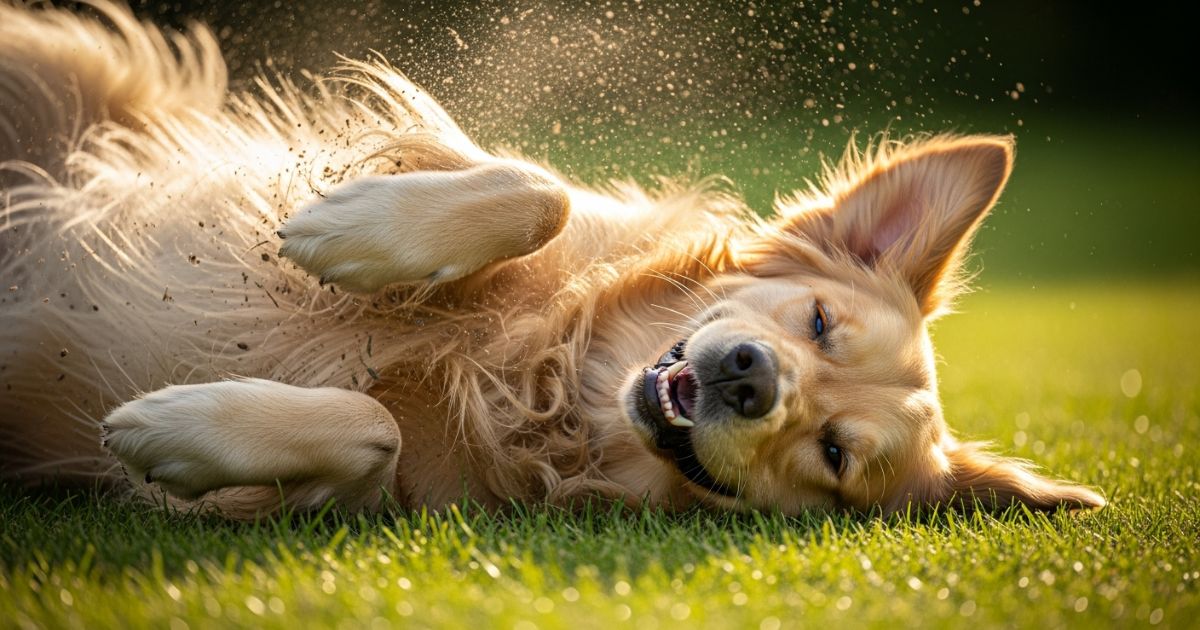
Few things horrify dog owners more than watching a freshly bathed dog dive shoulder-first into fox droppings. It leads to one of the most common questions about dog behavior: "Why does my dog hate being clean?"
He doesn't hate being clean, he hates smelling like a Sephora counter.
We need to get one thing straight before we talk about behavior modification, your dog is a predator.
Your dog may sleep on a memory foam bed and eat premium kibble, but the wiring in their brain hasn't changed in thousands of years. When they roll in grass, mud, or something dead, they aren't acting out. They are answering a biological call you can't hear.
In 2026, we finally have the data to stop guessing, we aren't relying on old trainer wisdom anymore, we have hard numbers from studies published last year that explain exactly why your dog treats a fresh grooming session as an insult.
The answer involves evolutionary camouflage, stress hormones, and the texture of specific grass blades.
You have a wolf in your living room
We tell ourselves we bred the wild out of them, we look at a Goldendoodle and see a teddy bear, but Biology sees a wolf in a perm.
A landmark study published in Scientific Reports in July 2025 finally connected the dots between your domestic dog's rolling habit and the hunting tactics of the grey wolf.
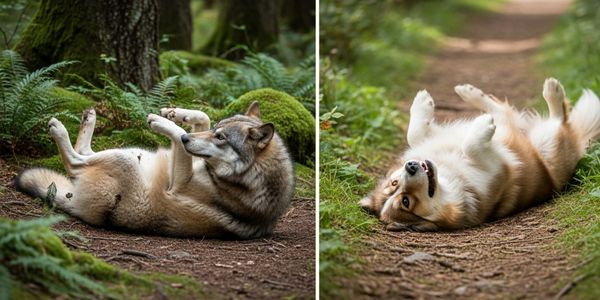
The researchers tracked three wolf packs over six months, and they found that wolves specifically seek out and roll in strong, foreign scents, usually crushed vegetation, urine from other predators, or decaying meat, before a hunt. This isn't random, it is tactical stealth.
Think about it.
If a wolf smells like a wolf, the deer smells him coming from a mile away, but if the wolf smells like a pine forest and badger droppings, he gets close enough to strike.
When your Golden Retriever hits the deck and starts grinding his neck into a patch of grass, he is engaging in "olfactory camouflage." He is putting on a ghillie suit for his nose.
In his mind, smelling like "Vanilla Bean & Shea Butter" makes him a walking target, it screams to the world, "I am here, I am artificial, and I am vulnerable."
By layering the scent of grass and earth over his coat, he is trying to disappear, he feels safer when he blends in with the background radiation of the natural world.
This behavior also serves as a primitive text message.
The Scientific Reports data showed that when a scout wolf returned to the pack smelling of a specific carcass, the pack would backtrack the scout's trail to find the food source. Your dog might be rolling in something particularly foul to bring the news back to you.
It’s a twisted little gift.
He’s not getting dirty to spite you; he’s updating the pack newsletter with the scent of whatever dead thing he found near the oak tree. He expects you to sniff him and say, "Good find, let's go eat that rotting bird."
When you yell at him instead, you are confusing the hell out of him.
RELATED: Why do Dogs tilt their Heads ?
Humans smell stressed, and it sticks for your dog.
We humans are walking chemical factories. In 2026, our primary output is cortisol, we reek of it.
A terrifying study from the University of Bristol back in 2024 proved that dogs can smell our stress in our sweat and breath. It makes them pessimistic, and it makes them risk-averse. But here is the thing: it also smells biologically offensive to them.
Dogs are very sensitive to human stress. Many can smell anxiety, and a tense person can make a whole room of dogs restless.
And the moment they get out into the yard, they drop and roll.
Behaviorists now suggest that one major reason dogs roll in the grass is to "scrub off" the scent of human anxiety they pick up from our hands and homes. They are trying to reset their sensory palette. Your stress smells like danger, it smells like instability, and to a dog, that scent is a contamination.
They are trading the smell of your unpaid bills, deadline panic, and relationship drama for the neutral, grounding scent of chlorophyll and dirt.
Rolling can be a way to release tension. Dogs coming out of stressful situations, such as a shelter intake, often spend their first minutes in a yard just rolling.
They aren't playing, they are decontaminating. They are washing off the trauma of their previous life using the only soap nature gave them.
If your dog rolls immediately after you've had a stressful phone call or a long day at work, take the hint. He isn't trying to be difficult, he is trying to get the smell of your bad day off his fur so he can relax.
The Great Perfume Rebellion
For decades, the pet industry sold us the lie that dogs need to smell like flowers, and we bought it.
We scrubbed them with citrus and lavender, scents that are actually offensive to the canine nose. But the tide turned in 2025 when the global dog grooming market hit $1.53 billion, but the money isn't in perfume anymore. It's in "microbiome-friendly" and fragrance-free products.
Sensory Overload
You have about 6 million olfactory receptors, your dog has up to 300 million.
Putting citrus shampoo on a dog is like staring directly into the sun for us, it blinds them, it overwhelms their primary way of navigating the world.
A dog that smells like a lemon is a dog that is effectively blind.
Rolling in the grass is a desperate attempt to remove the blinding agent, they are trying to get their vision back.
Strong artificial scents can backfire. Dogs sprayed with perfumes or colognes often try to cover the smell by rolling in something stronger.
If your dog keeps rolling in mud after grooming, try switching to unscented grooming products before anything else.
Two weeks of unscented bathing later, the rolling stopped, and the aggression dropped by half.
The dog wasn't mean; he was overstimulated and trying to scrape the noise off his skin.
The "Skin-First" Shift
If you are still using heavily scented products, you are the problem. The new standard in 2026 is "unscented" or "earth-scented."
-
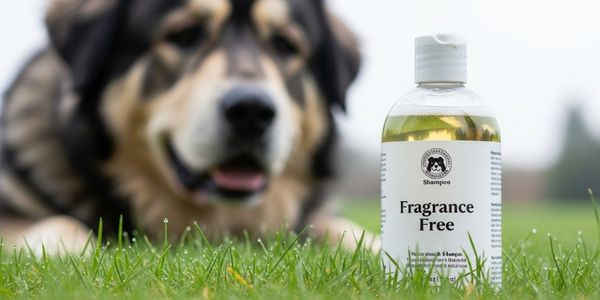
Fragrance-Free Shampoos: These strip dirt without leaving a masking agent. You want a shampoo that lists "no residual scent" on the bottle. In this category, the best is the Fragance Free Shampoo from Veterinary Formula Store
-
Microbiome Sprays: These are huge right now, they spray on healthy bacteria that eat the odor-causing bacteria. You aren't masking the smell; you are killing the source.
-
Dirt-Repellent Serums: Coatings that help prevent mud from sticking to the coat without adding a strong smell. They are popular before shows and adoption events.
Itch or Ecstasy? Decoding the Wiggle
Not every roll is a tactical maneuver or a protest.
Sometimes, it just feels good. But assuming rolling is always "just for fun" can be a costly mistake.
The texture of grass, especially coarse varieties like Bermuda or St. Augustine, acts like a thousand tiny fingers scratching an itch the dog can't reach.
The line between pleasure and medical distress is thinner than a razor wire.
In 2026, we have tools to tell the difference. The Maven Pet Health Tracker, which gained massive traction last year, specifically monitors "Itch & Scratch" metrics.
It uses AI to analyze the intensity and frequency of movements. Some shelters use these collars on new arrivals because staff can't watch every dog around the clock, and the data helps tell normal behavior from distress.
RELATED: How to train your dog to ignore Squirrels
The Pleasure Roll
When it’s pure joy, the movement is fluid.
The dog is engaging the sensory receptors in the hair follicles, releasing endorphins. It’s a massage.
They might pause on their back, legs in the air, soaking up the sun, their mouth is often open in a "play face", tongue lolling, eyes soft. This is healthy.
This is the dog reconnecting with the physical world in a way that a concrete sidewalk never allows.
The Medical Red Flag
A medical roll looks different, it is stiff, and frantic.
The dog rubs the same spot repeatedly, often growling low in their throat or whining, they don't look relaxed; they look possessed.
If the rolling is followed by biting at the paws, shaking the head, or rubbing the face against the carpet when you get inside, you aren't looking at a behavior problem, but at a medical one.
Environmental allergies are skyrocketing. Ragweed, pollen, and dust mites are brutal this year.
If your dog targets the grass immediately after eating or waking up, check the skin. Look for:
- Redness in the armpits or groin.
- Brown staining on the paws (from saliva).
- Thinning hair around the eyes.
If you see these, that grass isn't a toy. It's a scratching post for an infection. Get a cytology scrape from your vet. Don't train it out; treat it out.
For dogs that roll because their skin itches, see the best dog shampoos for sensitive skin.
The 2026 Turf War: It’s Not All Real Grass
Urban dogs have it rough.
They get dragged out to pee on patches of plastic that bake in the sun. For years, artificial turf was a disaster for canine behavior, it trapped urine, creating a bacterial ammonia stench that dogs felt compelled to mask by rolling over it.
You thought they were playing; they were trying to cover the smell of a thousand other dogs' mistakes.
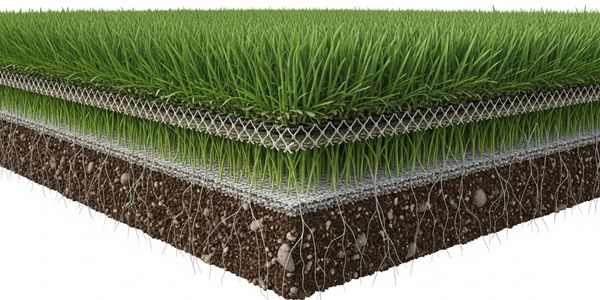
Thank god for the tech shift, because now, we are seeing products like the Natura Hybrid Dog Turf, and it changed the game this year.
Unlike the old plastic carpets, this system allows real grass to grow through a mesh, maintaining the soil biome. Why does this matter? Because the soil contains the "good smells", the microbes and earth scents, that satisfy the dog's rolling instinct without the foul ammonia trigger.
If you have a yard with old-school AstroTurf, you are practically begging your dog to roll. The bacterial buildup on non-antimicrobial surfaces (like the older generation turfs without "Flow-Through" tech) creates a scent profile that dogs find fascinating and humans find revolting. It heats up, too. Old turf can reach 140 degrees in the sun.
If you want them to stop rolling in the fake stuff, you need to upgrade to the antimicrobial infills like ProGreen CoolPlay that kill the odor at the source. This infill uses a mineral coating to prevent the ammonia from bonding to the turf fibers. The dogs treat it like ground, not like a toilet they need to roll in.
Impulse Control and the "Structured Sniff"
We used to train dogs by suppression. "No! Stop! Leave it!"
It works about as well as telling a teenager not to look at their phone. The urge to interact with the environment is a biological need, not a preference. A study from Aberystwyth University in February 2024 showed that dogs trained in scent work had significantly better inhibitory control than those who were just taught obedience.
If you want to stop the obsessive rolling, you have to give them a better outlet for their nose.
We call it the "Structured Sniff."
Instead of a mindless walk where the dog drags you to every pile of fox poop, you put the behavior on cue. You control the interaction.
Scent Work Games
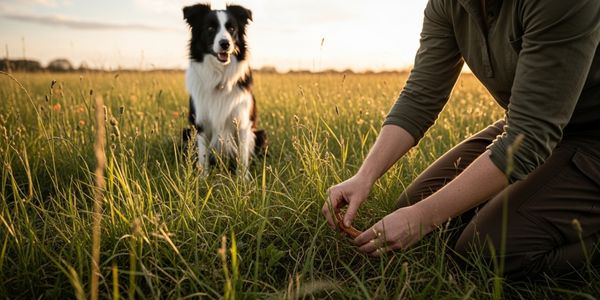
Turn the walk into a job. Carry high-value treats (freeze-dried liver works well), stop at a patch of clean grass, toss a treat into it, and give the command "Find it."
Now, the grass isn't a place to roll; it's a puzzle to solve.
This engages the prefrontal cortex, and a thinking dog rolls less than a bored dog.
You are channeling that drive into a task that you control. They get the sensory input they crave, but they are standing up, sniffing for food, rather than grinding their neck into the dirt.
The "Go" Command
Teach a release word that means "go be a dog," such as "Free."
When you say it, your dog can roll, sniff, and dig.
When the leash goes back on, the job starts again.
By compartmentalizing the behavior, you take away the frantic need to do it constantly, they know their time is coming.
Start in a low-distraction environment.
1. Ask for a "Sit."
2. Wait for eye contact.
3. Say "Free" and point to the grass.
4. Let them roll for 30 seconds.
5. Call them back, reward, and keep walking.
You become the gatekeeper of the fun, you aren't the fun police; you're the fun dispenser.
When Rolling Turns Obsessive
Let’s not sugarcoat it: sometimes the wiring is faulty. A massive survey from Texas A&M University in April 2025 revealed that 99.12% of U.S. dogs have at least one "problem behavior."
While aggression gets the headlines, obsessive environmental interaction, like compulsive grass rolling is a major sign of anxiety.
If your dog cannot walk past a patch of grass without throwing himself into it, and if he cannot be interrupted, you are dealing with a compulsion.
This isn't cute, it’s a neurological loop.
Some dogs rub their skin raw because the relief from rolling becomes their main way of coping with anxiety.
In these cases, no amount of shouting "No" will work. You are fighting brain chemistry, and you need to look at the dog's overall life.
Are they getting enough mental stimulation? Is the home environment chaotic? The rolling is just the symptom; the disease is usually boredom or chronic stress.
For dogs that roll compulsively, punishment rarely helps. Giving them an outlet works better, for example a structured activity like treibball, where dogs herd large balls.
Once his brain had something to do, the rolling vanished. He didn't need the cheap endorphin hit from the grass anymore because he was getting the high-grade dopamine from the work.
Practical Field Tactics (That Actually Work)
So, you're standing in the park, it's rained recently, and you see that look in your dog's eye. The shoulder is dropping, the knees are bending, and you have about three seconds before disaster strikes. What do you do?
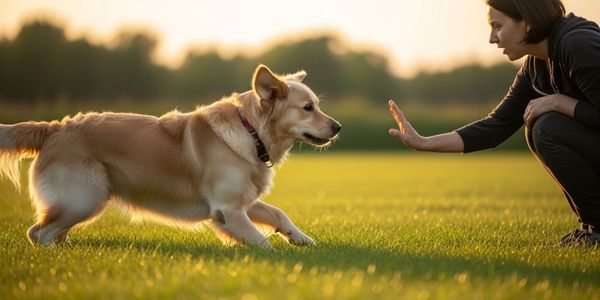
First, forget the leash jerk. It doesn't teach them anything except to roll faster next time. You need to interrupt the thought process, not the body.
1. The Recall Reset
Call them before they hit the ground. Watch the ears, if they flick back and the nose goes down, say their name immediately.
If their recall isn't 100%, that's your fault, not theirs. Practice this with a long line. When they look at you, mark it ("Yes!") and throw a treat away from the smelly spot.
You want them moving away from the temptation to get the reward.
2. The Body Block
If you are close enough, step calmly between the dog and the target scent, claim the space.
You aren't being aggressive; you are just being in the way. Walk into their personal bubble. Most dogs will yield the space to you.
Once they back up, ask for a "Sit" and reward them. You just told them, "That dead worm is mine," and they will respect that.
3. The Redirect
Throw a ball, scatter food, change the context instantly.
Switch their brain from "scent mode" to "chase mode." Keep a squeaky toy in your pocket, and if your dog is eyeing a pile of manure, squeak it to redirect their attention.
The predator instinct to chase the sound overrides the scavenger instinct to roll in the smell. You buy yourself five seconds to get out of the danger zone.
Conclusion
Dead fish, waste, and unidentifiable sludge are all part of life with a dog that loves to roll.
But when a dog drops into clean grass and wiggles with pure joy, there is often no reason to stop them.
In a world of concrete, leashes, and strict schedules, that roll is a moment of freedom. It’s a rebellion against the sanitized, human world we force them to live in.
Why do dogs roll in the grass? Because they are dogs. Because for thirty seconds, they aren't your pet, they aren't a "good boy," and they aren't an accessory.
They are an animal connecting with the earth. Sure, check for allergies, monitor the obsession, and maybe skip the cologne.
But occasionally, just let them have the roll. Dirt washes off. The joy of being an animal is harder to come by.
Resources & References
- Wolf scent-rolling behavior and domestic dog parallels. Scientific Reports (2025). ScienceDaily coverage
- University of Bristol (2024). Dogs detect human stress through chemosensory signals. bristol.ac.uk
- Aberystwyth University (2024). Scent work training and inhibitory control in dogs. aber.ac.uk
- Texas A&M University (2025). More than 99% of US dogs have a behavior problem. tamu.edu
🐾 Frequently Asked Questions
Q Why does my dog roll in the grass right after a bath?
It's likely an attempt to remove the artificial scent of shampoo. Dogs prefer natural environmental smells over perfumes, which can feel overwhelming or 'blinding' to their sensitive noses. They roll to regain a scent profile that helps them blend in (camouflage) or simply smells familiar.
Q Is rolling in the grass a sign of allergies?
It can be. If your dog's body is stiff, frantic, or if they bite at their paws and skin after rolling, it may be an itch caused by environmental allergies or dermatitis. A loose, wiggly body usually indicates pleasure, while tension indicates discomfort.
Q Why do dogs roll in dead worms or smelly things?
This is an evolutionary instinct called 'scent camouflage.' Wild ancestors rolled in strong odors to mask their own scent from prey. It may also be a way to carry information back to the pack, effectively saying, 'Look what I found.'
Q How do I stop my dog from rolling in the grass?
Instead of scolding, use 'structured sniffing' or scent work games to channel their urge to interact with the environment. Teach a strong recall to interrupt the behavior before they drop, and reward them for checking in with you instead of the ground.
Q Do wolves roll in the grass like dogs?
Yes. A 2025 study confirmed that wolves exhibit similar rolling behaviors, especially in response to scents left by other canids. This proves the behavior is a hardwired evolutionary trait shared between wild wolves and domestic dogs.

📖 Related Articles
5 Best No Pull Harnesses for Rescue Dogs (2026 Reviews)
The Silent Epidemic: Recognizing the Hidden Signs of Arthritis in Dogs Before the Limp

4 Best GPS Trackers for Dogs (2026): Escape Alerts Compared
Training Deaf Dogs with Hand Signals: A Real-World Guide

Why Do Dogs Chase Their Tails? The Thin Line Between Play and Pathology
💬 Comments (0)
No comments yet. Be the first to share your thoughts! 👇
✍️ Leave a Reply