
Crested Gecko Care: Humidity, Plants & Common Mistakes
Last updated: October 4, 2026. This article is for general information and does not replace advice from your veterinarian. How we write our articles.
This post contains affiliate links. If you buy something through them, I earn a small commission at no extra cost to you. Details.
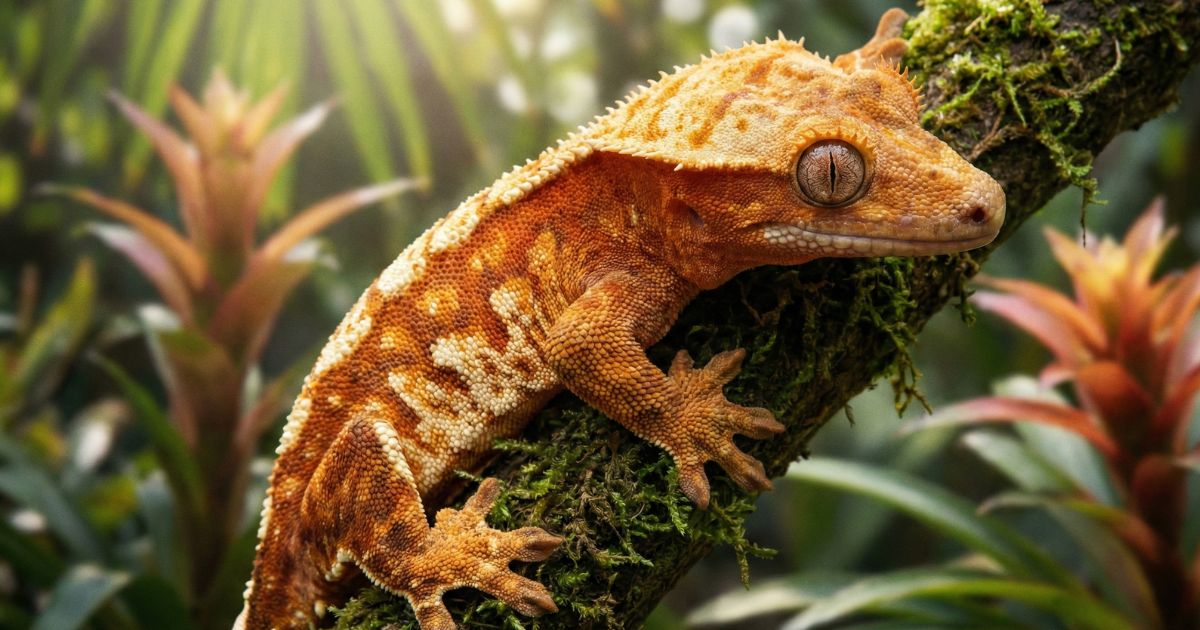
Crested geckos have a reputation for being "easy" starter reptiles. And honestly? They are, if you nail the basics.
Like most reptiles, these geckos need a specific micro-climate, and the details below are what makes the difference. To find a reptile vet, see the ARAV directory.
Understanding Humidity Requirements
Crested geckos originate from New Caledonia's humid rainforests, where moisture levels stay consistently high. They need humidity between 60-80%, with occasional spikes to 90% after misting.
The part that is easy to miss: you need dry periods too. Humidity should drop to around 45-50% during the day before misting again in the evening.
Constant wetness creates breeding grounds for mold, bacterial growth, and respiratory issues. Humidity cycling is just as important as maintaining high moisture levels, and it simply means checking twice a day.
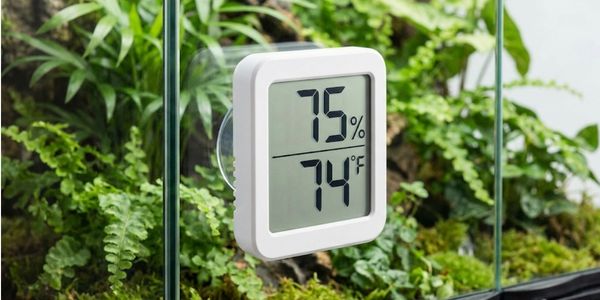
Skip the cheap analog dial hygrometers, which can be inaccurate. A digital hygrometer placed mid-height in the tank gives you readings where your gecko actually spends time.
A reliable digital hygrometer is essential, and an inexpensive unit like the ThermoPro TP50 saves you from guessing games.
The Misting Mistake Most Beginners Make
Here's the most common problem: over-misting. It's like people think they're recreating a tropical monsoon every six hours.
New keepers often run automatic misters multiple times daily, thinking more moisture equals better care. What actually happens? Waterlogged substrate, rotting plants, and bacterial overgrowth.
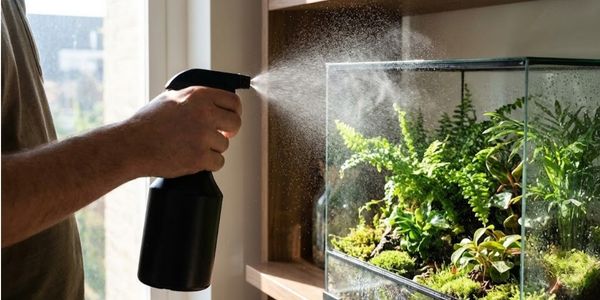
One thorough misting session per evening is typically sufficient. Spray the walls and plants, allow water to drip naturally, then let the enclosure dry out during daylight hours.
This day-night humidity cycle mimics natural conditions and prevents the health issues associated with constant dampness. Nature had it figured out already.
Why Your Plants Keep Rotting
Bioactive setups look fantastic, until everything turns brown and fuzzy within three weeks. The culprit is usually inadequate drainage combined with excessive moisture.
Root rot occurs when water accumulates at the bottom of your enclosure with nowhere to go, suffocating plant roots and creating anaerobic conditions perfect for harmful bacteria.
Building Proper Drainage
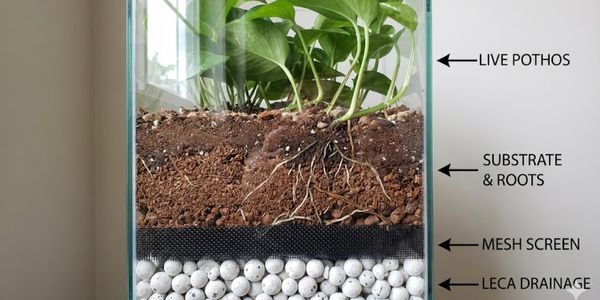
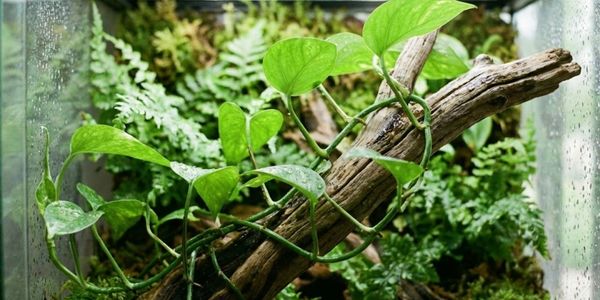
A functional bioactive setup requires a drainage layer at the bottom, LECA balls, hydro stones, or similar materials that allow water collection below the substrate level. Without it, water pools in the soil and roots rot.
Add a mesh screen barrier between drainage and substrate to prevent soil migration. Use a proper substrate mix like ABG (Atlanta Botanical Garden) blend or a combination of orchid bark, charcoal, and sphagnum moss, not ordinary potting soil, which can contain fertilizer or perlite.
Species like pothos, snake plants, bromeliads, and ferns thrive in humid environments while tolerating the moisture fluctuations crested geckos need.
If you're already dealing with rotting plants, remove them promptly before they contaminate the entire system. Prevention through proper setup beats remediation every time.
Temperature Guidelines
Unlike many popular reptiles, crested geckos are not heat-seekers. They're adapted to moderate temperatures with cooler nighttime drops, which means you don't need to recreate the Sahara desert.
Optimal temperature range: 72-78°F during the day, dropping to 65-70°F at night. That nighttime temperature decrease is actually beneficial for their metabolism and behavior, so you do not need to keep the enclosure warm all night.
Room temperature works for most households. If your home runs cold, use a low-wattage ceramic heat emitter or heat panel on the enclosure top, controlled by a thermostat.
Heat pads and heat rocks aren't appropriate for arboreal species and can cause thermal burns. Heating the air rather than surfaces is the safer approach.
UVB Lighting: What Recent Research Tells Us
For years, conventional wisdom said crested geckos didn't need UVB since they're crepuscular, and this assumption is incorrect. Research has since shown that many crepuscular species benefit from low-level UVB.
Crested geckos can live without UVB, but many reptile vets and keepers now see no reason to withhold it, as long as it is a low-level (zone 1) gradient with plenty of shade and hiding places. Our UVB lighting guide explains how to set it up.
A 5-6% UVB fluorescent tube running 10-12 hours daily provides appropriate exposure without overwhelming them. Mount it inside the mesh top or use a fixture that combines LED and UVB.
The Zoo Med ReptiSun 5.0 T5 HO provides the low-level UVB exposure that crested geckos actually benefit from.
Skip colored night lights: many reptiles can see red, blue and purple light, so it may disturb their rest. A dark night is best.
Our dedicated guide explains UVB lighting for reptiles in more detail.
Feeding Made Simple
Crested gecko diet (CGD) powder mixed with water forms the nutritional foundation. Brands like Repashy, Pangea, and Arcadia offer complete formulations, mix to ketchup consistency and offer every other day.
Ready to mix powders such as the REPTIZOO Fruit Mix Watermelon and Insects gecko diet are sold as complete diets that only need water, with no extra calcium or vitamin powder.
Repashy Crested Gecko MRP is another staple diet trusted by experienced keepers, with multiple flavor options to keep your gecko interested.
That covers their core nutritional needs.
Live insects (crickets, dubia roaches) once or twice weekly add enrichment and extra protein. Dust them with calcium powder before feeding to help prevent metabolic bone disease.
CGD provides balanced vitamins and minerals that insects alone cannot. Never feed insects exclusively, nutritional deficiencies develop quickly, starting with calcium.
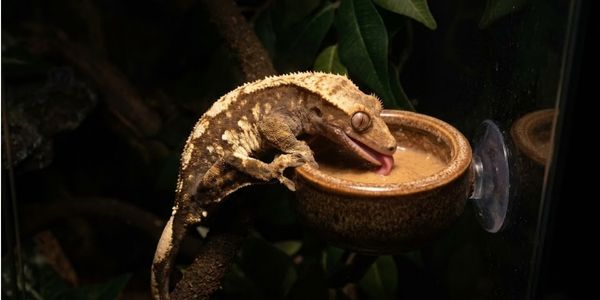
Skip baby food (lacks proper nutrients), plain fruit (excessive sugar, no calcium), and jelly cups (essentially gecko candy marketed as "treats"). A shallow water dish changed daily completes the setup.
Choosing the Right Substrate
Substrate choice depends on your experience level and maintenance preferences. Translation: how much effort you're actually willing to put in.
Paper towels: Safe, simple, perfect for young geckos or quarantine situations. Not visually appealing, but practical and easy to clean.
Coconut fiber (Eco Earth): Holds humidity effectively, looks natural. Watch for accidental ingestion in young geckos, though impaction is rare with proper hydration. Swallowing an occasional particle is not usually a problem.
Bioactive setups: The gold standard when done correctly. Live plants, cleanup crew (springtails and isopods), natural waste processing. Requires more initial investment and knowledge but reduces long-term maintenance, assuming you built it properly the first time.
Avoid: Sand, reptile carpet (claws snag), pine or cedar shavings (toxic oils), gravel, or any desert-oriented substrates. Basically, if it was marketed for a bearded dragon, it doesn't belong here.
For keepers who want natural substrate without the complexity of bioactive setups, the Zoo Med Eco Earth coconut fiber offers excellent humidity retention at a reasonable price.
Shedding Issues Signal Humidity Problems
Healthy crested geckos shed every few weeks. The skin should come off in large pieces or completely, and they typically eat it afterward. This is normal behavior. Eating the shed is normal too.
Stuck shed around toes, tail tip, or eyes indicates insufficient humidity during the shedding cycle. This condition, called dysecdysis (difficult shedding, usually linked to low humidity), can restrict circulation and cause digit loss if left untreated.
For stuck shed, provide a 10-15 minute soak in shallow lukewarm water, then gently assist removal with a damp cotton swab. Never pull: stuck shed on the toes can cut off blood flow, and pulling can injure them. If it won't come off, ask your vet.
Address the underlying humidity issue rather than repeatedly treating symptoms. Consistent moisture levels, checked with a hygrometer, prevent most shedding complications.
Ventilation: The Overlooked Factor
High humidity requires adequate airflow. Stagnant humidity breeds problems. It's the difference between a rainforest and a petri dish.
Without proper ventilation, you're creating an environment where mold proliferates rapidly, bacteria thrive, and respiratory function suffers.
Glass enclosures with mesh tops typically provide sufficient airflow. Fully enclosed glass setups or plastic bins need ventilation modifications, drill holes or add vents to create air exchange and prevent mold.
Some advanced keepers use small computer fans on timers for larger bioactive enclosures, though this isn't necessary for standard setups. It's overkill, but it looks impressively technical.
Handling Your Gecko Properly
Crested geckos tolerate handling when done correctly, they're not seeking interaction like some pets, but they're generally calm once acclimated. Think "resigned acceptance" rather than "affection."
Let them walk hand-to-hand rather than grabbing them. Support their body weight without squeezing. And critically: never grab the tail.
They drop tails as a defense mechanism, and it never regenerates. The wound heals, but they're permanently tail-less. They adapt fine, but it's completely preventable, assuming you can resist the urge to grab the most obvious handle.
Handle once or twice weekly for 5-10 minute sessions. Young geckos may be jumpier initially, patience helps them settle in.
Common Setup Mistakes
These mistakes come up again and again, and avoiding them saves trouble and money:
Maintaining constant high humidity. Remember the cycle, high moisture periods need dry intervals. This helps prevent respiratory infections and fungal issues.
Relying on inaccurate monitoring tools. Digital thermometers and hygrometers are inexpensive and provide reliable data.
Skipping drainage in bioactive setups. Plants can't survive in waterlogged conditions. Neither can beneficial microfauna. Both will die, and you'll wonder why your "natural" setup smells like a swamp.
Overfeeding. CGD every other day, insects 1-2 times weekly maximum. Obesity reduces lifespan in reptiles, turns out "chunky" isn't cute when it's metabolic dysfunction.
Cohabitation without experience. Males fight, females compete for resources and experience chronic stress. Individual housing is safest; crested geckos do not need company.
Recognizing Health Problems
Sometimes issues develop despite proper care. Watch for these warning signs before they become emergency vet visits:
Extended fasting beyond two weeks. A few days is normal during temperature changes or before shedding. Two weeks warrants concern and a call to a reptile vet.
Persistent lethargy. They're nocturnal, but should be active at night. Minimal movement at night suggests a problem (check after dark, since they sleep during the day).
Visible bone structure. Hip bones and ribs shouldn't be prominent, this indicates severe weight loss. If you can see these clearly, see a reptile vet soon.
Respiratory symptoms. Mucus around the mouth, labored breathing, or clicking sounds need immediate veterinary attention. These don't resolve on their own, despite what forum advice might suggest.
Abnormal feces. Should be dark brown with white urate. Runny, green, bloody, or absent for weeks requires veterinary consultation; bring a note of what you have been feeding.
If something looks wrong, an experienced reptile vet makes all the difference. Here is how to find and choose an exotic veterinarian.
The Complete Setup Checklist
Here's what a functional crested gecko enclosure includes, no gimmicks, just what actually works:
Enclosure: 18x18x24 inches minimum for adults. Vertical space matters more than floor space for these climbers, despite that salesperson insisting you need a 40-gallon breeder tank.
Substrate: Bioactive with drainage layer, or coconut fiber for simplicity. Paper towels for young geckos who haven't learned what's food yet.
Decor: Live or artificial plants (pothos, ferns, snake plants), cork bark, branches. Multiple climbing routes and hiding spots, they're arboreal, not ground-dwellers auditioning for a nature documentary.
Lighting: 5-6% UVB tube for 10-12 hours daily. No colored night lights, no matter how aesthetic they look on your shelf.
Heating: Usually unnecessary if room temperature is 72-78°F. If needed, use ceramic heat emitter with thermostat, not whatever was on clearance.
Humidity: Digital hygrometer, daily evening misting to 60-80%, daytime drying to 45-50%. Check the readings every day.
Food: CGD powder every other day. Optional dusted insects weekly. Fresh water daily.
This setup isn't complicated or expensive when you focus on actual needs rather than gadgets.
Key Takeaways for Long-Term Success
Crested geckos genuinely rank among the most manageable reptile species. But "manageable" still requires consistency, they're easy, not self-sufficient.
A common pattern: most problems stem from inconsistency rather than ignorance. Keepers start strong for a month, then maintenance slips. Humidity checks become occasional, cleaning gets delayed, and monitoring stops entirely.
Establish a routine. Check your gecko each evening when they wake. Mist at the same time. Clean the water dish daily. Remove uneaten food every two days before it becomes a science experiment.
Consistency beats perfection. Your gecko doesn't need an elaborate custom bioactive masterpiece. It needs stable conditions, clean water, and regular feeding.
Provide that, and crested geckos live 15-20 years. Neglect it, and problems can show up within months.
The choice is yours, but at least now you know what actually works instead of what pet stores recommend.
Frequently Asked Questions
My crested gecko hasn't eaten in a week. Is it dying?
A healthy crested gecko can occasionally skip meals due to stress, shedding, or minor temperature fluctuations. A brief fasting period of a few days is usually nothing to worry about. Verify your temperature and humidity levels first, as environmental issues are the most common cause of appetite loss. If your gecko refuses food for more than two weeks or shows signs of rapid weight loss, schedule a veterinary appointment.
Do I really need live plants, or can I just use fake ones?
Artificial plants work perfectly fine. They provide necessary climbing surfaces and hiding spots, and they are easy to clean. Live plants look fantastic and help maintain natural humidity, but they require proper lighting, drainage, and maintenance. If you are a beginner, starting with high-quality silk or plastic plants is a safe choice. You can always upgrade to a planted bioactive setup once you master the basic husbandry.
How often should I clean my crested gecko's tank?
It depends on your substrate. Replace paper towels every few days. For loose substrates like Eco Earth, spot-clean waste every other day and perform a complete substrate change every two to three months. Fully bioactive enclosures require minimal substrate maintenance. Regardless of setup, you must clean the water dish daily and remove uneaten Crested Gecko Diet within 24 to 48 hours to prevent mold.
My crested gecko dropped its tail. Will it grow back?
No. Unlike leopard geckos, crested geckos cannot regenerate their tails once dropped. Tail loss is a natural defense mechanism triggered by stress, sudden loud noises, or improper handling. While it is permanent, your gecko will adapt quickly and live a completely normal, healthy life without it. Just ensure the enclosure is kept clean while the wound heals to prevent any infection.
Can I keep two crested geckos together in the same tank?
No. Crested geckos are solitary reptiles and should be housed individually. Males will fight, often causing severe injuries. While females might appear to coexist, they continuously compete for food, space, and optimal temperature zones, leading to chronic stress for the submissive gecko. Unless you are an experienced breeder with appropriate setups, stick to the golden rule: one gecko per enclosure.

Related Articles

How to Find and Choose an Exotic Vet: 5 Mistakes to Avoid
How to find and choose an exotic vet before an emergency: real directories, questions to ask, and mistakes to avoid for reptiles, birds and small pets.

Parasites in Reptiles: 7 Warning Signs and Treatment
How to spot internal and external parasites in reptiles: 7 warning signs, how vets test and treat them, and how to prevent mites.
Reptile Impaction: Causes, Symptoms & Emergency Care Guide
What causes reptile impaction, the early and emergency signs, how vets treat it, and the husbandry habits that prevent it.
Reptile Respiratory Infections: Symptoms & Treatment Guide
Reptile respiratory infections: early and advanced signs, what the vet will do, treatment, and the husbandry habits that prevent most cases.

Metabolic Bone Disease in Reptiles: Prevention & Treatment
Metabolic bone disease in reptiles: causes (UVB, diet, supplements, temperature), early and advanced signs, prevention, and what vet treatment involves.

Leopard Gecko Care: Setup, Diet & Common Mistakes
Leopard geckos are low-maintenance, not no-maintenance. Learn proper setup, temperatures, calcium and UVB, safe substrates, and how to prevent impaction.
Comments (0)
No comments yet. Be the first to share your thoughts!
Leave a Reply