Dog Aggression Toward Other Dogs: Training Tips That Actually Work
Heads up: This post contains affiliate links. If you buy something through them, I earn a small commission at no extra cost to you. It keeps the lights on and the kibble bowl full. Read the full boring legal stuff here.
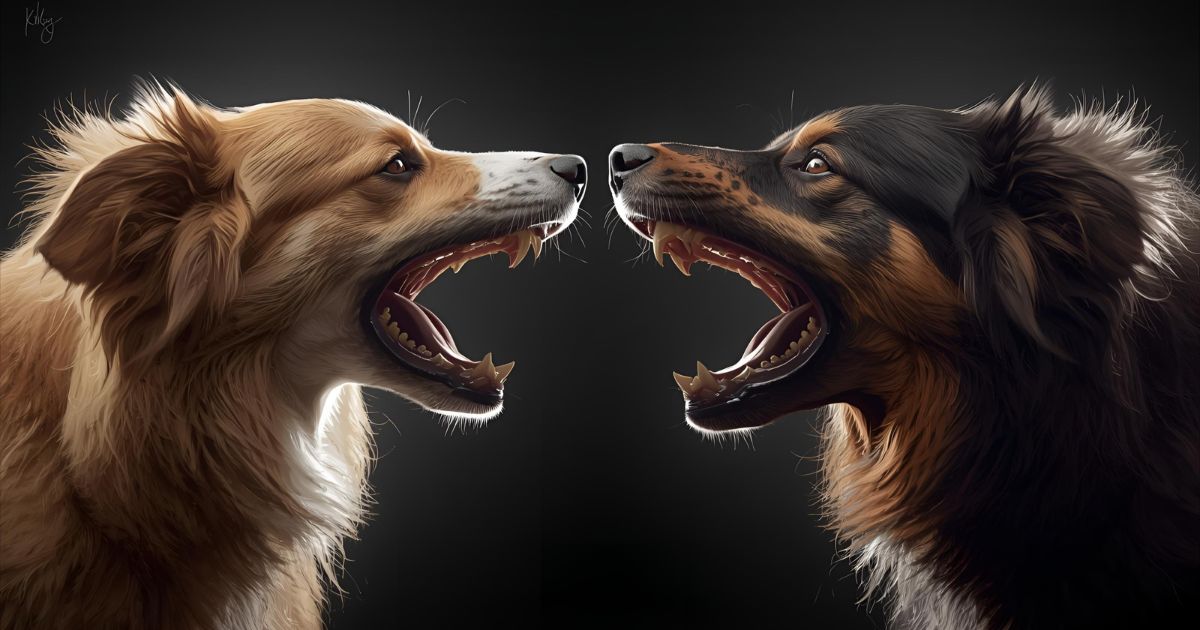
You're out for a walk, enjoying the sunshine, coffee in hand.
Then, boom, your sweet fur-ball spots another dog.
Cue the growling, lunging, barking, and that classic "I swear he's not usually like this!" speech.
Dog aggression toward other dogs is one of those problems every owner thinks they can manage until it becomes a full-blown public spectacle.
But here's the truth: it's fixable.
You just have to stop thinking it'll "go away on its own."
Because it won't.
Let's talk about real-world training tips for dog aggression toward other dogs—the kind that work for actual dogs, not the perfectly behaved ones on YouTube.
First, Let's Get Real About What's Going On
Most people assume their dog is "mean."
Nah.
Aggression toward other dogs isn't about dominance or evil intent. It's usually fear, frustration, or poor socialization.
Translation: your dog's brain goes into overdrive when they see another dog. They might be thinking:
- "That other dog's gonna hurt me."
- "I want to say hi but I can't, so I'll bark instead."
- "This leash is holding me back, I hate it."
You're looking at emotion, not attitude.
And that means punishment doesn't fix it. (It just teaches your dog that other dogs = bad things happen.)
What does fix it? Patience, training, and consistency.
Yeah, I know. Not sexy. But it works.
Aggression Type Identification: Know What You're Dealing With
Dog-to-dog aggression isn't one-size-fits-all. Identifying the type of aggression your dog displays is crucial for choosing the right training approach.
| Aggression Type | What It Looks Like | Root Cause | Training Approach |
|---|---|---|---|
| Fear-Based Aggression | Lunging, barking, growling from distance; retreating after confrontation | Previous negative experience or lack of socialization | Desensitization + counter-conditioning at safe distance |
| Leash Reactivity | Intense reaction on-leash only; calm off-leash with other dogs | Frustration from leash constraint and tension transfer | Loose-leash training + focus redirection ("look at me") |
| Protective/Territorial | Aggressive only near owner, home, or resources | Protective instinct or resource guarding | Counter-conditioning to pair other dogs with positive experiences |
| Play Aggression | Starts as play but escalates; nipping, intense wrestling | Lack of self-control and play boundary understanding | Structured play sessions with breaks; "leave it" training |
| Redirected Aggression | Calm, then suddenly attacks nearby target (you or other dog) | Pent-up frustration redirected onto accessible target | Increased distance, environmental management |
✓ Action Item: Before starting any training, identify which type(s) your dog displays. This determines your entire approach. If you're unsure, a certified professional can assess your dog accurately.
The Root Causes: Why Dogs Get Aggressive Toward Other Dogs
Before you can fix it, you need to know why it's happening. Here are the main culprits.
1. Fear or Trauma
Maybe your dog got attacked once. Or just had a bad experience at the park.
Dogs don't forget that stuff. Now every dog they see = danger.
2. Lack of Early Socialization
If your dog didn't meet other dogs during the critical socialization window (roughly 3–14 weeks old), they might not know how to "speak dog."
So they default to barking, growling, or lunging, because they're unsure what else to do.
3. Leash Frustration (a.k.a. Leash Reactivity)
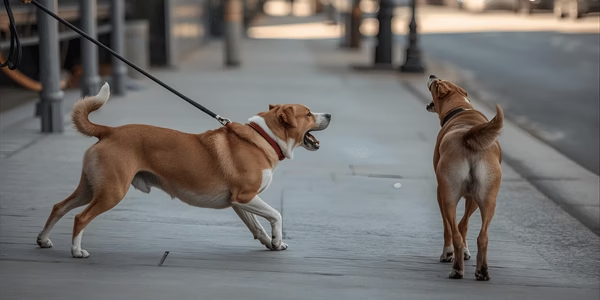
Off-leash, your dog's fine. On-leash? Instant chaos.
Why? The leash limits natural movement and communication, and your tension on the leash transfers directly to them.
They feel trapped, so they lash out.
4. Protective Instinct
Some dogs go into guard mode around their humans. They think they're keeping you safe, even if you're just trying to grab a latte.
Safety Protocols: Protecting Everyone Involved
Before you even think about training, safety comes first. For you, your dog, and every other dog you encounter.
Essential Safety Measures
- Use a properly fitted harness: Front-clip harnesses give you control without choking. Never use a retractable leash during reactive episodes—they offer zero control.
- Keep high-value treats handy: Always carry emergency rewards to redirect or reward calm behavior. Keep them in a pouch for quick access.
- Maintain safe distance: Know your dog's threshold (the distance where they notice other dogs but don't react). Stay beyond it until training progresses.
- Never force interaction: Leash greetings between reactive dogs often escalate situations. Avoid them entirely until your dog's under solid control.
- Consider a muzzle if necessary: A well-fitted basket muzzle (NOT a cloth muzzle) can prevent bites during training. Train your dog to wear it positively first.
- Walk during off-peak hours: Fewer dogs = fewer triggers. Walk early morning or late evening while building skills.
- Use visual barriers at home: If your dog reacts to dogs outside windows, use frosted film or curtains to reduce visual triggers.
- Have an emergency plan: Know the location of the nearest emergency vet. Carry your dog's medical records and your vet's contact info.
⚠ Warning: If your dog shows signs of severe aggression (sustained biting, inability to stop, injuring other dogs or people), seek professional behavioral help immediately. This is not something to tackle alone.
Step One: Stop Making It Worse (Seriously)
Most owners accidentally reinforce aggression.
When your dog barks at another dog and you:
- Pull the leash tight,
- Yell "No!" or "Stop it!",
- Or freak out yourself…
You're confirming to your dog that, yep, that other dog is a threat.
Next time they see one? They'll go nuclear even faster.
Instead, your job is to stay calm and neutral. If your energy spikes, theirs will too.
So before we even talk training, remember: you can't train calm if you're not calm.
Step Two: Control the Environment
You can't fix aggression by "hoping for the best" every time you walk past a German Shepherd.
Start by setting your dog up to win.
Use Distance to Your Advantage
Distance is your best friend. Find your dog's threshold, the distance where they notice another dog but don't react.
That's your training zone. If they start barking or lunging, you're too close. Back it up.
Every calm exposure helps their brain learn that other dogs = no big deal.
Avoid Triggers (for Now)
Skip the dog park. Avoid crowded trails.
You're not avoiding the problem, you're creating space to work safely on it.
Once your dog's under control at a distance, then you can move closer.
Training Progression: A Step-by-Step Timeline
Real progress takes time. Here's a realistic progression from "my dog's a nightmare" to "my dog's manageable (and improving)":
| Phase | Timeline | Focus | Success Indicators |
|---|---|---|---|
| Phase 1: Foundation | Weeks 1-2 | Establish calm walking; teach "look at me" in zero-distraction environment | Dog responds to "look at me" indoors 90%+ of time |
| Phase 2: Threshold Work | Weeks 3-4 | Identify safe distance; practice desensitization; reward calm behavior | Dog notices other dog but doesn't react at distance |
| Phase 3: Active Desensitization | Weeks 5-8 | Gradually reduce distance; pair dog presence with high-value treats | Dog shows anticipation of treats when dogs appear |
| Phase 4: Increased Difficulty | Weeks 9-12 | Add complexity (multiple dogs, varied environments); reduce treat frequency | Dog walks past other dogs on loose leash with minimal reaction |
| Phase 5: Real-World Application | Weeks 13+ | Test in varied real-world scenarios; practice with unfamiliar dogs | Dog maintains calm on walks; slip-ups are brief |
✓ Key Point: Every dog progresses at their own pace. Some may move faster; others (especially severely reactive dogs) may take 6+ months. Consistency and patience matter more than speed.
Step Three: Desensitization + Counter-conditioning (The Fancy Words That Work)
Let's translate the science into something you can actually do.
Desensitization
Gradually expose your dog to other dogs, but in small, non-threatening doses.
Start far away. Reward calm behavior. Slowly, over time, reduce the distance.
No rush. This isn't a TikTok challenge.
Counter-conditioning
While desensitizing, pair the sight of other dogs with something awesome, like treats, praise, or positive reinforcement.
The goal? Your dog starts thinking: "Oh, another dog! That means chicken time!"
And once their emotional response flips from fear to positive expectation… You win.
That's the core of behavior change.
Step Four: Teach the "Look at Me" Command
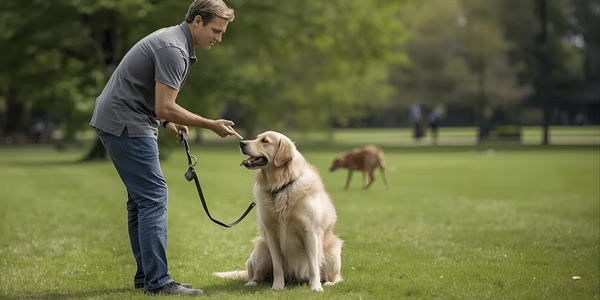
One of the best ways to manage reactivity is to redirect focus back to you.
Here's how:
- Say your dog's name.
- When they make eye contact, reward with a high-value treat.
- Practice at home first, zero distractions.
- Slowly add controlled distractions (the sound of another dog, a dog across the street, etc.).
Over time, your dog learns that you are more interesting than that other dog.
This simple cue can diffuse 80% of reactive episodes. Tools like clicker training can speed things up too.
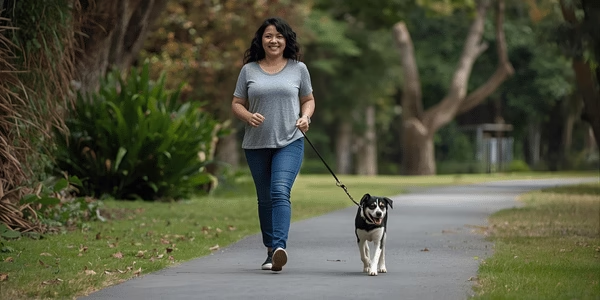
Step Five: Walk the Right Way (Loose-Leash = Calm Dog)
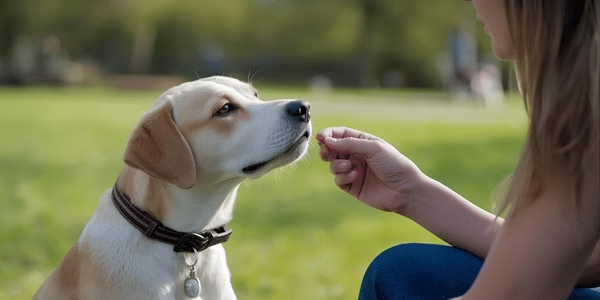
A dog pulling on the leash is physically and mentally wound up. That tension fuels aggression.
To fix it:
- Use a front-clip harness like the 2 Hounds Design Freedom Harness to prevent pulling.
- Keep the leash loose.
- Walk in a zigzag pattern or change directions often. It forces your dog to tune in to you.
The goal is focus, not a military march.
And when you spot another dog ahead? Create space, ask for a "look at me," and keep moving calmly. No drama.
Step Six: Learn the Subtle Warning Signs
Aggression doesn't come out of nowhere. Dogs give plenty of warnings before they explode:
- Stiff body posture.
- Closed mouth.
- Intense staring.
- Raised hackles (hair on back standing up).
- Low growling.
If you catch those early, you can redirect before things escalate.
Most owners miss these because they're scrolling on their phones. (You know who you are.)
Watch your dog. They're telling you everything you need to know.
Step Seven: Socialize the Right Way (Not the Way You Think)
"Socialization" doesn't mean tossing your dog into a dog park and hoping for the best.
That's like throwing someone with social anxiety into a rave.
Instead:
- Arrange controlled meetups with calm, well-socialized dogs.
- Keep leashes loose.
- Start with parallel walks, dogs side by side but not interacting.
- Gradually allow them to sniff when they're both relaxed.
A few good experiences can undo a lot of fear-based aggression.
Step Eight: Manage, Don't Just Train
Management isn't giving up. It's buying your dog time to learn.
Here's what that looks like:
- Walk during quiet hours.
- Use visual barriers at home if your dog reacts to dogs outside.
- Always carry high-value treats (think cheese, not kibble).
- Avoid leash greetings until your dog's ready.
You can't control other dogs, but you can control your environment. And that's how you win.
Step Nine: Get Professional Help (If You're Out of Your Depth)
If your dog's aggression is severe, or you've been trying for months with no change, it's time to bring in a pro.
Look for a Certified Dog Behavior Consultant (CDBC) or Certified Professional Dog Trainer (CPDT-KA) who specializes in aggression.
Professional help can make all the difference, especially for severe cases or dogs with trauma histories.
Avoid anyone who:
- Uses shock collars or "dominance" training.
- Tells you to "alpha roll" your dog.
- Or says "your dog's just stubborn."
Those methods suppress behavior, not fix it, and often make things worse.
Bonus: Tools That Actually Help (and Don't Make Things Worse)
Here's a quick breakdown of what works, and what doesn't.
| Tool | Use | Avoid |
|---|---|---|
| Front-clip harness | Controls pulling, reduces frustration | Back-clip harness (encourages pulling) |
| Head halter | Great for strong pullers (train with patience) | Using it without proper acclimation |
| Clicker | Reinforces good behavior precisely | Overuse or inconsistent timing |
| Calming treats | Helps mild anxiety before walks | Relying on treats only without training |
| Muzzle (basket style) | Safety during training if needed | Cloth muzzles (restrict breathing) |
Used correctly, these tools build confidence and safety for both of you.
The Reality Check: This Isn't an Overnight Fix
You're retraining your dog's brain. That means repetition. And consistency.
And yeah, sometimes walking the long way around the block because there's a golden retriever coming your way.
Progress looks like:
- Your dog barking less.
- Recovering faster after an outburst.
- Listening to commands instead of tuning out.
Celebrate those small wins. They add up.
And remember: aggression doesn't define your dog, it's just a behavior. One you can change.
Quick Recap: What Works Best for Dog Aggression
| Strategy | Why It Works |
|---|---|
| Desensitization + Counterconditioning | Rewires emotional response |
| "Look at Me" Command | Redirects focus and builds control |
| Controlled Environment | Prevents overload |
| Loose-Leash Walking | Reduces physical and emotional tension |
| Professional Help | Ensures safety and proper guidance |
Stick to this, and you'll start seeing calm where there used to be chaos.
The Bottom Line
Dog aggression toward other dogs looks scary. It feels embarrassing. But it's not hopeless.
Most of the time, it's not "bad behavior." It's bad communication and misunderstood emotions.
Once you understand the why, you can train the how.
So ditch the guilt, grab your treats, and start today.
Because your dog's capable of change. They just need you to lead the way, calmly, confidently, and without panic.
🐾 Frequently Asked Questions
Q Is my dog aggressive because they are "dominant"?
Almost never. The whole "alpha dog" theory was debunked years ago. Your dog isn't trying to rule the world; they are usually just scared, frustrated, or socially awkward. Treat the fear, not the "dominance," and you'll actually see results.
Q Can I just punish them when they growl?
Terrible idea. If you punish a growl, you take away your dog's warning system. Next time, they might skip the growl and go straight for the bite. Growling is good communication, it says "I need space." Listen to it.
Q How long does this training take?
How long is a piece of string? It depends on how long your dog has been practicing the behavior. Could be weeks, could be months. If anyone promises you a "quick fix" in one weekend, run away. They are selling snake oil (or shock collars).
Q Should I let them "fight it out" to socialize?
Absolutely not. That's how dogs get injured or traumatized for life. Your job is to be their protector, not a fight promoter. Controlled, positive interactions only.
Q My dog is fine off-leash but a demon on-leash. Why?
That's called "Leash Reactivity." They feel trapped and can't use natural body language (like moving away) to defuse tension. So they choose "fight" because "flight" isn't an option. Loose-leash training is your cure here.

📖 Related Articles
Training deaf dogs with hand signals: A Real-World Guide

Why Do Dogs Chase Their Tails? The Thin Line Between Play and Pathology
💬 Comments (0)
No comments yet. Be the first to share your thoughts! 👇
✍️ Leave a Reply