Dog Ear Positions: What Your Dog Is Actually Thinking
Dog Ear Positions: What Your Dog Is Actually Thinking (Not What You Want to Hear)
Dogs don't talk, but their ears never shut up.
Those two furry appendages are running constant commentary on what's happening in your dog's head, fear, excitement, confusion, aggression, submission, boredom. Every twitch means something. Most dog owners ignore it and wonder why their dog freaks out at the vet or snaps at a kid.
Learn what those ears are saying, and you'll understand your dog better than 90% of people walking their dogs down the street.
The Anatomy: Why Dog Ears Are So Damn Expressive
Dogs have roughly 18 muscles controlling their ears, humans have 3.[1] Let that sink in.
Those muscles allow your dog to rotate, raise, lower, and flatten their ears independently. It's a biological communication system that evolved over thousands of years alongside humans.[2] While you're reading body language wrong, your dog's ears are broadcasting their emotional state in real time.
A German Shepherd's pointed ears move like satellite dishes. A Basset Hound's droopy ears still shift at the base. A Chihuahua's tiny ears twitch with every stray thought. The shape doesn't matter, the movement is what tells you what your dog is actually feeling.
Here's the important part: ear positions are involuntary. Your dog can't fake it. While they can learn to sit or stay no matter how they feel, their ears react automatically to emotion. That makes ear positions one of the most honest signals your dog gives you.[3]
Forward Ears = Full Attention Mode
When your dog's ears perk up and point forward, they're locked in.
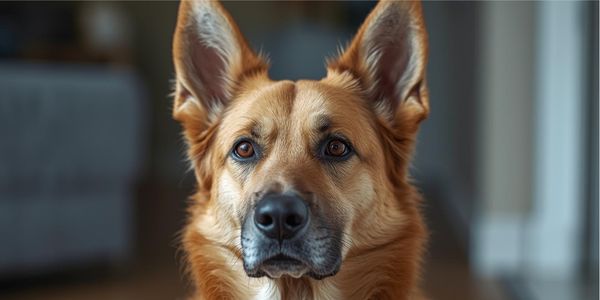
This is your dog in information-gathering mode. They heard something interesting, spotted movement, or you just grabbed the leash. The ears act like actual satellite dishes, positioned to soak up as much sensory input as possible.
You'll see forward ears when:
- An unfamiliar sound catches their attention
- They spot another animal in the distance
- You're reaching for their favorite toy
- They're waiting for a command or treat
This is your dog essentially saying: "I'm interested, I'm paying attention, and I want to know what happens next."
Forward ears indicate alert, focused attention. Your dog is locked onto something and gathering information.
Neutral/Relaxed Ears = Everything Is Fine
A relaxed dog holds their ears in their natural resting position, not forward, not back, just... normal.
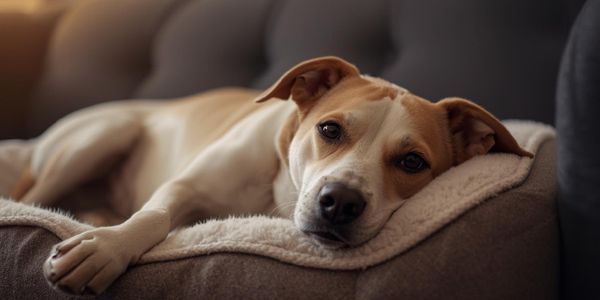
For upright-eared dogs, this means the ears are up but not tensed. For floppy-eared dogs, they hang loose with no visible tension. This ear position screams: "I'm comfortable here. No threats. Everything is normal."
You see this when your dog is:
- Lounging on the couch after a walk
- Napping in their bed
- Watching the household go about its day
- In a balanced emotional state with no stress
If your dog's ears are in neutral most of the time, you're doing something right. They trust the environment.
Neutral ears indicate comfort and safety. Your dog trusts their environment and feels no immediate threats.
Flattened/Pinned Back Ears = Fear or Submission (Or Pain)
This is the one you need to pay attention to.
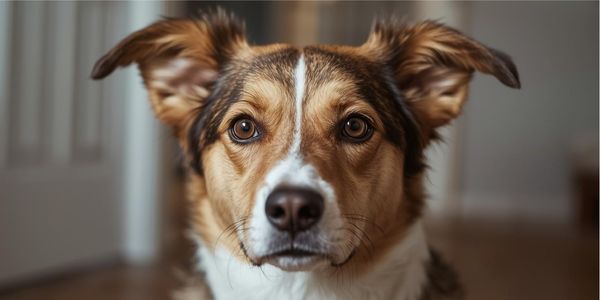
When a dog presses their ears flat against their head, something negative is happening. They're scared, anxious, threatened, submissive, or in pain. The flatter the ears, the more intense the feeling.[4]
Some people call extremely flattened ears "seal ears" because they practically disappear when you look at the dog from the front.
Pinned ears might mean:
- Your dog is frightened by something
- They feel threatened or intimidated
- They're experiencing anxiety
- They're showing submission to another dog or person
- They could be in physical pain
Don't ignore this signal. When you see pinned ears, something is wrong from your dog's perspective. Figure out what and fix it—or remove your dog from the situation.
Pinned ears signal fear, anxiety, or submission. This is a critical signal, your dog needs support or removal from the situation.
RELATED: 10 Dog Car Anxiety Training Tips & Techniques That Actually Work
Slightly Back Ears = Friendly With a Side of "You're the Boss"
There's a crucial difference between slightly back ears and completely flattened ears. Learn this distinction or you'll misread your dog constantly.
Slightly back ears (but not pressed tight to the head) = friendly submission. Your dog is saying: "I like you, and I respect your position here."[5]
You'll see this during:
- Greeting someone they trust
- Friendly interactions with other dogs
- Moments of gentle excitement
- When they're being respectfully deferential
Many dogs do this when you come home after being gone. It's their way of showing they're happy to see you while acknowledging that you're the pack leader.
Slightly back ears (not flattened) indicate friendly greeting and gentle deference. A positive signal combined with context.
One Ear Up, One Ear Down = "I'm Not Sure About This"
When your dog holds one ear forward and one back, they're in a state of confused interest.
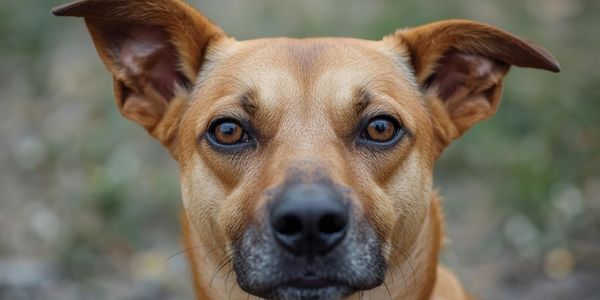
They want to know what's happening, but they haven't decided yet how to feel about it. It's genuine uncertainty, your dog is processing conflicting signals.[3]
This happens when:
- Your dog encounters something completely new
- They hear an unfamiliar sound from an unclear source
- They're receiving mixed signals from the environment
- They're mildly confused about what to do
Note: Some dogs naturally hold their ears asymmetrically due to genetics or muscle development. Know your own dog's baseline. Is this their normal, or a change?
Asymmetrical ears indicate curiosity mixed with uncertainty. Your dog is interested but hasn't decided how to feel yet.
Super-Forward/Tightly Perked Ears = High Arousal (Good or Bad)
When your dog's ears are not just forward but locked forward, almost touching at the base, they're in a state of intense arousal.
This could be extreme excitement (puppy seeing another dog) or potential aggression (dog locked onto prey or a threat). Context determines the difference.
You have to look at the whole dog:
- Relaxed body + wagging tail + happy face = extreme excitement, probably fun
- Stiff body + fixed stare + tense mouth = high alert, possibly aggressive, stay back
This ear position means your dog's attention is completely locked onto something and their emotional intensity is maxed out. Intervene based on context.
Reading Ears Across Different Breeds (Because Genetics Are Annoying)
The emotional meaning behind ear positions stays consistent across all breeds. But what that looks like visually? Completely different.
Prick-Eared Dogs (The Easy Read)
German Shepherds, Huskies, Chihuahuas, and similar breeds with upright ears are basically living mood rings.
Their ears can move in multiple directions, and subtle emotional shifts are very visible. You can see:
- Fine adjustments as they track sounds
- Clear differences between alert, relaxed, and fearful positions
- Subtle tilting that shows they're processing or confused
These dogs' ears are like emotional semaphores. Clear signals. Hard to misread.
Floppy-Eared Dogs (The Challenge)
Basset Hounds, Beagles, Cocker Spaniels, their heavy ear flaps limit how much movement you can see from the tips.
But the base of the ear still moves. You just have to look more carefully.
With floppy-eared dogs, focus on:
- The position of the ear base, not the tips
- Whether the ears are held slightly away from the head or pressed closer
- Changes from their normal resting position
- Subtle lifting or lowering of the entire ear structure
The signals are still there. You just need to develop a better eye for subtlety.
Cropped Ears and the Communication Problem
Dogs with cropped ears (surgically shortened flaps) have reduced ability to signal through ear positions.
It's a problem because removing part of the ear removes communication tools. Your dog can't express themselves as clearly.
If your dog has cropped ears or unusual ear structure:
- Rely more heavily on other body language cues (tail, body posture, eyes)
- Watch the ear base for what little movement remains
- Look for subtle shifts rather than dramatic movements
- Pay closer attention to context and whole-body signals
The Complete Picture: Ears + Body Language
This is where most people screw up: they read ears in isolation.
A single body part doesn't tell the whole story. Your dog communicates with their entire body. Ears + tail + posture + facial expression + context = the real message.[2]
Common combinations that matter:
- Ears forward + tail loose wag = alert and happy
- Ears back + tail tucked = fearful or submissive
- Ears forward + stiff, high tail = aroused alertness, possibly aggression
- Forward ears + soft eyes + relaxed mouth = friendly interest
- Pinned ears + whale eye + tense mouth = fear or stress
- Forward ears + play bow = playful attention
- Pinned ears + crouched body = fear or submission
Start combining these signals. You'll develop a much more accurate picture of what your dog is actually experiencing.

Real-World Scenarios: What Those Ears Mean Right Now
Introducing Your Dog to a Stranger
New person showing up? Watch your dog's ears:
- Forward, alert ears: curiosity and interest
- Slightly back ears: friendly greeting with respect
- Flattened ears: fear or discomfort—don't force it
- Rapidly changing positions: uncertainty about how to respond
Use this to decide whether to push the introduction or give them space.
During Play or Exercise
Play reveals a lot about your dog's mental state:
- Forward, alert ears during fetch: focused excitement
- Relaxed ears during gentle play: comfortable enjoyment
- Brief ear flattening during rough play: normal during high-intensity moments
- Ears swiveling: tracking multiple playmates or toys
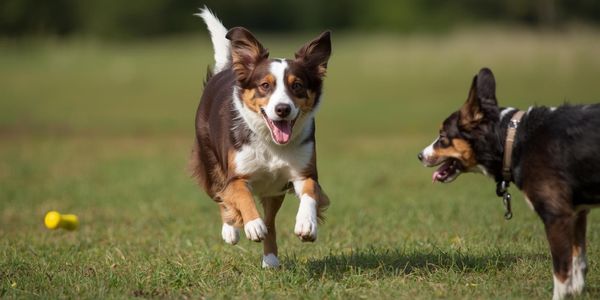
Healthy play = mostly alert or relaxed ears. If ears are pinned for extended periods, the play is too intense or your dog is uncomfortable.
Stressful Situations (Vet, Loud Noises, Strange Places)
Stress triggers specific ear positions:
- Tightly pinned ears: significant fear or stress
- Lower than normal (but not flat): mild anxiety
- Rapidly shifting positions: difficulty coping
- One back, one forward: conflicted feelings
These signals let you intervene before your dog loses it completely. Recognizing early stress signs is how you prevent situations from escalating.
How to Actually Use This Information
Understanding what your dog's ears say is worthless if you don't respond appropriately.
When Your Dog Shows Fear (Pinned Ears)
Don't ignore it. Don't force them into the situation. Actually help:
- Don't push interactions that are clearly causing stress
- Create distance from whatever triggered the fear
- Use a calm, quiet voice, don't get excited
- Provide a safe space where they can retreat
- Work on counter-conditioning for recurring fears[6]
Never punish your dog for showing fear through their ears or other body language. All you teach them is to hide warning signs, not to feel differently. That makes things worse down the line.
When Your Dog Shows Positive Emotions (Forward/Relaxed Ears)
Build on these moments:
- Acknowledge and praise these states
- Notice which environments bring happy ears
- Create more opportunities for those good experiences
- Use these calm moments for training and bonding
By responding to positive signals, you're building trust and strengthening your relationship. Your dog learns that being calm and happy gets rewards.
When Unusual Ear Positions Mean Your Dog Is Actually Sick
Sometimes weird ear positions aren't emotional, they're medical.[6]
Red Flags That Warrant a Vet Visit
Watch for these ear position warning signs:
- One ear consistently held different than the other
- Head tilting along with odd ear positioning
- Reluctance to let you touch the ears
- A normally upright ear suddenly drooping
- Excessive scratching with abnormal ear positions
These could indicate ear infections, injuries, or pain. Get it checked.
When to Call the Vet
- Sudden changes from your dog's normal ear carriage
- Signs of pain when ears are touched
- Unusual positions paired with lethargy or appetite loss
- One ear in an abnormal position that doesn't change
- Discharge, weird smell, or inflammation around the ears
Early intervention stops problems from becoming expensive disasters. Don't wait on ear stuff, infections escalate fast.
Building a Real Connection Through Ear Language
Learning to read your dog's ears isn't a party trick, it's a genuine pathway to understanding them better.
To get fluent in your dog's ear language:
- Observe your dog in different situations and note how they respond
- Build a mental baseline of what their specific ears look like in different states
- Connect ear positions to context and other body language
- Respond appropriately and watch how your dog reacts
With practice, this becomes automatic. You'll understand your dog's needs faster, avoid stressful situations before they blow up, and build a relationship based on actual communication instead of guessing.
The Bottom Line
Your dog's ears are constantly broadcasting their emotional state, alert, relaxed, scared, excited, confused, aggressive.
Learn to read them. Combine that with tail position, facial expression, and body posture. Respond appropriately to what you observe.
That's how you actually understand your dog. Not by anthropomorphizing. Not by training them into silence. But by learning their language and respecting what they're telling you.
Each dog is an individual with their own communication style shaped by breed, ear shape, and personality. Spend time learning your specific dog's ear language.
Do that, and you'll have a relationship based on real understanding instead of assumptions. That's worth more than a thousand $200/hour dog trainers.
Related Articles:
- Stop your Dog Destructive Behavior with these 10 Techniques
- How to train your dog to ignore squirrels
Sources
- [1] Toronto Humane Society. (2024). Canine Communication. https://www.torontohumanesociety.com/wp-content/uploads/2024/02/Canine-Communication.pdf
- [2] Dogs Trust. (2024). Canine Communication Resources. https://www.dogstrust.org.uk/how-we-help/professionals/vet-clinics/resources/canine-communication
- [3] Rover. (2024). Dog Ear Position Chart. https://www.rover.com/blog/dog-ear-position-chart/
- [4] Bark and Whiskers. (2023). Dog Ear Signals: What They Mean. https://www.barkandwhiskers.com/2023-08-02-dog-ear-signals/
- [5] National Center for Biotechnology Information. (2021). Domestic Dog Cognition and Behavior. https://pmc.ncbi.nlm.nih.gov/articles/PMC6116041/
- [6] American Veterinary Medical Association. (2024). Understanding Canine Behavior and Training. Retrieved from AVMA resources.
🐾 Frequently Asked Questions
Q Why can't I just train my dog to control their ear positions?
Because they're involuntary. Your dog can train themselves to sit even if they're terrified. They can't control their pupils or their blushing (metaphorically). Ear positions are automatic reactions to emotion. Instead of trying to change the signals, figure out why your dog is feeling whatever emotion is causing those ears.
Q My dog has floppy ears. Are they still communicating through ear positions?
Yes, but you have to pay better attention. The ear tips don't move much, but the base of the ear shifts in meaningful ways. Watch whether the ears are held slightly away from the head, pressed close, or shifted from normal. With practice, you'll catch these subtle movements. It's harder than reading upright ears, but the information is still there.
Q What does it mean when my dog's ears keep changing position rapidly?
Your dog is confused, stressed, or processing conflicting information. They haven't settled on an emotional response yet. They're basically thinking, "What the hell is happening right now?" This happens in new environments, during unfamiliar situations, or when your dog is genuinely uncertain about what to do. Multiple rapid changes = anxiety or confusion.
Q How do I tell if my dog's weird ear position is emotional or a medical problem?
Emotional ear positions change based on context. When the stressor goes away, the ears return to normal. Medical issues cause persistent changes regardless of the situation. If your dog has only one ear in an odd position, shows pain when touched, tilts their head, scratches constantly, or has discharge—that's medical. Get the vet involved. When in doubt, ask a vet. Better safe than sorry with ears.
Q My dog's ears are almost always pinned back. Should I be worried?
Depends. If that's their baseline in a comfortable home environment, they might just have a naturally anxious temperament. But if it's a change, or if it's paired with other signs of fear or stress, there's a problem. Consider: Is your home environment actually stressful? Is something triggering constant anxiety? Or is your dog just genetically nervous? Talk to your vet. Some dogs are just naturally more fearful, and that requires patience and counter-conditioning, not more stress.

📖 Related Articles
Training deaf dogs with hand signals: A Real-World Guide

Why Do Dogs Chase Their Tails? The Thin Line Between Play and Pathology
💬 Comments (0)
No comments yet. Be the first to share your thoughts! 👇
✍️ Leave a Reply