9 Major Signs of Anxiety in Adopted Shelter Dogs (With Real Fixes)
Adopting a dog from a shelter is one of those things that sounds beautiful in theory.
And it is, until you realize your new best friend comes with more baggage than you packed for your last vacation.
You save a life, get a furry best friend, and you post adorable photos online. Everyone claps.
But what they don't tell you is this:
Your new dog might come with a suitcase full of emotional baggage.
Not literal, although some shelters are fancy enough to send them home with toys and blankets.
We're talking fear, trauma, and anxiety that can show up in really weird ways.
And unless you've lived through it before, it's easy to misinterpret what's going on.
So instead of chalking it up to "quirks," let's break down 9 common signs your adopted shelter dog might be anxious—and what to do about it.
And yeah, we're going deep. Real talk, real fixes.
⚡ Quick Start: If Your Dog Is Anxious RIGHT NOW
Don't panic. Here's what to do immediately:
- Create a quiet safe space: Turn off TV/music, close curtains, let them hide if they want to
- Skip physical affection: Don't force hugs or pets. Let them come to you when ready.
- Offer high-value treats: Drop small pieces of chicken or cheese near them (not from your hand)
- Rule out medical issues: If symptoms persist 48+ hours or worsen, call your vet immediately
Then, read this guide to understand what's happening and create a long-term plan.
⚠️ Important Medical Disclaimer
Before assuming your dog has anxiety, rule out medical causes first.
Many anxiety symptoms can also indicate health problems:
- Panting: Heart disease, respiratory issues, pain, fever
- Appetite loss: Dental pain, GI issues, metabolic disease
- Trembling: Pain, neurological issues, low blood sugar
- Elimination issues: UTI, GI disease, cognitive dysfunction
Schedule a vet exam within the first week of adoption to establish a health baseline. If behavioral symptoms appear suddenly or worsen rapidly, seek veterinary care immediately.
1. Excessive Panting (a.k.a. The Sweatpants of Anxiety)
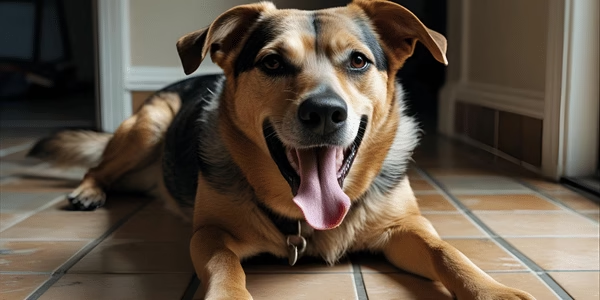
Yes, dogs pant when it's hot.
They also pant when they're excited.
But if your new pup is panting inside the air-conditioned house, lying still, and clearly not excited?
That's a different story.
Excessive panting can be a classic anxiety tell. It's like their internal thermostat is stuck in overdrive.
You might also see:
- Wide eyes
- Tongue hanging unusually far out
- Tight facial muscles
Why it matters: Dogs don't sweat like we do. Panting is their way of dumping stress and regulating cortisol, the stress hormone.
If they're panting 24/7? Something is stressing them out hard.
What to do: Provide quiet, low-stimulation environments. Cut back on guests, TV noise, or chaotic walks.
Let them decompress in peace. Think spa day…every day…for a while.
2. Pacing Like They're on Lap 6 of a Track Meet
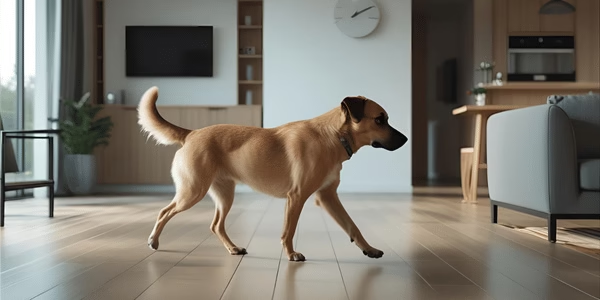
A stressed-out dog doesn't just lie down and chill.
They pace.
They walk from the kitchen to the hallway, back to the living room, then back to the kitchen like they're checking if the fridge has magically restocked itself.
It's not boredom. It's restlessness caused by anxiety.
It could be:
- A new environment
- Loud street noises outside
- Feeling unsafe in their new home
Red flag: If the pacing gets worse after you leave the room or before you leave the house, buckle up. That's a sign of separation anxiety.
RELATED: 10 Natural Home Remedies for Dog Separation Anxiety That Actually Work
3. Destructive Chewing (No, They're Not Just "Teething")
You go to work. You come back.
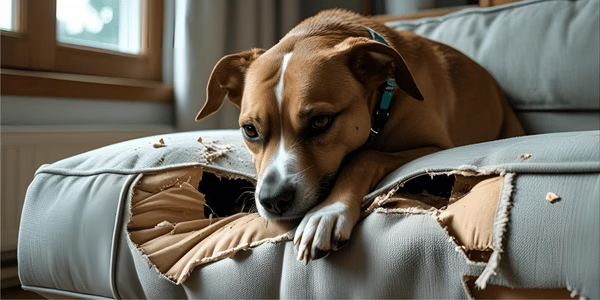
And it looks like a bomb went off in your living room.
Pillows? Destroyed.
Door frame? Scratched.
Shoes? Ripped apart like they owed your dog money.
Sound familiar? That's textbook separation anxiety behavior.
Dogs left alone with anxiety will:
- Chew to self-soothe
- Try to escape (which causes damage)
- Focus destruction near exit points (doors, windows)
Let's be real: this isn't a training issue. Dog chewing problems are an emotional issue.
What helps:
- Gradual desensitization to being alone (see detailed protocol below)
- Interactive toys (like KONGs filled with frozen peanut butter, xylitol-free only, as xylitol is toxic to dogs)
- Dog cameras with 2-way audio so they can hear your voice
Or better yet…work from home. Like you weren't already looking for an excuse.
4. Velcro Dog Syndrome (a.k.a. The Shadow That Won't Quit)
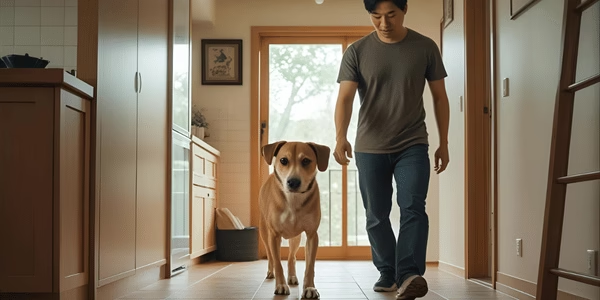
You move. They follow.
You stand. They stand.
You go to the bathroom…and they stare at you like you just walked into the Bermuda Triangle.
This "clingy" dog behavior might seem adorable at first.
But it's a coping mechanism.
Dogs with abandonment trauma often become hyper-attached to their new person. They finally feel safe…and they're terrified to lose it.
Red flag: If they cry when you shut a door between you, or start panicking when you grab your keys, that's not devotion, it's anxiety.
5. Vocal Anxiety: Barking, Whining, Howling... All of It

Let's talk about noise.
More specifically, your dog's version of a panic attack.
When a dog feels stressed, they try to communicate. And if you're not around to listen, they might broadcast it to the entire block.
Signs include:
- Barking as soon as you leave
- Whining for hours
- Howling like a werewolf at 3 p.m.
Fun fact: Dogs can suffer panic attacks just like humans.
Except instead of hyperventilating, they howl and dig a hole through your drywall.
What helps:
- Gradual departure training (see step-by-step protocol below)
- "Goodbye ritual" (so they know you're coming back, not abandoning them forever)
- White noise machines to block external stressors
Also, maybe leave your dog a podcast or audiobook. Dogs love voices.
(Just don't leave them with true crime. That's how you end up with a nervous wreck and no couch.)
6. Loss of Appetite (The Ultimate Warning Sign)
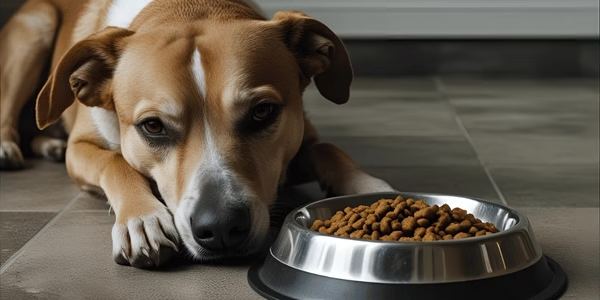
Food is life.
So when a dog turns it down? That's a sign of serious stress.
Anxious dogs often stop eating, even if they loved that same food at the shelter.
Why?
- Fight-or-flight mode overrides hunger
- New environments disrupt appetite
- Fear triggers nausea in sensitive dogs
What you can try:
- Warm up their food to enhance smell
- Add bone broth or soft toppers
- Hand-feed for bonding
If they're still not eating after 48 hours? Call the vet. Something deeper might be going on, either medical or emotional.
7. Trembling or Shaking (Even When It's 75°F)
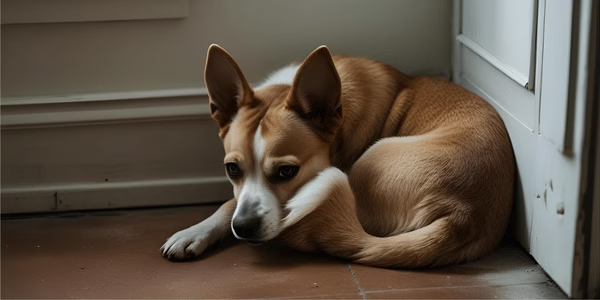
This one's heartbreaking.
You sit next to your new dog. He's trembling so hard you can hear the collar rattle.
He's not cold. He's terrified.
Shaking is a full-body fear response, like a human getting goosebumps during a panic attack.
What causes it?
- Loud sounds (triggers from shelter life)
- Human movements that remind them of past trauma
- Being overwhelmed by the new environment
Pro tip: Avoid rushing physical affection. Many traumatized dogs don't like being touched right away.
Let them come to you. And maybe drop a few treats nearby while you "ignore" them.
Dogs love a mystery.
8. Growling, Snapping, or Biting (Fear-Based Aggression)

Here's the one most adopters don't want to talk about.
You adopt a sweet-looking dog.
They're shy. Nervous. But seem calm.
Then one day, they growl at your roommate.
Or snap when you try to touch their paw.
Cue the panic.
But here's the deal: aggression in shelter dogs is often rooted in anxiety, not malice.
It's called fear-based reactivity.
And it's incredibly common in dogs who've been abused or under-socialized.
What NOT to do: Punish them. Yell. Or try to "dominate" them. (That outdated alpha nonsense? Total garbage.)
What to do instead:
- Get a fear-free certified trainer
- Learn to read calming signals (lip licking, whale eyes, yawning)
- Avoid trigger stacking (ex: don't bring guests over, bathe them, and leave them alone, all in one day)
Patience isn't optional. It's survival.
RELATED: How to Socialize an Adult Rescue Dog: A Complete Guide (2026)
9. Potty Accidents (a.k.a. Pee Happens)
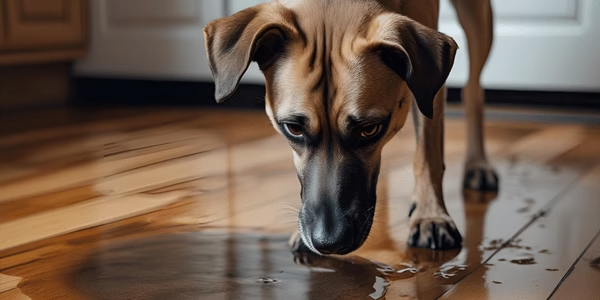
You did all the training, take them out regularly, and even bought that overpriced grass pad on Instagram.
But your dog still pees in the hallway. Or poops in your closet.
Fun.
Truth bomb: Anxiety causes elimination issues.
It's called submissive urination or stress-induced regression.
What's happening:
- Your dog is too scared to ask to go outside
- Loud noises spooked them mid-bladder control
- They're overwhelmed and reverting to "puppy" mode
Whatever you do, don't punish them. That will only increase their anxiety and make accidents more likely.
Instead, tighten the routine. Use belly bands or potty pads temporarily. Reward outdoor potties like they just won the lottery.
Bonus Section: 5 Less Obvious Signs of Anxiety
Because 9 signs weren't enough and your dog is weird in even more ways.
Here are 5 more to look out for:
- Licking the air or their paws constantly (self-soothing)
- Yawning excessively (a calming signal)
- Dilated pupils or wide "whale eyes"
- Hypervigilance (they watch everything like they're on guard duty)
- Hiding in closets, bathrooms, or under furniture
Each of these is a subtle way your dog says: "I'm not okay right now."
Symptom Identification Checklist: Is Your Shelter Dog Anxious?
Before you chalk up your new dog's behavior to "quirky," check for these clear signs of anxiety:
- Excessive panting inside, even when it's cool
- Pacing like they're training for a marathon
- Destructive chewing focused near doors and windows
- Clingy "Velcro dog" behavior following you everywhere
- Barking, whining, or howling when left alone
- Loss of appetite for more than 24-48 hours
- Trembling or shaking without cold weather triggers
- Growling, snapping, or fear-based aggression
- Inappropriate potty accidents after previous training
Spotting these early means you can help your dog relax faster, and save your home and sanity.
Quick Reference Table
| Symptom | Anxiety Trigger? | What To Do |
|---|---|---|
| Panting indoors | Yes | Quiet space, reduce stimulation |
| Destructive chewing | Yes | Enrichment, crate training, puzzle toys |
| Clinginess (Velcro dog) | Yes | Gradual independence building |
| Loss of appetite | Yes | Warm food, hand-feeding, vet check if 48+ hrs |
| Trembling | Yes | Safe space, avoid overstimulation |
| Barking/whining alone | Yes | Gradual alone-time training, sound machines |
| Sudden aggression | Yes | Hire a fear-free trainer, avoid punishments |
| Potty accidents | Yes | Reinforce potty routine, never punish |
Adoption Timeline Expectations: What to Realistically Expect
Adopting a shelter dog comes with emotional baggage, and that takes time to unpack. Here's what to expect:
- First 3 days: Overwhelmed and possibly withdrawn. Your dog is scared and learning new rules.
- 1 week: Brief moments of curiosity mixed with fear or confusion.
- 1 month: Adjusting to routines but anxiety behaviors still present; expect setbacks.
- 3 months: Noticeable improvements with consistent training and structure.
- 6 months: Many dogs feel significantly safer and calmer in their new home.
- 1 year: Your furry friend's "new normal" settled, with trust and security.
Every dog moves at their own pace. Patience and consistency are your best friends here.
Step-by-Step: Desensitization Protocol for Separation Anxiety
If your dog freaks out when you leave, you need a gradual desensitization plan. This isn't a weekend fix, it takes weeks or months.
Here's how to do it:
Phase 1: Pre-Departure Cues (Week 1-2)
- Desensitize trigger items: Pick up your keys, put them down. Repeat 10-20 times daily until your dog doesn't react.
- Put on shoes/jacket randomly: Do this throughout the day without leaving. Your dog learns these actions don't always mean abandonment.
- Walk to the door and back: Don't leave. Just walk to the door, pause, come back. Repeat until boring.
Phase 2: Ultra-Short Absences (Week 2-4)
- Leave for 10 seconds: Step outside, close door, count to 10, come back in.
- Ignore your dog: When you return, don't make a big deal. Wait until they're calm, then casually greet them.
- Repeat 5-10 times per session: Do this 2-3 times daily.
- Gradually increase time: 10 seconds → 30 seconds → 1 minute → 2 minutes. Only increase when your dog stays calm.
Phase 3: Building Duration (Week 4-8)
- Progress slowly: 2 min → 5 min → 10 min → 15 min → 30 min → 1 hour
- Mix up intervals: Don't always increase. Sometimes do shorter times (15 min, then 10 min, then 20 min) so it's unpredictable.
- Leave enrichment: Frozen KONG, puzzle toys, chew toys (only when you leave, so they become positive associations).
- Use a camera: Monitor for signs of distress (panting, pacing, whining). If they panic, you've moved too fast.
Phase 4: Real-World Departures (Week 8+)
- Start with short errands: Mailbox run, 5-minute drive to gas station, etc.
- Create a goodbye ritual: Same phrase every time ("Be right back"), give special treat, leave calmly.
- Return calmly: Don't make homecoming a huge event. Wait 5-10 minutes before greeting your dog.
Key Rules:
- Never punish anxiety behaviors
- If your dog panics, you've moved too fast, go back a step
- Practice daily for best results
- Be patient. Some dogs take 3-6 months to feel comfortable alone.
Managing Anxiety in Multi-Dog Households
Got other dogs at home? Here's what changes:
Introductions Matter
Don't just throw your new anxious dog into the pack and hope for the best.
- Neutral territory first: Introduce dogs outside your home (park, sidewalk) on leash.
- Parallel walks: Walk dogs side-by-side (10+ feet apart) before allowing direct interaction.
- Supervise heavily: For the first 2-4 weeks, never leave the new dog alone with other pets unsupervised.
Resource Guarding Risks
Anxious dogs may guard food, toys, or even YOU from other dogs.
- Feed separately: Different rooms or use baby gates to create distance during meals.
- Remove high-value items: No toys or chews when dogs are together initially.
- Give individual attention: Your anxious dog needs one-on-one time without other pets around.
Your Other Dogs Can Help
Confident, well-adjusted dogs can actually teach anxious dogs that home is safe.
Your existing dogs show them:
- Where to go potty
- That certain sounds (doorbell, mailman) aren't threats
- How to play and relax
But don't force it. Let the anxious dog observe from a distance and approach when ready.
When Multi-Dog Doesn't Work
Sometimes an anxious dog does better as an only pet, at least temporarily.
Signs your anxious dog is overwhelmed by other dogs:
- Hiding constantly
- Refusing to eat when other dogs are present
- Aggression toward other pets
- No improvement after 4-6 weeks
If this happens, consult a certified behaviorist. Don't feel guilty, some dogs just need to be the only child.
The Real Cost of Helping an Anxious Shelter Dog
Let's talk money. Because nobody else will.
Helping an anxious dog isn't just emotionally draining, it can drain your wallet too.
Here's what you should budget for:
Immediate Costs (First Month)
- Vet exam + bloodwork: $150-$300 (rule out medical issues)
- High-quality food: $50-$100/month (anxious dogs may need special diets)
- Enrichment toys (KONGs, puzzles): $30-$60
- Crate or safe space setup: $50-$200
- Potty pads/belly bands (if needed): $20-$40
Total first month: $300-$700
Ongoing Training Costs
- Private trainer (fear-free certified): $100-$200/session (plan for 4-8 sessions minimum)
- Group classes: $150-$300 for 6-week course
- Online training programs: $50-$200
Total training: $400-$1,600
Medical Intervention (If Needed)
- Anxiety medication: $20-$60/month (fluoxetine, trazodone)
- Behavioral vet consultation: $200-$500 (for severe cases)
- Calming supplements (not always needed): $20-$40/month
Total medical (annual): $240-$1,220
Equipment & Lifestyle
- Dog camera (2-way audio): $50-$200 one-time
- White noise machine: $20-$50 one-time
- Replacement items (shoes, furniture, etc.): $100-$500+ (hope for the lower end!)
- Doggy daycare (if you work long hours): $200-$600/month
Budget-Friendly Alternatives
Don't have $2,000 lying around? Here's how to cut costs:
- DIY training: Use free YouTube resources (Kikopup, Simpawtico) instead of private trainers
- Ask about payment plans: Many vets and trainers offer financing for behavior cases
- Shelter support: Some shelters provide free or discounted post-adoption training
- Medication generics: Ask your vet for generic versions (fluoxetine vs. Reconcile brand saves 50%+)
- Make your own enrichment: Frozen broth ice cubes, cardboard box puzzles, snuffle mats from old towels
Bottom line: Budget $500-$1,000 for the first 3 months, then $100-$300/month ongoing.
Yes, it's a lot. But you're literally saving a life and rebuilding a broken soul.
Worth it? Hell yes.
Long-Term Fixes: How to Help Your Dog Heal
Okay, now what?
You've identified the signs.
Now here's what actually helps them recover.
1. Decompression Period
The 3-3-3 rule is real:
- 3 days to adjust to your home
- 3 weeks to settle in
- 3 months to feel like it's their home
Don't rush. Let them slowly acclimate.
2. Positive Reinforcement Training
This means:
- Clickers
- Treats
- Celebrating tiny wins
Never, ever use punishment-based training with a traumatized dog.
That's like yelling at someone for having PTSD.
RELATED: 12 Powerful Positive Reinforcement Techniques for Dogs That Work
3. Routine, Routine, Routine
Dogs with anxiety crave structure.
Set meal times. Predictable walks. Clear expectations.
Chaos equals stress.
4. Give Them a Safe Space
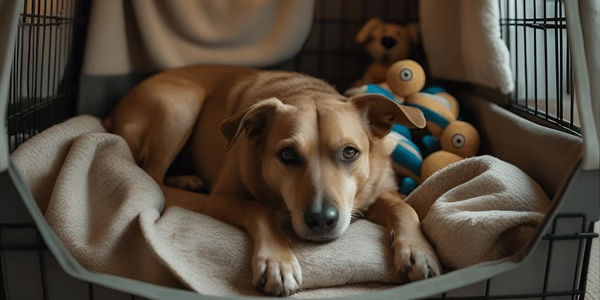
Crate training (when done correctly) is magic.
It gives your dog a cozy "den" where they can relax without feeling overwhelmed.
Just don't shove them in there for 8 hours and call it a day.
Make it positive. Treats, toys, blankets, the whole spa package.
Important note: Some shelter dogs associate crates with confinement trauma. If your dog panics in a crate (frantically trying to escape, injuring themselves, severe distress), don't force it. Use a safe room with a baby gate instead.
5. Vet Consult + Medication (If Needed)
If your dog's anxiety is interfering with daily life, talk to your vet.
There are legit, safe meds (like fluoxetine or trazodone) that can reduce anxiety and make training more effective.
Important timeline info: SSRIs like fluoxetine take 4-6 weeks to reach full effectiveness. Don't expect overnight results. Trazodone works faster (1-2 hours) but is usually for situational anxiety (vet visits, thunderstorms).
Medication works best when combined with behavior modification training, not as a replacement for it.
No shame in the Prozac game.
Final Thoughts: You Didn't Rescue a Dog. You Became Their Safe Place.
Here's the truth:
That shelter dog you adopted?
They might've been tossed aside, ignored, yelled at, or worse.
They didn't just need a roof, but someone to teach them that life doesn't always hurt.
That people can be kind.
That safety is real.
You're not just their owner. You're their first experience of peace.
So yeah…there will be setbacks.
You'll lose a shoe. Maybe a couch.
You'll cry. You'll wonder if you're doing it right.
But one day, your scared little rescue dog will look at you…
…and you'll know you earned their trust.
And that?
That's what love actually looks like.
Resources & References
Certified Professional Dog Trainers (CCPDT)
Natural Home Remedies for Dog Separation Anxiety
Pet Behavior Correction Guide
How to Socialize an Adult Rescue Dog
Positive Reinforcement Techniques for Dogs
🐾 Frequently Asked Questions
Q Can shelter dogs really overcome severe anxiety?
Yes, but it takes time and you can't rush it. Most shelter dogs improve dramatically with consistent, compassionate training and support. Some dogs bounce back in weeks; others need months or even a year. The key is patience and not expecting them to be "normal" overnight. They've been through hell. Give them space to heal.
Q How long does it usually take to see results from anxiety training?
Realistically? Expect weeks to months. Usually 3–6 months for solid behavior change, sometimes longer for severely traumatized dogs. Anyone who promises you a "quick fix" is lying. Be patient, stay consistent, and celebrate small wins. Progress isn't linear, and that's okay.
Q Is medication necessary for all anxious shelter dogs?
Not always. Some improve through training alone; others may benefit from vet-prescribed meds like fluoxetine or trazodone. Medication isn't a cop-out, it's a tool that helps anxious dogs relax enough to actually learn. If your dog's anxiety is severe, talk to your vet. There's zero shame in getting help.
Q My dog regresses after initial progress, is this normal?
Yes. Setbacks happen to everyone. Dogs don't heal in a straight line. They might have a great week, then freak out over something random and revert back. Don't panic. Adjust your pace, go back to easier training steps, and celebrate small wins rather than perfection. Regression is part of recovery.
Q Should I avoid visitors while my dog is anxious?
In the beginning, yes, minimize stress during early adjustment. But eventually, you'll need gradual positive exposure to visitors to help normalize things over time. Don't throw a house party in week one, but also don't isolate your dog forever. Slow, controlled introductions work best.

📖 Related Articles
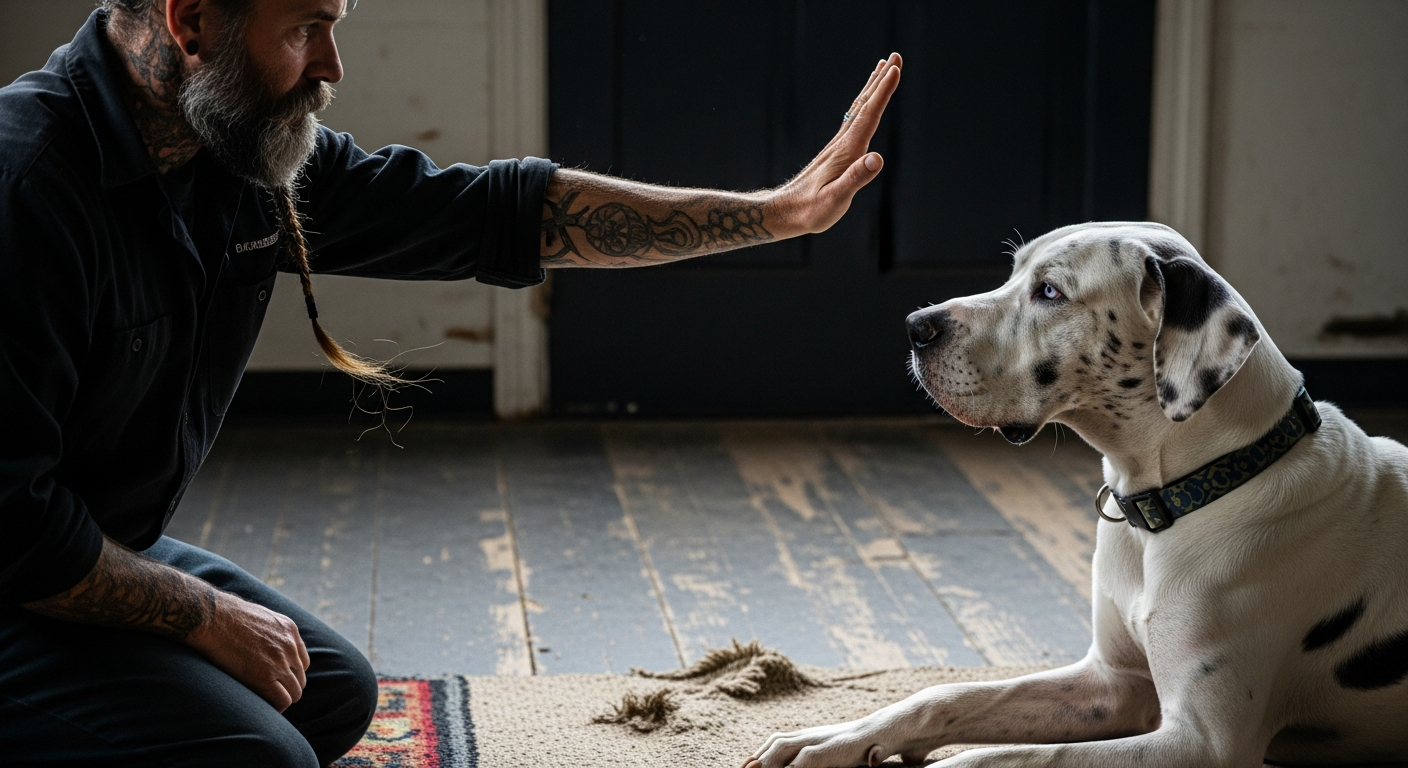
Training deaf dogs with hand signals: A Real-World Guide

Why Do Dogs Chase Their Tails? The Thin Line Between Play and Pathology

💬 Comments (0)
No comments yet. Be the first to share your thoughts! 👇
✍️ Leave a Reply