How to Train Your Dog to Come When Called (Even If They Ignore You Now)
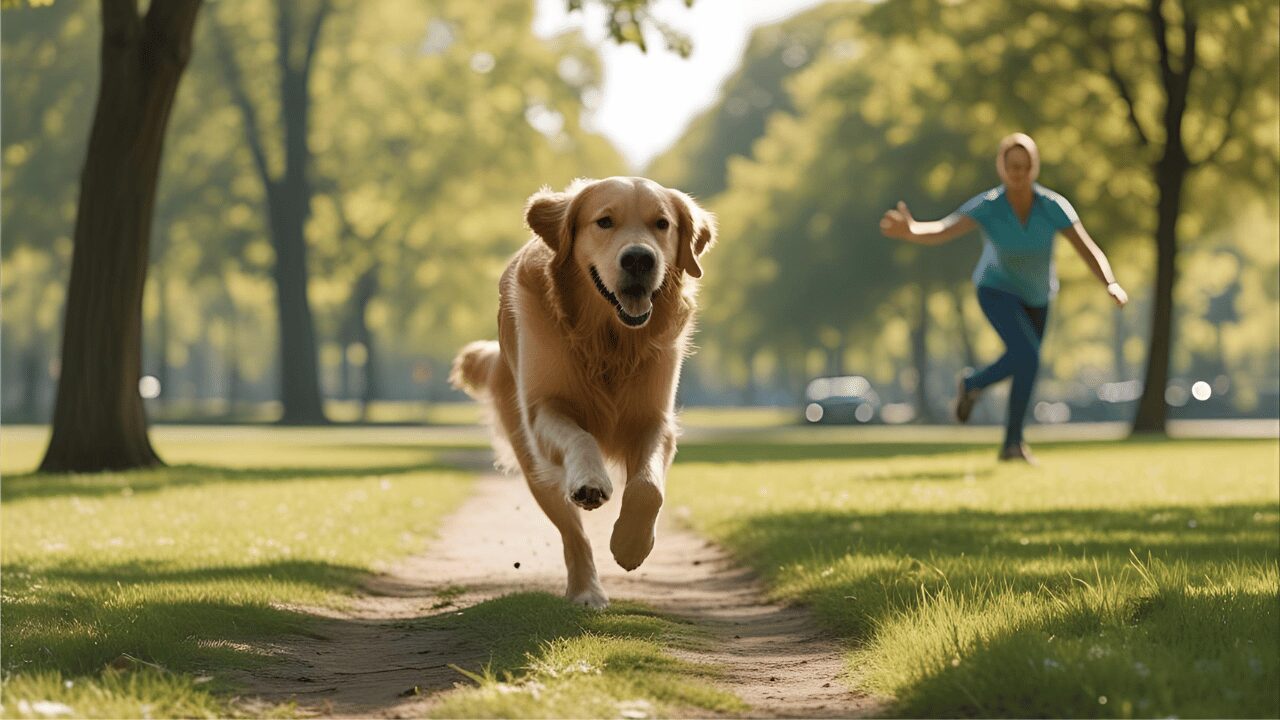
If you're reading this, you're probably standing in a dog park right now, screaming "COME!" at your dog while they pretend you don't exist.
Or maybe you're the person frantically chasing your dog around the neighborhood because they slipped out the front door and decided freedom tastes better than your training treats.
Sound familiar?
Here's the thing most dog owners don't realize: teaching your dog to come when called isn't actually that hard.
The problem? You've accidentally taught your dog that "come" means "the fun is over."
But don't worry. We're about to fix that.
This guide walks you through the exact system I've used to build bulletproof recall, the kind where your dog drops everything and races back to you like you just opened a bag of cheese
Why Your Dog Ignores You (It's Not Because They're Stupid)
Before we dive into the fix, let's talk about why your dog gives you the cold shoulder when you call.
Reason #1: You've Poisoned the Cue
Think about it. When do you usually call your dog?
- When it's time to leave the dog park (fun over).
- When you need to give them a bath (torture).
- When you're about to clip their nails (scary).
- When playtime is finished.
No wonder they've learned that "come" equals disappointment.
Your dog isn't being defiant. They're being logical.
Reason #2: It's Just Background Noise
A lot of dogs think "come" is just background noise, like when you say "good morning" to your coffee maker.
They've never been properly taught that it's a specific request that requires immediate action.
Reason #3: The Payoff Isn't Worth It
If coming to you means a quick pat on the head while that squirrel over there promises endless entertainment, guess who wins?
Your dog isn't stubborn. They're just doing the math, and you're losing.
Pro tip: If your dog has been ignoring "come" for months, it might be time to start fresh with a brand-new recall word. Your current cue might be totally burned.
The Foundation: What You Need Before You Start
Pick Your Recall Word (And Stick With It)
Choose one word. Could be "come," "here," or honestly, "pickles" if you want to.
The word doesn't matter. Consistency does.
And if you've been using "come" with zero success for the past six months? Pick a new word. Start fresh.
Your Secret Weapons
Here's what you'll actually need to make this work:
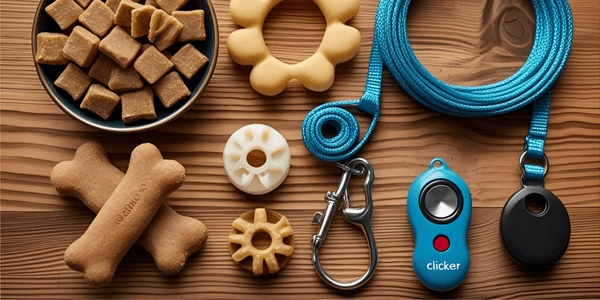
- High-value treats: We're talking tiny pieces of chicken, cheese, or hot dogs. If it doesn't make your dog drool, it's not good enough.
- A 20-30 foot long line: For outdoor training. Do NOT use a retractable leash; those things are garbage for training.
- Patience: This isn't a weekend project.
- A helper: Optional, but useful if you want to speed things up.
Related: Need help with other foundational skills? Check out our Complete Dog Obedience Training Guide.
The 4-Stage Training System (That Actually Works)
Stage 1: Build the Foundation (Week 1-2)
Start in your living room. Not the dog park. Not your backyard.
You need a boring, distraction-free zone.
The Basic Exercise:
- Show your dog a treat.
- Take a step backward.
- Say your recall word once.
- When they move toward you, praise like they just won the Super Bowl.
- Reward immediately when they reach you.
Critical mistake to avoid: Don't repeat the command. Say it once, then wait. If they don't respond, make yourself more interesting, clap, make weird noises, or run backward. But don't say "come, come, COME!" You're just teaching them they can ignore you the first three times.
Practice this 5-10 times per day in short bursts. Your dog should start perking up and moving toward you the moment they hear the word.

Stage 2: Add Distance and Rooms (Week 2-3)
Once your dog is reliably responding in the same room, it's time to level up.
The Hide-and-Seek Method:
- Go to another room.
- Call your dog using your recall word.
- When they find you, throw an absolute party. Treats, praise, maybe even a little victory dance.
- Gradually increase the distance within your home.
This teaches your dog that coming to you is worth the effort, even when they can't see you.
Stage 3: Introduce Controlled Distractions (Week 3-4)
Now we're getting to the real world. Move to your backyard or another enclosed space.
The Long Line Technique:
- Attach a 20-30 foot long line to your dog's harness (never the collar, you could hurt their neck).
- Let them explore and get mildly distracted.
- Call them using your recall word.
- If they come immediately, jackpot reward them with multiple treats.
- If they ignore you, gently guide them with the line (don't drag them).
The golden rule: Never call your dog if you can't enforce it. Every ignored command teaches them that listening is optional.
Stage 4: Real-World Proofing (Week 4+)
This is where most people rush it and ruin months of progress.
Don't be that person.
Gradually increase distractions:
- Other dogs playing nearby.
- Interesting smells.
- People walking by.
- Squirrels (the ultimate boss-level challenge).
Keep that long line attached until your dog has a 100% success rate in each environment.
And yes, that means you might be using a long line for months. That's normal.
Struggling with squirrel distractions? We have an entire guide on that: How to Train Your Dog to Ignore Squirrels.
Step-by-Step Training Schedule (The Realistic Timeline)
Here's what your training schedule should actually look like if you want real results:
| Week | Focus | Environment | Success Metric |
|---|---|---|---|
| 1-2 | Foundation work | Inside home, zero distractions | Dog comes 90%+ of the time indoors |
| 2-3 | Distance & hide-and-seek | Different rooms, mild distractions | Dog comes from other rooms reliably |
| 3-4 | Outdoor introduction | Fenced yard with long line | Dog responds with light outdoor distractions |
| 4-6 | Moderate distractions | Quiet parks, low-traffic areas | Dog comes when mildly distracted outdoors |
| 6-8 | Advanced distractions | Busy parks, other dogs present | Dog comes even with moderate distractions |
| 8-12 | Reliability testing | High-distraction environments | Dog comes reliably in real-world situations |
| 12+ | Maintenance & off-leash prep | Varied environments | Consistent recall, begin off-leash work |
Note: Every dog progresses at their own pace. Some dogs will move faster, others slower. Don't rush it.
Advanced Techniques (Once You've Mastered the Basics)
The "Catch Me" Game
While walking your dog on-leash, suddenly turn and run a few steps away while calling their name and recall word.
Most dogs can't resist chasing you, which makes recall feel like play rather than work.
The Two-Person Recall
Have a family member hold your dog while you walk away. Call them, and when they come racing over, reward heavily.
Take turns being the caller. This teaches your dog that coming to any family member is rewarding.
The Emergency Recall
Train a separate, super-charged recall for genuine emergencies.
Use a whistle or a unique word, and only use it for life-or-death situations.
When you use it, give your dog the best reward they've ever received, an entire chicken breast, their favorite toy, whatever it takes.
This is your "break glass in case of emergency" button.
Common Mistakes That Sabotage Your Progress
Let's talk about the stuff that's killing your recall training.
Mistake #1: Calling Your Dog to End Fun Activities
What you're doing: Calling your dog when it's time to leave the park, come inside, or stop playing.
What your dog learns: "Come" = fun's over.
The fix: Call them multiple times during play, reward them, then release them back to what they were doing. Prove that coming to you doesn't always end the party.
Mistake #2: Using Recall for Punishment
What you're doing: Calling your dog over to scold them, give them medicine, or do anything they dislike.
What your dog learns: Coming to you = bad things happen.
The fix: Never, ever call your dog for something unpleasant. Go get them instead.
Mistake #3: Repeating the Command
What you're doing: "Come. Come. COME. COME HERE RIGHT NOW!"
What your dog learns: They can ignore you the first five times.
The fix: One clear command, then wait. Make yourself more interesting if needed, but don't repeat the word.
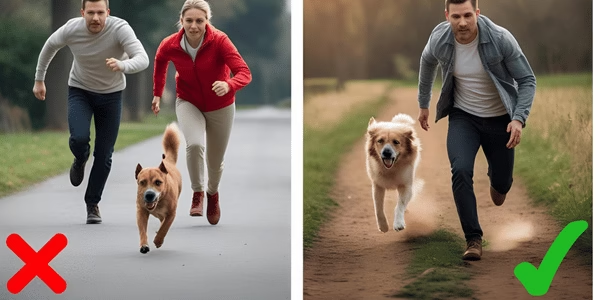
Mistake #4: Chasing Your Dog
What you're doing: Running toward your dog when they don't come.
What your dog learns: Tag! You're it!
The fix: Run away from them or make yourself more interesting where you are. Never chase.
Mistake #5: Inconsistent Training
What you're doing: Training hard for a week, then nothing for two weeks, then back to training.
What your dog learns: Confusion.
The fix: Short, daily sessions beat marathon weekend sessions every time.
Mistake #6: Moving Too Fast to High Distractions
What you're doing: Your dog can barely recall in your backyard, but you're testing them at the dog park.
What your dog learns: Ignoring you works fine in exciting places.
The fix: Slow down. Master each environment before moving to the next.
Emergency Recall Protocols: When Things Go Wrong
Let's talk about emergency situations, because if you own a dog, they will happen.
Scenario 1: Your Dog Slips Out the Door
What NOT to do: Chase them, scream, or panic.
What TO do:
- Stay calm (I know, easier said than done).
- Use your emergency recall if you've trained one.
- If they don't respond, try running away from them.
- Get in your car and open the door, many dogs will jump in for a car ride.
- Use high-value treats and your happiest voice.
Scenario 2: Your Dog is Running Toward Danger
What NOT to do: Scream in a panicked voice (they'll likely think it's a game).
What TO do:
- Use your emergency recall command.
- If trained, use a recall whistle (it carries farther than your voice).
- Drop to the ground, most dogs will come investigate.
- Run the opposite direction to trigger their chase instinct.
Scenario 3: Your Dog Won't Let You Grab Their Collar
The problem: They come close but stay just out of reach.
The solution: Practice the "collar grab game" at home.
- Touch their collar.
- Immediately reward.
- Gradually work up to holding the collar for longer.
- Eventually, grab the collar, reward, and release back to play.
Prevention is key: Train an emergency "drop" or "down" command as a backup. If your dog won't come, you can at least get them to stop moving.
Using Positive Reinforcement (The Only Way That Works)
Let's be clear about why positive reinforcement is the only training method worth your time.
Punishment-based methods (prong collars, leash corrections, yelling) might stop a behavior temporarily, but they don't fix the root cause.
In my experience, they usually just make things worse.
Why positive reinforcement works:
- It builds trust instead of fear.
- It replaces fear with positive associations.
- It helps dogs make better choices on their own.
- It increases confidence in both you and your dog.
The concept is simple: reward what you want to see more of.
Your dog comes when called? Party time. Treats, praise, play, whatever they love.
Your dog ignores you? No punishment. Just go back a step in training.

Troubleshooting: When Things Go Sideways
Problem: My Dog Comes But Won't Let Me Grab Their Collar
Solution: You're reaching for them too quickly. Let them come all the way to you before moving, or teach them to sit when they reach you.
Problem: Perfect at Home, Terrible Outside
Solution: You moved too fast. Go back to easier environments and build up more slowly, using higher-value rewards outdoors.
Problem: Only Comes When They Feel Like It
Solution: This is called "selective hearing." Go back to basics with a long line. Never call them unless you can enforce it.
Problem: Comes to Other Family Members But Not Me
Solution: You've probably poisoned the cue for yourself. Either start fresh with a new recall word or let other family members handle the training for a few weeks.
Your Next Steps
Teaching your dog to come when called isn't just about obedience—it's about freedom.
A dog with reliable recall can enjoy off-leash hikes, beach runs, and the kind of adventures that make both of you happier.
Start with Stage 1 today.
Grab some treats, find a quiet room, and practice for just 5 minutes.
Your future self (and your dog) will thank you when you're confidently exploring the world together, connected by trust instead of a leash.
Every dog owner who has a well-behaved pup started exactly where you are now.
The difference between success and frustration isn't talent. It's consistency and patience.
What are you waiting for?
Your dog is ready to learn. Are you ready to teach them?
Want more training help? Check out our complete guides:
Resources:
🐾 Frequently Asked Questions
Q How long does this actually take? Be honest.
If you want the truth? Weeks, not days. Most dogs get the basics in 2-4 weeks, but if you want "bulletproof recall" where they ignore a squirrel to come to you? You're looking at 3-6 months of consistent work. If you rush it, you ruin it.
Q My dog is stubborn/old/dumb. Can they still learn this?
Your dog isn't dumb, and age doesn't matter. I've seen 10-year-old dogs learn perfect recall. The "stubbornness" is usually just you not being exciting enough or the reward being too boring. Upgrade the treats and try again.
Q Can I use an e-collar (shock collar) to speed this up?
You can, but why would you want to? Most people use e-collars because they are lazy and want a shortcut. Build the relationship first. If your dog only comes because they are afraid of a zap, that's not recall, that's fear.
Q My dog only listens when I have treats. Is that bad?
Would you go to work if your boss stopped paying you? Probably not. Eventually, you can fade out the treats and use praise or toys, but in the beginning? Pay the dog. It's not bribery; it's a paycheck.
Q When can I finally let them off-leash?
When you are willing to bet $1,000 that they will come back the first time you call. If you aren't that confident, keep the long line on. Safety first, ego second.

📖 Related Articles
Training deaf dogs with hand signals: A Real-World Guide

Why Do Dogs Chase Their Tails? The Thin Line Between Play and Pathology
💬 Comments (0)
No comments yet. Be the first to share your thoughts! 👇
✍️ Leave a Reply