Ball Python Care Guide: Temperature, Humidity & Feeding
Heads up: This post contains affiliate links. If you buy something through them, I earn a small commission at no extra cost to you. It keeps the lights on and the kibble bowl full. Read the full boring legal stuff here.
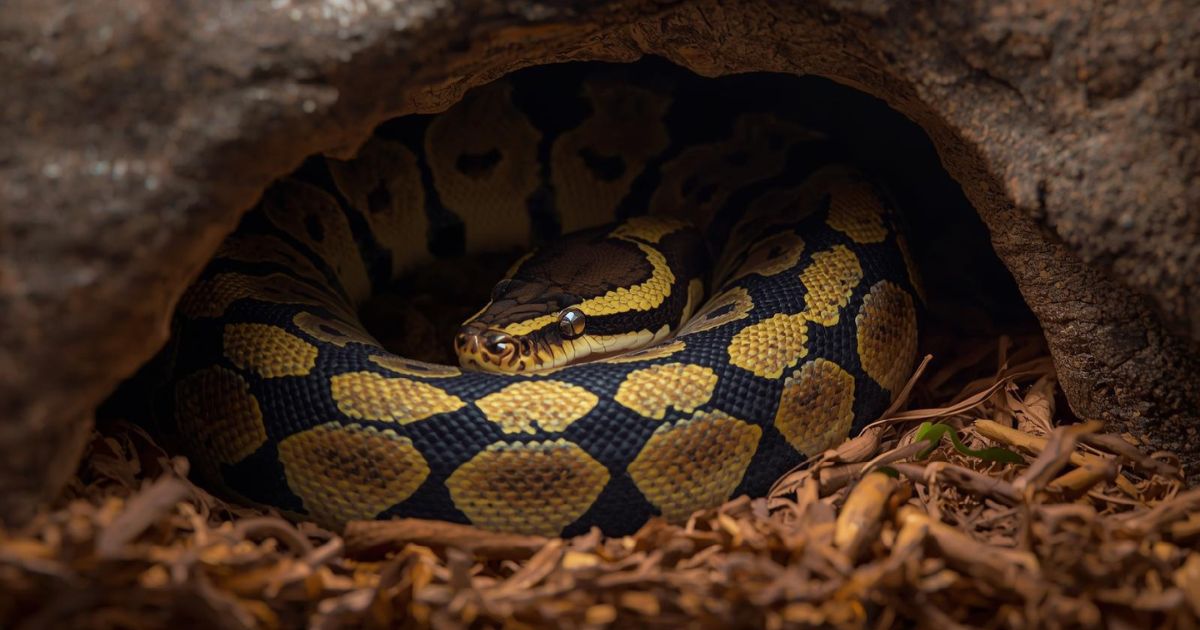
🐍 What Nobody Tells You About Ball Pythons
- Ball pythons don't eat when they're cold, stressed, or looking at you through the glass — and they're cold and stressed constantly in the garbage setups most people buy, which is why "my ball python won't eat" is the most common question in reptile forums.
- Most ball python "feeding strikes" are just improper husbandry — your snake isn't being picky, your temperatures are wrong, your humidity is too low, your enclosure is too big and exposed, or you're bothering it too much.
- Ball pythons need 60-80% humidity, not the 30% your house naturally maintains — and without it, they get stuck sheds, respiratory infections, and dehydration that makes them stop eating for months.
- Heat mats alone don't work for ball pythons — they need ambient air temperature at 78-80°F minimum, and a heat mat under one corner of a tank doesn't raise air temp, it just creates a hot floor tile your snake avoids.
- Ball pythons are not "easy" just because they don't move much — they're motionless because they're ambush predators designed to sit still for weeks, not because they require less maintenance than active reptiles.
This guide explains why your ball python won't eat, how to stop accidentally freezing or burning it, and what proper ball python care actually looks like when you're not getting advice from pet store employees who've never owned one.
Ball Python Care: Stop Freezing, Burning, and Starving Your Snake
Ball pythons are sold as beginner snakes.
They're actually survival experts that tolerate terrible conditions long enough for new owners to think they're doing everything right, until the snake stops eating for six months and develops a respiratory infection.
Pet stores call them "easy" because they don't bite often, don't need UVB lighting, and sit motionless in tiny enclosures without obvious distress.
What they don't mention is that ball pythons are notorious for refusing food, require precise temperature and humidity control, and will quietly suffer through months of improper care before showing visible symptoms.
If your ball python isn't eating, it's almost never because the snake is being difficult.
It's because your temperatures are wrong, your humidity is too low, your enclosure setup is stressing it out, or you're handling it too much.
This guide covers what ball python care actually requires, the temperature gradients, humidity levels, feeding protocols, and enclosure setups that prevent the "my snake hasn't eaten in three months" panic posts that fill every reptile forum.
← Back to complete reptile care guide
What Ball Python Ownership Actually Costs
Pet stores sell ball pythons for $50-100 and tell you they're cheaper to maintain than bearded dragons because they "only eat once a week."
That's technically true. It's also incomplete.
Initial setup cost:
- 40-gallon tank with solid sides (minimum for adults): $100-150
- PVC enclosure (better option): $200-400
- Heat source (CHE, RHP, or DHP): $40-120
- Thermostat (non-negotiable): $30-80
- Two identical hides: $30-50
- Water dish (large enough to soak in): $15-25
- Digital thermometer/hygrometer combo (2): $20-40
- Substrate (cypress mulch, coconut husk, etc.): $20-30
- Infrared temp gun: $20-30
Total initial cost: $475-925.
That's before the snake.
Ongoing costs:
- Frozen rats: $5-15 per month (adult snakes eat every 7-14 days)
- Substrate replacement: $10-15 every 2-3 months
- Heat bulb replacement (if using CHE): $15-30 every 2-3 years
- Vet visits (annual checkup + fecal): $100-200 per year
Annual ongoing cost: $220-380.
Ball pythons live 20-30 years if you don't kill them with improper care.
That's two to three decades of buying rats, maintaining temperatures, and managing humidity.
Temperature Requirements: Stop Freezing Your Snake
Ball pythons are tropical snakes from West Africa.
They need consistent warmth, not "room temperature".
Correct Temperature Gradient
Warm side (hide surface temperature): 88-92°F
Cool side (ambient air temperature): 78-80°F
Nighttime temperature: 75-78°F (can drop slightly but shouldn't go below 72°F)
These are not optional ranges.
If your warm hide is 85°F instead of 90°F, your snake is too cold to digest food properly and will stop eating.
If your cool side is 72°F instead of 78°F, your snake has nowhere to thermoregulate that isn't either too hot or too cold, and it will stay stressed.
Why Heat Mats Alone Don't Work
Pet stores sell under-tank heat mats (UTH) as the "standard" ball python heating solution.
They work for raising floor temperature in one section of the tank.
They don't work for raising ambient air temperature, which is what ball pythons actually need.
A heat mat under one corner of a 40-gallon tank creates a warm floor tile (90°F surface) while the air temperature 6 inches above it stays at 68°F.
Your snake sits on the warm tile for belly heat but breathes 68°F air, which is too cold for proper respiration and digestion.
This is why so many ball pythons in "proper" setups with UTHs still get respiratory infections and stop eating.
Proper Heating Options
Ceramic Heat Emitter (CHE): Produces infrared heat with no light output. Requires a thermostat and porcelain socket fixture. Good for raising ambient temps in glass tanks.
Deep Heat Projector (DHP): Produces deeper-penetrating infrared heat than CHEs. More expensive but more efficient and longer-lasting. Better for larger enclosures.
Radiant Heat Panel (RHP): Flat panel mounted to enclosure ceiling. Best option for PVC enclosures. Even heat distribution, long lifespan (5-10 years), low fire risk.
The Arcadia Deep Heat Projector 50W produces penetrating infrared-B heat that warms your ball python from the inside (like natural sunlight) instead of just heating the air around it like ceramic emitters, and it lasts 5,000+ hours instead of needing replacement every 18 months like cheap CHEs.
Optional supplemental heat: You can use a UTH in addition to overhead heating for supplemental belly warmth, but never as the sole heat source.
Thermostat: The Thing That Prevents Burns
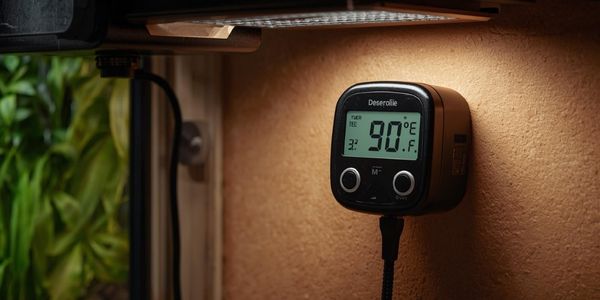
Every heat source must be controlled by a thermostat.
Unregulated heat sources run at full power continuously and will overheat your enclosure, burn your snake, or start a fire.
The REPTIZOO Reptile Thermostat is an on/off controller that keeps heat sources at your target temperature automatically, has a digital display so you're not guessing if it's working, and costs $30-40 instead of the $100+ "smart" thermostats that do the same thing with unnecessary features.
Place the thermostat probe inside the warm hide, not floating in mid-air.
The hide surface temperature is what matters, not the air temperature 8 inches away from where your snake sits.
Humidity Requirements: Stop Drying Out Your Snake
Ball pythons need 60-80% humidity during the day, rising to 80-100% at night.
Most homes naturally maintain 30-40% humidity.
Without proper humidity, ball pythons get:
- Stuck sheds (retained eye caps, tail tips that constrict and die)
- Respiratory infections (dry airways are more susceptible to bacteria)
- Dehydration (leads to feeding refusal and lethargy)
- Chronic stress (uncomfortable = won't eat)
How to Maintain Humidity
Use moisture-retaining substrate:
- Cypress mulch (best option, holds moisture well, doesn't mold easily)
- Coconut husk (cheap, works well, can mold if over-saturated)
- Coconut fiber (Eco Earth, good but dusty when dry)
- Sphagnum moss (excellent for humid hides, too expensive for full substrate)
Avoid:
- Aspen shavings (molds at high humidity)
- Pine or cedar (toxic to reptiles)
- Paper towels (can't hold humidity)
- Reptile carpet (bacteria trap, can't maintain moisture)
Use a thick substrate layer: 3-4 inches minimum.
The deeper the substrate, the more moisture it holds.
Reduce ventilation: If you're using a glass tank with a screen lid, cover 50-75% of the screen with HVAC tape, aluminum foil, or acrylic sheet.
Ball pythons don't need maximum ventilation, they need humidity.
Add a humid hide: One hide packed with damp sphagnum moss gives your snake a high-humidity retreat during shedding.
Daily misting: Spray the enclosure once in the evening (when humidity should naturally rise). Don't soak the entire substrate, just enough to raise humidity without creating standing water.
Large water bowl: Use a water dish large enough for your snake to soak in. The evaporating water raises ambient humidity.
The Exo Terra Water Dish Large is heavy enough that your ball python won't tip it when soaking (which they do constantly in lightweight dishes), has naturalistic rock texture that blends into setups, and is sized correctly for adult snakes to submerge their entire body during shed cycles.
Monitoring Humidity
Stick-on analog hygrometers are wildly inaccurate.
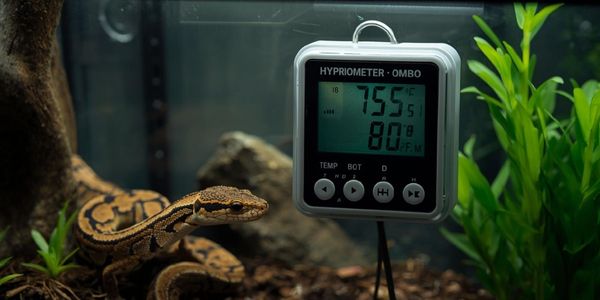
Use a digital hygrometer with a probe placed at snake level (not on the ceiling, not on the floor, middle height where your snake actually sits).
The ThermoPro Digital Hygrometer Thermometer Combo displays temperature and humidity simultaneously on one screen, has a remote probe so you're measuring conditions at snake level instead of at the device location, and costs $15 instead of the $40 "reptile-specific" versions that do the same thing.
Check humidity twice daily.
Adjust misting frequency, substrate depth, or ventilation coverage until you consistently maintain 60-80%.
Enclosure Setup: Size, Hides, and Why Your Snake Is Stressed
Tank Size: Bigger Isn't Always Better
Ball pythons are ambush predators that spend most of their time in burrows.
They don't roam. They hide.
A common mistake is buying a huge enclosure because "more space is better."
For ball pythons, more space is more stress.
Appropriate enclosure sizes:
- Hatchlings (under 1 year): 20-gallon long or 28-quart tub
- Juveniles (1-3 years): 40-gallon breeder or 41-quart tub
- Adults (3+ years): 40-gallon breeder minimum, up to 4'x2'x2' PVC enclosure
A 120-gallon tank for a 4-foot snake is excessive and makes the snake feel exposed.
It will hide constantly and stress-fast (refuse food due to anxiety).
Glass Tanks vs PVC Enclosures
Glass tanks: Cheap, widely available, see-through (which stresses snakes), terrible at holding humidity, require modified lids.
PVC enclosures: Expensive upfront ($200-400), opaque sides (snake feels secure), excellent humidity retention, front-opening doors (easier access without scaring snake).
If you can afford a PVC enclosure, buy one.
If you can't, a glass tank with 50-75% of the screen lid covered and thick substrate works fine.
Hides: Two Identical Hides, Not One
Ball pythons need two hides, one on the warm side, one on the cool side.
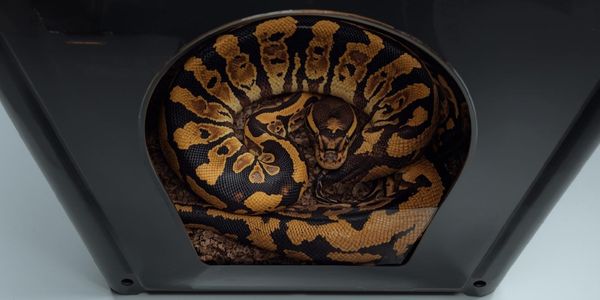
They must be identical in size, shape, and security.
If the warm-side hide is small and snug and the cool-side hide is a giant open cave, your snake will stay in the snug hide even when it's too hot because it feels safer.
Then it overheats and stops eating.
Proper hide characteristics:
- Just large enough for the snake to fit inside with minimal extra space
- Single entrance (not multiple openings that make it feel exposed)
- Opaque walls (not clear plastic)
- Low ceiling (snakes feel vulnerable in tall hides)
If your snake is in the hide, it should be touching at least 3 sides.
If there's room to move around, the hide is too large.
Substrate Depth and Why It Matters
Ball pythons naturally live in rodent burrows.
A thin layer of substrate on a hard surface doesn't replicate that.
Use 3-4 inches of moisture-retaining substrate.
This allows humidity retention, provides insulation, and gives the snake something to press against (which reduces stress).
The Zoo Med Forest Floor Cypress Mulch holds moisture for days without molding like coconut husk, doesn't produce dust like Eco Earth, and comes in compressed bricks that expand to 4+ inches of substrate depth, exactly what ball pythons need for humidity retention and natural burrowing behavior.
Feeding: Why Your Ball Python Won't Eat and How to Fix It
Ball pythons are notorious for refusing food.
Most feeding problems are husbandry issues, not picky snakes.
Correct Feeding Schedule
Hatchlings (under 300g): Feed every 5-7 days (rat pups or small mice)
Juveniles (300-800g): Feed every 7 days (small to medium rats)
Adults (800g+): Feed every 10-14 days (medium to large rats)
Ball pythons are not food-motivated.
Offering food too frequently stresses them.
Prey Size: Not Too Big, Not Too Small
Prey item should be roughly the same width as the snake's body at its widest point.
Too small: Snake stays hungry, doesn't get enough nutrition.
Too large: Risk of regurgitation, stress, refusal to eat.
Frozen/Thawed vs Live
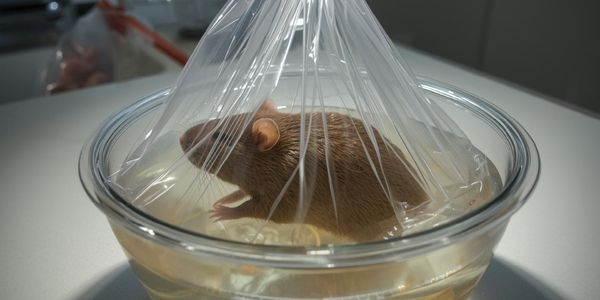
Feed frozen/thawed rats whenever possible.
Live prey can injure or kill your snake (rats bite back).
If your snake refuses frozen/thawed and you must use live:
- Never leave live prey unattended with the snake
- Remove the rat immediately if the snake doesn't strike within 10 minutes
- Be prepared to euthanize the rat humanely if it's not eaten
Why Ball Pythons Refuse Food
1. Incorrect temperatures: If the warm hide is below 88°F, digestion is impaired and the snake won't eat.
2. Low humidity: Dehydrated snakes don't eat.
3. Stress from over-handling: If you handle your ball python multiple times per week, stop until it's eating consistently.
4. Enclosure too large or too exposed: Snake feels vulnerable and won't eat.
5. Hides too large or mismatched: Snake doesn't feel secure.
6. Seasonal fasting: Ball pythons naturally reduce feeding in winter (November-March). If temps and humidity are correct and the snake is maintaining weight, wait it out.
7. Breeding season: Adult males often fast during breeding season (October-March) even in captivity.
8. "The Wall" (subadult females): Females around 800-1000g sometimes stop eating for weeks to months. This is believed to be related to follicle development (snake puberty). Reduce feeding frequency and prey size until she resumes.
Feeding Troubleshooting Steps
If your ball python refuses food:
Step 1: Verify temperatures. Warm hide should be 88-92°F measured with a temp gun, not a stick-on thermometer.
Step 2: Verify humidity. Should be 60-80% measured with a digital hygrometer.
Step 3: Stop handling completely until the snake is eating consistently.
Step 4: Offer food at night (ball pythons are nocturnal). Turn off all lights, place prey in enclosure, leave the room.
Step 5: Wait 7-10 days before offering food again. Do not offer food every 3 days, this increases stress.
Step 6: Try a different prey item. If you're offering rats, try mice. If frozen/thawed isn't working, try live (with supervision).
Step 7: If the snake hasn't eaten in 8+ weeks and is losing weight, see a reptile vet. Parasites, respiratory infections, and other health issues suppress appetite.
Shedding: What's Normal and What's a Problem
Ball pythons shed every 4-6 weeks when young, less frequently as adults.
Pre-Shed Signs
- Eyes turn blue/milky
- Skin becomes dull and pale
- Snake refuses food
- Increased hiding
This is normal. Don't handle during shed. Don't force-feed.
Healthy Shed
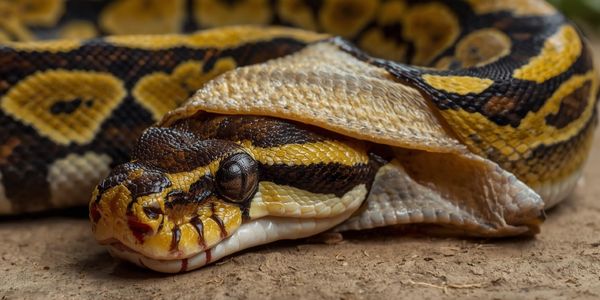
A healthy shed comes off in one complete piece like a sock.
If humidity is correct (60-80%), shedding is effortless.
Problem Sheds (Stuck Shed)
If shed comes off in pieces, patches of old skin remain, or eye caps stay on, humidity was too low.
Fix:
- Soak snake in lukewarm water (chest-deep, not swimming-deep) for 10-15 minutes
- Gently peel stuck shed with fingers (don't force it, if it doesn't come off easily after soaking, soak again)
- Increase enclosure humidity to prevent future stuck sheds
Warning: Retained eye caps can cause blindness if left on for multiple sheds. If you can't remove them safely, see a reptile vet.
Health Problems: What Actually Goes Wrong
Respiratory Infections (RI)
Caused by: Low temperatures, low humidity, poor ventilation, stress.
Symptoms:
- Open-mouth breathing
- Mucus around nostrils or mouth
- Wheezing or clicking sounds
- Refusing food
- Lethargy
RIs require antibiotics from a vet.
They don't resolve on their own. Delaying treatment kills the snake.
Mites
Symptoms:
- Tiny black or red dots moving on snake's body
- Excessive soaking (trying to drown mites)
- White specks in water (mite feces)
- Restlessness, rubbing against objects
Treat with reptile-safe mite spray or diluted betadine baths.
Deep-clean and disinfect entire enclosure.
Mites spread to other reptiles, quarantine infected snakes.
Scale Rot
Caused by: Substrate that's too wet, poor ventilation, bacterial infection.
Symptoms:
- Reddish or brownish discoloration on belly scales
- Blistering or peeling scales
- Foul odor
Treat by:
- Switching to paper towel substrate temporarily
- Soaking snake in diluted betadine solution
- Applying antibiotic ointment (reptile-safe)
- Seeing a vet if it doesn't improve in 7-10 days
Inclusion Body Disease (IBD)
IBD is a fatal viral disease with no cure.
Symptoms:
- Stargazing (staring upward, unable to right itself)
- Neurological dysfunction (corkscrewing, head tremors)
- Chronic regurgitation
- Progressive wasting
If you suspect IBD, quarantine immediately and see a reptile vet.
Euthanasia is often the most humane option.
Common Ball Python Mistakes That Cause Problems
1. Using Only a Heat Mat Without Overhead Heat
Heat mats don't raise ambient air temperature.
Your snake needs warm air to breathe, not just a warm floor tile.
2. Offering Food Too Frequently
Ball pythons aren't food-driven like bearded dragons.
Offering food every 3 days stresses them. Stick to 7-14 day intervals.
3. Handling Too Much
Ball pythons tolerate handling but don't enjoy it.
Limit handling to 1-2 times per week, 10-15 minutes max.
If your snake isn't eating, stop handling completely until it resumes.
4. Using Enclosures That Are Too Large
A 4-foot snake doesn't need an 8-foot enclosure.
It needs an appropriately sized space where it feels secure.
5. Panicking When the Snake Doesn't Eat for a Month
Ball pythons regularly fast for 4-8 weeks (sometimes longer) for seasonal reasons, breeding triggers, or stress.
If temperatures and humidity are correct and the snake is maintaining weight, relax.
Offering food every 3 days because you're anxious makes the problem worse.
6. Not Using a Thermostat
Unregulated heat sources cause burns, overheating, and death.
A thermostat costs $30. Treating burns costs $300+.
Final Thoughts: Ball Pythons Aren't Easy, They're Just Quiet
Ball pythons sit still because they're ambush predators, not because they're low-maintenance.
They require precise temperature control, consistent high humidity, appropriate enclosure sizes with proper hides, and feeding schedules that respect their biology instead of your anxiety about whether they're eating enough.
Most "problem" ball pythons aren't problems at all.
They're normal snakes in incorrect setups run by people who believed pet store employees when they said ball pythons were "easy beginner snakes."
If you can maintain 78-80°F ambient temps, 88-92°F warm hide temps, and 60-80% humidity consistently, and you're willing to let your snake fast for 6 weeks without panicking, ball pythons are rewarding animals that live 20-30 years and tolerate handling better than most snakes.
If you can't do that, buy a corn snake instead.
They actually are easy.
🐾 Frequently Asked Questions
Q Why won't my ball python eat and how long can it go without food?
Most feeding refusals are caused by incorrect temperatures (warm hide below 88°F), low humidity (under 60%), stress from over-handling, or enclosures that are too large and exposed making the snake feel vulnerable. Ball pythons can safely fast for 6-12 months if they're otherwise healthy and maintaining body weight, they're not starving, they're exhibiting natural behavior triggered by seasonal changes, breeding cycles, or environmental stress. Before panicking, verify your warm hide is 88-92°F measured with a temp gun, humidity is 60-80% on a digital hygrometer, you're not handling the snake, and you're only offering food every 7-10 days at night with all lights off. If temps and humidity are correct and the snake is losing weight after 8+ weeks, see a reptile vet to rule out parasites or respiratory infection.
Adult males often fast October-March during breeding season even in captivity. Subadult females (800-1000g) sometimes hit "the wall" and stop eating for weeks due to follicle development. If your snake refused once, wait 7-10 days before offering again, offering food every 3 days because you're anxious increases stress and makes refusal worse.
Q What temperature should I keep my ball python's enclosure at?
Warm side hide surface temperature should be 88-92°F, cool side ambient air temperature should be 78-80°F, and nighttime temps can drop to 75-78°F but shouldn't go below 72°F. These aren't suggestions, if your warm hide is 85°F instead of 90°F, your snake can't digest food properly and will stop eating. Measure temps with an infrared temp gun pointed at the hide floor where your snake actually sits, not with stick-on thermometers that measure glass temperature 6 inches away from the animal. Heat mats alone don't work because they only heat floor surfaces without raising ambient air temperature, your snake sits on a 90°F tile breathing 68°F air, which causes respiratory infections and feeding refusal. Use overhead heating (ceramic heat emitter, deep heat projector, or radiant heat panel) controlled by a thermostat to maintain proper air temps throughout the enclosure.
Q How do I maintain 60-80% humidity in my ball python enclosure?
Use 3-4 inches of moisture-retaining substrate (cypress mulch or coconut husk), cover 50-75% of your screen tank lid with HVAC tape or acrylic to reduce ventilation, provide a large water bowl your snake can soak in, and mist the enclosure once daily in the evening. Add a humid hide packed with damp sphagnum moss for shedding. Monitor humidity with a digital hygrometer (not stick-on analog gauges that are always wrong), placing the probe at snake level in the middle of the enclosure. If you're using a glass tank and can't maintain humidity even with these steps, you either have too much ventilation (cover more of the screen) or substrate that's too shallow (add more depth). PVC enclosures hold humidity better than glass tanks but cost $200-400. Ball pythons get stuck sheds, respiratory infections, and stop eating when humidity drops below 60%, so maintaining moisture isn't optional, it's critical to health.
Q Can I keep a ball python in a 20-gallon tank?
No for adults, maybe for hatchlings under 6 months. Adult ball pythons (3-5 feet long) need a minimum 40-gallon breeder tank (36"x18"x18") or 4'x2'x2' PVC enclosure. However, bigger isn't always better for ball pythons, they're ambush predators that hide in burrows, not active roamers. A 120-gallon tank for a 4-foot snake is excessive and causes stress because the snake feels too exposed. Stressed ball pythons stop eating for months. Use an appropriately sized enclosure (40-gallon for adults, 20-gallon for babies) with two identical tight-fitting hides, one on the warm side, one on the cool side. If your snake can move around freely inside its hide, the hide is too large and won't provide adequate security. Ball pythons prefer feeling secure over having space to roam.
Q Should I feed my ball python live or frozen rats?
Frozen/thawed whenever possible. Live rats bite, and those bites cause serious injuries or kill snakes, rats have powerful incisors and will defend themselves when cornered in an enclosure. Frozen/thawed rats are safer, cheaper (buy in bulk), and more convenient (store months in freezer). If your ball python refuses frozen/thawed, verify your temps and humidity are correct first, most refusals are husbandry issues, not prey preference. If you must try live after ruling out environmental problems, never leave live prey unattended, remove the rat immediately if your snake doesn't strike within 10 minutes, and be prepared to humanely euthanize the rat if it's not eaten. Some snakes will only eat live initially but can be transitioned to frozen/thawed gradually by offering freshly thawed rats that are still warm, "dancing" the rat with feeding tongs to simulate movement, or trying different prey scents (rubbing the rat with chick bedding or ASF).

📖 Related Articles
7 Ways to Socialize a Guinea Pig: The 2026 Guide

💬 Comments (0)
No comments yet. Be the first to share your thoughts! 👇
✍️ Leave a Reply