Leopard Gecko Care: Setup, Diet & Common Mistakes
Heads up: This post contains affiliate links. If you buy something through them, I earn a small commission at no extra cost to you. It keeps the lights on and the kibble bowl full. Read the full boring legal stuff here.

🦎 What "Easy Beginner Reptile" Actually Means
- Leopard geckos are the closest thing to an "easy" reptile that exists — but "easy" means they won't die in the first month if you make mistakes, not that they don't need proper care, temperature control, and calcium supplementation.
- They don't need UVB lighting like other reptiles — which saves you $100+ on equipment, but you're still responsible for temperature gradients, proper substrate, appropriate hides, and a feeding schedule that includes gut-loaded insects and calcium powder.
- Leopard geckos develop metabolic bone disease just like every other reptile — it just takes longer to show symptoms because they're small and slow-growing, so people assume they're fine until the gecko's legs are bent and its jaw is rubbery.
- They live 10-20 years, not 3-5 like pet stores imply — which means two decades of buying crickets, dusting calcium, maintaining temperatures, and cleaning poop off rocks, not a short-term commitment you can abandon when you get bored.
- Most leopard gecko health problems are caused by sand substrate and lack of calcium — two things pet stores actively sell you as "necessary" when they're actually the #1 and #2 causes of impaction and MBD in captivity.
This guide explains what leopard gecko care actually requires when you're not getting advice from a pet store employee reading from a laminated care sheet written in 2003.
Leopard Gecko Care: Low-Maintenance, Not No-Maintenance
Leopard geckos are the reptile equivalent of goldfish.
Not because they're disposable, but because everyone treats them like disposable starter pets instead of decade-long commitments.
Pet stores call them "perfect for beginners" because they tolerate mistakes better than bearded dragons or ball pythons.
They don't need UVB lighting. They don't need high humidity. They eat every 2-3 days instead of weekly. They're small enough to house in a 20-gallon tank for life.
That doesn't make them maintenance-free.
It makes them lower-maintenance, which is not the same thing.
Leopard geckos still develop metabolic bone disease without calcium supplementation.
They still get impacted and die when housed on sand substrate.
They still need proper temperature gradients, appropriately sized hides, and regular feeding schedules.
The difference is that leopard geckos survive improper care long enough for you to learn what you're doing wrong and fix it before they die.
That's not "easy." That's forgiving.
This guide covers what leopard gecko ownership actually requires, not the glossy version pet stores sell, but the daily reality of keeping a small desert lizard alive in a glass box.
← Back to complete reptile care guide
What Leopard Gecko Ownership Actually Costs
Pet stores sell leopard geckos for $30-50 and tell you the setup is cheaper than other reptiles because "they don't need UVB."
That's true. It's also incomplete.
Initial setup cost:
- 20-gallon long tank (minimum): $50-80
- Heat mat or heat lamp: $20-40
- Thermostat: $25-50
- Three hides (warm, cool, humid): $30-45
- Water dish: $5-10
- Digital thermometer (2): $15-25
- Infrared temp gun: $20-30
- Substrate (tile or paper towels): $10-30
- Calcium supplements: $15-25
The Etekcity Infrared Thermometer Gun lets you point-and-click to measure hide surface temps, basking spot temps, and cool side temps in seconds instead of relying on stick-on analog thermometers that are consistently 10-15°F off and make you think everything's fine while your gecko slowly freezes.
Total initial cost: $190-335.
That's half the cost of a bearded dragon setup, but it's not the $80 "complete starter kit" pet stores push.
Ongoing costs:
- Live insects: $10-20 per month
- Calcium supplements: $5-10 per month
- Substrate replacement (if not using tile): $5-10 every 2-3 months
- Heat bulb replacement (if not using heat mat): $10-15 every 6-12 months
- Vet visits (annual checkup + fecal): $80-150 per year
Annual ongoing cost: $250-400.
Leopard geckos live 10-20 years with proper care.
That's up to two decades of buying crickets and dusting calcium, not a 3-year commitment.
Temperature Requirements: Easier Than Most Reptiles, Still Required
Leopard geckos are from the deserts and rocky grasslands of Afghanistan, Pakistan, and India.
They need warmth, but they're more tolerant of temperature fluctuations than tropical species.
Correct Temperature Gradient
Warm side (hide surface temperature): 90-92°F
Basking spot (optional): 94-97°F
Cool side (ambient): 70-77°F
Nighttime: Can drop to 60°F without issue
These temperatures are more forgiving than ball pythons (which die if you let temps drop to 65°F) or bearded dragons (which need precise 100-110°F basking spots).
But "more forgiving" doesn't mean "optional."
If your warm hide is 82°F instead of 90°F, your gecko's digestion slows, it stops eating, and you'll spend six weeks asking Reddit why it won't touch food.
Heat Mat vs Overhead Heating
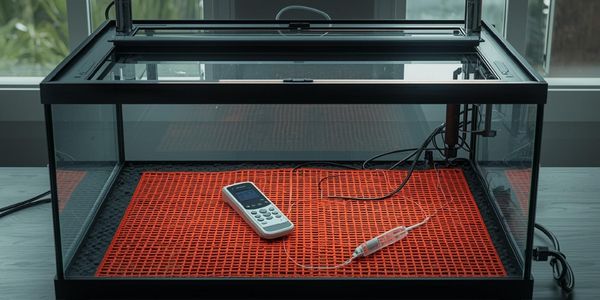
Leopard geckos are one of the few reptiles where under-tank heat mats actually work as a primary heat source.
They're ground-dwelling lizards that naturally absorb belly heat from sun-warmed rocks.
Heat mat setup:
- Place heat mat under one end of the tank (covering 1/3 of the floor)
- Use a thermostat to regulate temp (unregulated mats hit 120°F+ and burn geckos)
- Place a hide directly over the warm spot
- Verify surface temperature with infrared temp gun
The iPower Reptile Heat Pad comes in sizes that fit standard 20-gallon tanks perfectly, includes adhesive backing so it stays put under the glass, and produces consistent warmth when paired with a thermostat instead of the wildly inconsistent heat you get from cheap no-name mats that cook geckos one day and go cold the next.
Overhead heating (alternative):
You can use a low-wattage halogen bulb or deep heat projector instead of a heat mat.
This creates a more natural heat gradient and allows for optional UVB supplementation.
Overhead heating is better long-term but costs more upfront ($60-100 vs $30 for a heat mat).
Thermostat: Still Non-Negotiable
Heat mats without thermostats cause burns.
Every heat source needs temperature regulation.
Place the thermostat probe on the tank floor directly above the heat mat, not floating in the air.
Set target temp to 90-92°F.
Check temps daily with an infrared thermometer for the first two weeks until you're confident the setup is stable.
The Inkbird Reptile Thermostat has a digital display so you can see exactly what temperature it's maintaining, costs half what "reptile-specific" thermostats cost while doing the same thing, and has dual probes so you can monitor both warm and cool side temps simultaneously instead of guessing.
Enclosure Setup: Size, Substrate, and Hides
Tank Size
20-gallon long tank (30" x 12" x 12") is the minimum for adult leopard geckos.
Larger is fine (40-gallon works well), but unlike ball pythons, leopard geckos don't get stressed in appropriately sized larger spaces.
Do not use tall tanks.
Leopard geckos are ground-dwellers. A 20-gallon tall tank (24" x 12" x 16") wastes vertical space they'll never use.
Substrate: Stop Using Sand
Pet stores sell "calcium sand" and "vita-sand" marketed as safe for leopard geckos.
It's not.
Leopard geckos lick substrate while hunting insects.
Ingested sand clumps in the digestive tract and causes impaction, a blockage that requires surgery or kills the gecko.
"Calcium sand" doesn't dissolve. It clumps harder than regular sand when wet.
Safe substrate options:
- Ceramic tile: Best option. Easy to clean, holds heat, looks natural, zero impaction risk
- Slate tile: Same benefits as ceramic
- Non-adhesive shelf liner: Cheap, replaceable, safe
- Paper towels: Ugly but functional and free
- Reptile carpet: Works but harbors bacteria if not washed weekly
Avoid:
- Sand (calcium, vita, play, any kind)
- Loose substrates (walnut shell, crushed walnut, wood chips)
- Anything the gecko can accidentally eat
The tile debate is settled: tile works, sand kills.
Use tile.
Hides: Three, Not One
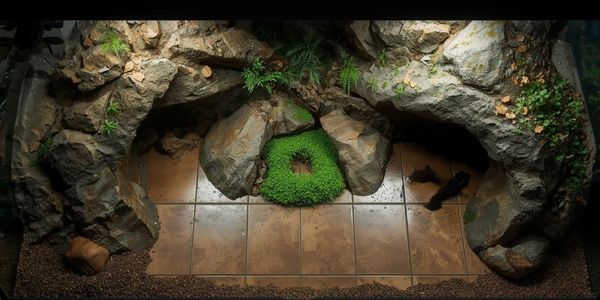
Leopard geckos need three hides:
1. Warm hide: Placed over the heat mat or under the heat lamp. Tight-fitting (gecko should touch 3 sides when inside).
2. Cool hide: Placed on the cool end. Same size and style as warm hide.
3. Humid hide: Placed anywhere (usually on warm or neutral zone). Filled with damp sphagnum moss or paper towels. Used during shedding.
If your gecko only has one hide, it will stay in that hide regardless of temperature because feeling secure trumps thermoregulation.
Then it either overheats or stays too cold, stops eating, and you post "why won't my gecko eat" on Reddit.
The Exo Terra Reptile Cave comes in sizes that fit leopard geckos perfectly (small for juveniles, medium for adults), has a natural rock appearance that doesn't look like cheap plastic, and has appropriately small entrances that make geckos feel secure instead of exposed like those giant hollow logs pet stores sell.
Decor and Climbing Enrichment
Leopard geckos are ground-dwellers but appreciate low climbing opportunities.
Add flat rocks, cork bark, or low branches (nothing higher than 6 inches, they're not arboreal and will fall).
Avoid sharp decorations that can injure soft gecko bellies.
Diet: Insects, Calcium, and Why Your Gecko Has Rubbery Legs
What to Feed
Leopard geckos are insectivores.
They eat live insects, and only live insects (they won't eat dead prey).
Good feeder insects:
- Mealworms (staple)
- Dubia roaches (best nutritional value)
- Crickets (noisy, smell bad, but work fine)
- Black soldier fly larvae (high calcium)
- Superworms (occasional treat, high fat)
Avoid:
- Waxworms except as rare treats (too much fat, addictive)
- Wild-caught insects (pesticide risk)
- Insects larger than the space between the gecko's eyes (choking/impaction risk)
Feeding Schedule
Juveniles (under 1 year): Feed daily. Offer as many insects as they'll eat in 10-15 minutes.
Adults (1+ years): Feed every 2-3 days. Offer 5-7 appropriately sized insects per feeding.
Leopard geckos are prone to obesity.
Do not leave a bowl of mealworms available 24/7 unless you want a fat gecko with fatty liver disease.
Gut-Loading Insects
Pet store crickets and mealworms are nutritionally empty.
You need to gut-load them (feed the insects nutritious food 24-48 hours before offering them to your gecko).
Feed insects:
- Collard greens, mustard greens, or commercial gut-load powder
- Carrots or sweet potato (vitamin A)
- Commercial cricket food (if you're lazy)
Insects are only as nutritious as what they recently ate.
Feeding un-gutloaded insects is feeding your gecko cardboard dust by proxy.
Calcium Supplementation: The Thing That Prevents Broken Legs
Leopard geckos will develop metabolic bone disease without calcium supplementation.
Not "might." Will.
MBD causes soft bones, bent legs, tremors, seizures, and death.
It's 100% preventable with proper supplementation.
Supplementation schedule:
Option 1 (No UVB lighting):
- Dust insects with calcium + D3 at every feeding
- Dust with multivitamin powder once per week
Option 2 (With UVB lighting):
- Dust insects with plain calcium at most feedings
- Dust with calcium + D3 twice per week
- Dust with multivitamin powder once per week
The Zoo Med Repti Calcium with D3 is the standard for geckos without UVB, it's fine powder that sticks to mealworms instead of falling off like cheap brands, and the D3 content is dosed correctly for leopard geckos so you're not under-supplementing (MBD) or over-supplementing (toxicity).
How to dust:
Put insects in a plastic bag or container with a pinch of calcium powder.
Shake gently until insects are lightly coated (you should still see the insect color through a thin dust layer).
Feed immediately, powder falls off within 10-15 minutes.

Calcium dish (optional):
Some keepers leave a small dish of plain calcium powder in the enclosure.
Geckos will lick it as needed to self-regulate calcium intake.
This is supplemental, not a replacement for dusted insects.
Hydration
Leopard geckos get most hydration from insects but should have access to fresh water 24/7.
Use a shallow dish they can't drown in.
Change water daily.
If your gecko is dehydrated (sunken eyes, wrinkled skin, lethargy), soak it in shallow lukewarm water for 10-15 minutes.
UVB Lighting: Optional but Beneficial
Leopard geckos are crepuscular (active at dawn and dusk).
They receive some natural UVB exposure but don't require it like diurnal species.
However, recent research shows that optional low-level UVB improves health:
- Better bone density
- Improved coloration
- More natural behavior
- Enhanced appetite and activity
If you provide UVB:
- Use a 5-7% UVB bulb (T5 or T8)
- Mount 10-12 inches from basking spot
- Run 10-12 hours per day
- Replace every 12 months
If you skip UVB, that's fine, just use calcium with D3 at every feeding.
Shedding: What's Normal and What's a Problem
Leopard geckos shed every 4-8 weeks when young, less frequently as adults.
Normal Shedding Process
Before shedding:
- Skin becomes dull and pale
- Gecko may refuse food
- Increased hiding and grumpiness
During shedding:
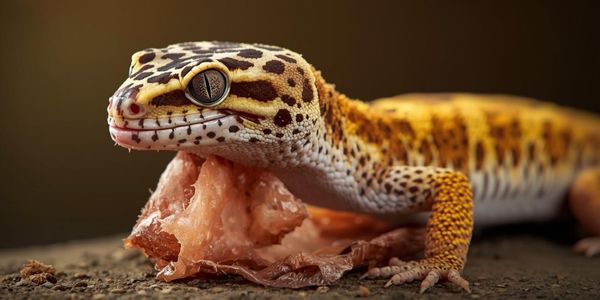
- Gecko peels shed off with feet and mouth
- Eats the shed (this is normal, recycles nutrients)
- Process takes 10-30 minutes
A healthy shed comes off in large pieces with minimal effort.
Stuck Shed
If shed doesn't come off completely, pieces remain stuck on toes, tail tip, or around the eyes.
Causes:
- Humidity too low (humidity should be 30-40%, but humid hide should be 70-80%)
- Dehydration
- Lack of humid hide
- Malnutrition (vitamin A deficiency causes shedding problems)
Fix:
- Soak gecko in shallow lukewarm water for 10-15 minutes
- Gently remove stuck shed with damp Q-tip or fingers
- Provide humid hide for future sheds
Warning: Stuck shed on toes constricts blood flow and causes toe loss if left for multiple sheds.
Check toes and tail tip after every shed.
Health Problems: What Actually Goes Wrong
Metabolic Bone Disease (MBD)
Caused by: Lack of calcium, insufficient D3, poor diet.
Symptoms:
- Soft or rubbery jaw
- Bowed or bent legs
- Tremors or twitching
- Difficulty walking
- Kinked tail
- Lethargy and loss of appetite
MBD is 100% preventable with proper calcium supplementation.
Once deformities appear, damage is permanent.
Impaction
Caused by: Eating substrate (sand), eating insects that are too large, dehydration, low temperatures.
Symptoms:
- No bowel movements for 7+ days
- Bloated belly
- Lethargy
- Loss of appetite
- Straining to defecate
Treatment:
- Soak gecko in warm water for 15-20 minutes daily
- Gently massage belly (only if you know what you're doing)
- Give oral lubricant (coconut oil or petroleum jelly, 0.5ml max)
- See a vet if no improvement in 3 days
Severe impaction requires surgery.
Prevention is easy: don't use sand substrate.
Respiratory Infections
Caused by: Low temperatures, high humidity (over 50%), poor ventilation, stress.
Symptoms:
- Open-mouth breathing
- Mucus around nostrils
- Wheezing or clicking sounds
- Lethargy
- Refusing food
Respiratory infections require antibiotics from a vet.
They don't resolve on their own.
Parasites
Common in pet store leopard geckos.
Symptoms:
- Diarrhea or runny stool
- Weight loss despite eating
- Visible worms in feces
- Lethargy
Get a fecal exam from a reptile vet within the first month of ownership.
Tail Loss (Autotomy)
Leopard geckos drop their tails when threatened or grabbed by the tail.
The tail regrows but never looks the same (stubby, different color, lacks original pattern).
Prevention:
- Never grab a gecko by the tail
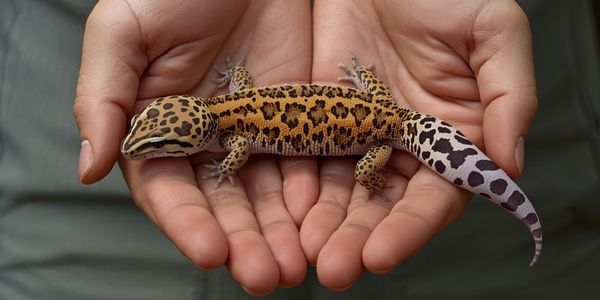
- Handle gently and support entire body
- Reduce stress in enclosure
If your gecko drops its tail:
- Remove dropped tail from enclosure (gecko may eat it, that's normal)
- Keep enclosure extra clean to prevent infection
- Increase feeding slightly to support regrowth
Tail regrowth takes 3-6 months.
Common Leopard Gecko Mistakes
1. Using Sand Substrate
Pet stores sell it. Geckos get impacted and die.
Use tile. This is not debatable.
2. Skipping Calcium Supplementation
"My gecko looks fine" doesn't mean its bones are fine.
MBD develops slowly. By the time you notice symptoms, permanent damage has occurred.
Dust insects with calcium. Every feeding.
3. Cohabitating Multiple Geckos
Leopard geckos are solitary.
Housing multiple geckos together causes fighting, stress, injuries, and death.
Males will kill each other.
Females compete for resources and bully weaker individuals.
One gecko per enclosure. No exceptions.
4. Not Providing a Humid Hide
Leopard geckos need a humid retreat for proper shedding.
Without it, they get stuck shed on toes and lose digits.
5. Overfeeding
Obese leopard geckos develop fatty liver disease and shortened lifespans.
Adults only need 5-7 insects every 2-3 days, not unlimited mealworms 24/7.
6. Not Using a Thermostat
Unregulated heat mats cause burns.
A thermostat costs $30. Treating burns costs $200+.
Final Thoughts: Low-Maintenance Doesn't Mean No-Maintenance
Leopard geckos are the easiest reptiles to keep alive.
That doesn't mean they're maintenance-free pets you can ignore for weeks.
They need daily feeding schedules, temperature monitoring, calcium dusting, enclosure cleaning, and health checks.
They live 10-20 years, which means a decade or two of sustained effort.
But compared to bearded dragons (daily salad prep, $120 UVB setups, 120-gallon tanks) or ball pythons (70% humidity nightmares, feeding strikes that last months), leopard geckos are easier.
They tolerate mistakes.
They eat reliably.
They handle temperature fluctuations better than tropical species.
They don't need UVB (though it helps).
If you can provide a 20-gallon tank, a heat mat with thermostat, three hides, and calcium-dusted insects every 2-3 days, leopard geckos are rewarding pets that tolerate handling, live for decades, and won't stress-fast for six months because you looked at them wrong.
If that sounds like too much effort, get a pet rock.
It's actually maintenance-free.
🐾 Frequently Asked Questions
Q Do leopard geckos really need calcium supplementation?
Yes, absolutely. Leopard geckos will develop metabolic bone disease without calcium supplementation, it's not "might," it's "will." Feeder insects like crickets and mealworms have terrible calcium-to-phosphorus ratios (more phosphorus than calcium), and phosphorus blocks calcium absorption. Without supplementation, your gecko's body pulls calcium from its bones to maintain vital functions, causing soft rubbery bones, bent legs, jaw deformities, tremors, and eventually death. If you don't have UVB lighting, dust insects with calcium + D3 powder at every feeding. If you do provide UVB, use plain calcium most of the time and calcium + D3 twice weekly. Add a multivitamin once per week. Put insects in a bag with calcium powder, shake until lightly coated, and feed immediately before the powder falls off. MBD is 100% preventable with proper supplementation, and once bone deformities appear, the damage is permanent.
Q Can I use sand as substrate for my leopard gecko?
No. Pet stores sell "calcium sand" and "vita-sand" marketed as safe for leopard geckos, but they cause impaction (digestive blockage) that requires surgery or kills the gecko. Leopard geckos lick substrate while hunting insects, and ingested sand clumps in the digestive tract. "Calcium sand" doesn't dissolve, it clumps harder than regular sand when wet with digestive fluids. Use ceramic tile, slate tile, non-adhesive shelf liner, or paper towels instead. Tile is the best option: easy to clean, holds heat well, looks natural, and has zero impaction risk. The "leopard geckos live on sand in the wild" argument is nonsense, they live in rocky, hard-packed clay areas with sparse sand, not loose dunes. Every reptile vet will tell you not to use sand. Use tile.
Q What temperature should a leopard gecko enclosure be?
Warm side hide surface should be 90-92°F, cool side ambient air should be 70-77°F, and nighttime temps can drop to 60°F without problems. Measure the warm hide surface temperature with an infrared temp gun pointed at the floor where your gecko sits, not with stick-on thermometers that measure glass temperature and are always wrong. Use an under-tank heat mat covering 1/3 of the tank floor, controlled by a thermostat set to 90-92°F with the probe placed on the tank floor directly above the heat mat. Without a thermostat, heat mats reach 120°F+ and cause burns. Verify temps daily for the first two weeks until stable. If your warm hide is 85°F instead of 90°F, your gecko's digestion slows and it stops eating. Leopard geckos tolerate temperature fluctuations better than ball pythons or bearded dragons, but proper temps are still required.
Q How often should I feed my leopard gecko?
Juveniles (under 1 year) need daily feeding, offer as many appropriately sized insects as they'll eat in 10-15 minutes. Adults (1+ years) should eat every 2-3 days, offer 5-7 insects per feeding. Insect size should be no larger than the space between your gecko's eyes to prevent choking and impaction. Don't leave a bowl of mealworms available 24/7 or your gecko will become obese and develop fatty liver disease. Leopard geckos are prone to obesity because they'll eat whenever food is available, even when not hungry. Gut-load all insects 24-48 hours before feeding (feed the insects nutritious greens and veggies), then dust with calcium powder immediately before offering to your gecko. Remove uneaten insects after 15-20 minutes. If your gecko refuses food, check temperatures first, if the warm hide is below 88°F, digestion is impaired and the gecko won't eat.
Q Can I keep two leopard geckos together in the same tank?
No. Leopard geckos are solitary animals and should never be housed together. Males will fight to the death, they're extremely territorial and will attack each other viciously. Females can be housed together in theory, but they compete for resources, bully weaker individuals, steal food, and cause chronic stress that weakens immune systems and shortens lifespans. Even "bonded" females that lived together peacefully for months can suddenly become aggressive and injure each other. Cohabitation also makes it impossible to monitor individual eating habits, identify health problems early, or ensure both geckos are getting proper nutrition. One gecko per enclosure, no exceptions. If you want multiple leopard geckos, buy multiple tanks. The "but they live in colonies in the wild" argument is false, wild leopard geckos are solitary except during breeding season, and captive enclosures don't provide the space needed to establish separate territories.

📖 Related Articles
7 Ways to Socialize a Guinea Pig: The 2026 Guide

💬 Comments (0)
No comments yet. Be the first to share your thoughts! 👇
✍️ Leave a Reply