Metabolic Bone Disease in Reptiles: Prevention & Treatment
Heads up: This post contains affiliate links. If you buy something through them, I earn a small commission at no extra cost to you. It keeps the lights on and the kibble bowl full. Read the full boring legal stuff here.
Metabolic bone disease, or MBD for those who don't enjoy saying "metabolic bone disease" seventeen times per article, is one of the most common preventable conditions in captive reptiles. And yes, I said preventable.
Yet somehow, it keeps showing up in vet clinics with alarming regularity. Let's talk about what it is, why it happens, and how to avoid joining the ranks of panicked owners Googling "why are my gecko's legs bent" at 2 AM.
What Is Metabolic Bone Disease?
MBD is an umbrella term for skeletal disorders caused by calcium, phosphorus, and vitamin D3 imbalances. Research shows it's the result of nutritional deficiencies combined with inadequate UVB exposure in most cases.
The scientific name is Nutritional Secondary Hyperparathyroidism, which is a mouthful. Essentially, when reptiles don't get enough calcium or can't absorb it properly, their bodies start pulling calcium from their bones to maintain vital functions.
This process weakens the skeletal structure, leading to fractures, deformities, and in severe cases, death. According to reptile veterinarians, MBD is 100% preventable with proper husbandry, but that requires actually doing the research before buying the reptile.
Wild reptiles rarely develop MBD because nature provides everything they need: natural sunlight for UVB, calcium-rich prey, and appropriate vegetation. Captive reptiles depend entirely on keepers who may or may not have read more than a care sheet printed at the pet store.
The Science Behind Calcium Metabolism
Here's how calcium metabolism actually works, since apparently this wasn't covered in the "easy beginner pet" sales pitch.
When UVB light hits reptile skin, it triggers vitamin D3 synthesis, specifically converting 7-dehydrocholesterol into previtamin D3, which body heat then converts to active vitamin D3. This travels to the liver and kidneys where it becomes calcitriol, the active hormone that enables calcium absorption in the intestines.
No UVB exposure means no vitamin D3 production. No vitamin D3 means calcium can't be absorbed efficiently, regardless of how much you're providing. Studies on reptile physiology confirm this pathway is non-negotiable, you can't supplement your way out of missing UVB entirely.
The optimal calcium-to-phosphorus ratio in reptile diets is 2:1 according to research. Too much phosphorus actually blocks calcium absorption, which is why feeding insects without gut-loading or dusting creates problems even if the reptile is eating regularly.
Early Signs Most People Miss
MBD develops gradually, and early symptoms are subtle enough that many keepers miss them entirely. By the time it's obvious, significant damage has occurred.
Lethargy and reduced activity. Not just "resting", actual decreased movement compared to normal behavior patterns. This gets dismissed as "maybe they're just chilling," which is optimistic but unhelpful.
Decreased appetite. Refusing food for more than a few days, especially in species that normally eat readily. Could be multiple causes, but combined with other symptoms, it's a red flag.
Tremors or twitching. Calcium plays a crucial role in muscle contractions. Insufficient calcium causes involuntary muscle movements, particularly visible in the limbs or jaw.
Weakness in rear legs. Difficulty climbing, unsteady gait, or reluctance to use back limbs. Reptile veterinarians note this is often the first physically obvious sign owners actually notice.
If you're seeing these symptoms, the problem has been developing for weeks or months. Time to stop consulting Reddit and book a vet appointment.
Advanced Symptoms Nobody Wants to See
When MBD progresses, because it was ignored or misdiagnosed as something less serious, things get significantly worse.
Metabolic bone disease causes visible skeletal deformities. Bowed or curved limbs, spinal kinks, and facial bone softening. These don't magically heal once you finally fix the husbandry, the damage is permanent.
Swollen or rubbery jaw (commonly called "rubber jaw") occurs as bones lose density and the body attempts to stabilize them with fibrous tissue. This condition, fibrous osteodystrophy, makes eating difficult or impossible without intervention.
Spontaneous fractures from normal activity, walking, climbing, or even just being handled. Bones become so weakened that routine movement causes breaks. At this stage, we're talking extensive veterinary care and potentially lifelong mobility issues.
Shell deformities in turtles and tortoises manifest as soft or pyramiding shell growth. According to research on chelonian health, this indicates severe calcium deficiency during growth periods and rarely improves even with corrected care.
Why MBD Happens (Spoiler: It's Usually Multiple Failures)
MBD rarely results from one single mistake. It's typically a combination of husbandry failures that compound over time, which makes prevention that much more important.
Inadequate UVB Lighting
The number one culprit. No UVB bulb, using the wrong spectrum, placing it too far from basking spots, or not replacing bulbs when they stop producing adequate UVB (even though they still visibly glow).
Research on reptile lighting requirements shows that UVB output degrades significantly over time. Most bulbs need replacement every 6-12 months depending on type, but somehow this maintenance step gets perpetually postponed.
Insufficient Calcium Supplementation
Feeding insects without dusting, using calcium with D3 when the reptile has UVB (creating D3 toxicity), or not gut-loading feeder insects so they're nutritionally worthless.
Studies on insectivorous reptile nutrition demonstrate that crickets and mealworms are naturally low in calcium. Without supplementation, they're essentially crunchy fiber, not a balanced diet.
Poor Diet Composition
Offering foods with improper calcium-to-phosphorus ratios. Iceberg lettuce, spinach high in oxalates that bind calcium, or excessive fruit in species that need vegetation.
For herbivorous and omnivorous species, diet composition matters as much as supplementation. Reptile nutrition research emphasizes variety and appropriate Ca:P ratios, not just "whatever green thing is in the fridge."
Temperature Issues Affecting Metabolism
Incorrect temperatures prevent proper digestion and nutrient absorption. Reptiles are ectothermic, they need appropriate heat gradients to metabolize food, including calcium.
According to reptile veterinarians, even with perfect UVB and calcium supplementation, inadequate temperatures mean nutrients aren't being processed effectively. It's remarkable how many problems trace back to "I don't use a thermometer."
Species Most at Risk
While any reptile can develop MBD, certain species show up in vet clinics with this condition more frequently than others. Coincidentally, they're also the most commonly kept as "beginner" pets.
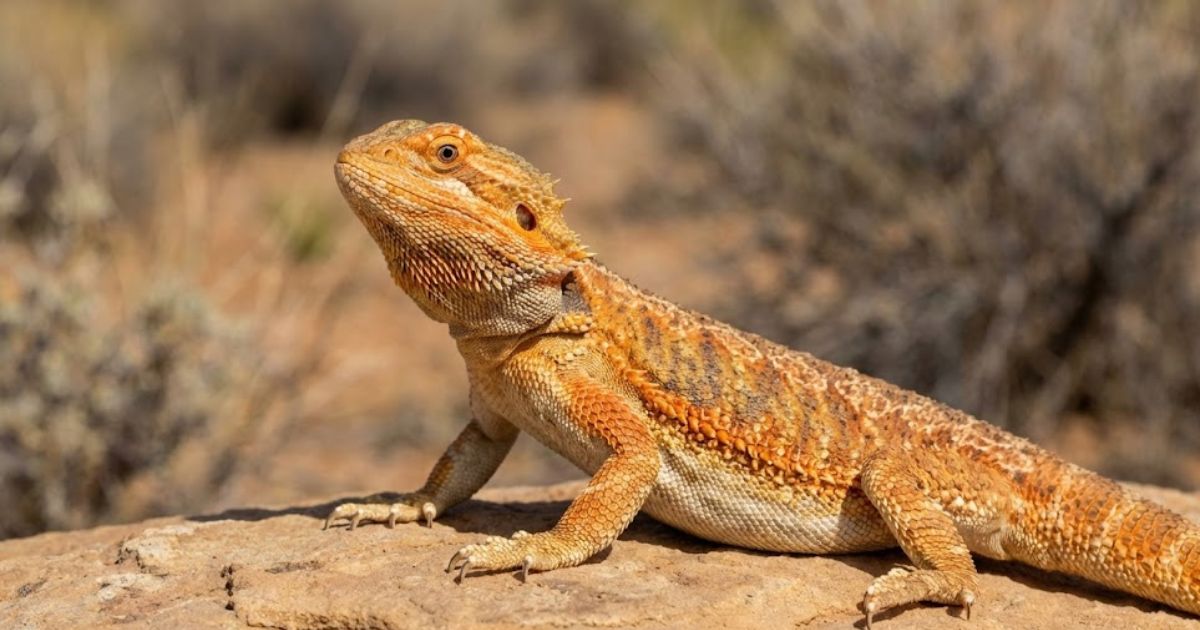
Bearded dragons. Probably the poster child for MBD in reptiles. They need both high UVB exposure and calcium supplementation, yet somehow the "easy" label persists.
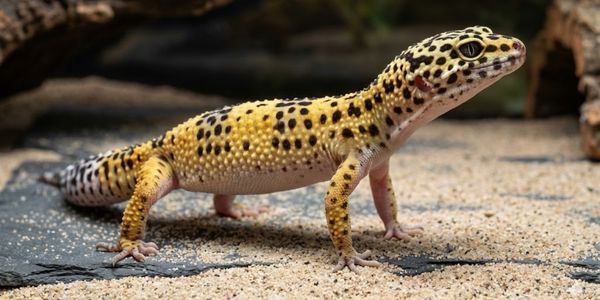
Leopard geckos. Despite being crepuscular and theoretically able to manage without UVB, research now shows they benefit significantly from low-level UVB exposure. Calcium supplementation is non-negotiable.
Crested geckos. Same story as leopard geckos, newer research challenges old assumptions about UVB requirements. Complete gecko diets help, but only if they're actually being fed regularly.
Iguanas and other herbivorous lizards. Need both strong UVB and carefully balanced vegetable diets. Lettuce and fruit don't cut it, despite what picture books might suggest.
Chameleons. High UVB requirements and specific dietary needs make them particularly susceptible. Advanced MBD cases in chameleons often involve multiple system failures.
Prevention: The Part Everyone Should Actually Read
Here's the good news: preventing MBD is straightforward. The bad news: it requires consistent effort and actually following species-specific care guidelines.
Proper UVB Lighting Setup
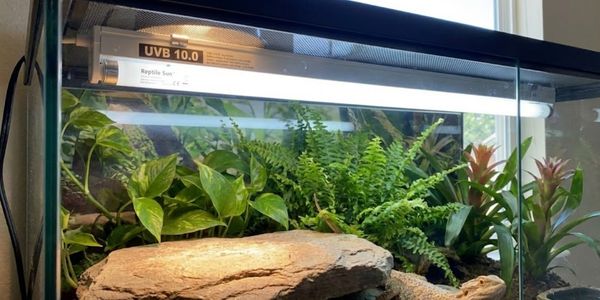
Install appropriate UVB bulbs for your species, typically 5.0 for most tropical and forest species, 10.0 for desert species. Mount them inside the enclosure or directly on mesh tops, not behind glass which blocks UVB.
For desert species and those with high UVB requirements, the Zoo Med ReptiSun 10.0 T5 HO provides the strong output that research shows is necessary for proper vitamin D3 synthesis.
Position basking spots at manufacturer-recommended distances. Too far reduces effectiveness, too close causes burns. Use a UVB meter if you want to be precise, though most people skip this step and hope for the best.
Replace bulbs every 6-12 months depending on type. Yes, they still glow. No, that doesn't mean they're producing adequate UVB. Research on lighting degradation shows output drops significantly before visible changes occur.
Calcium and D3 Supplementation
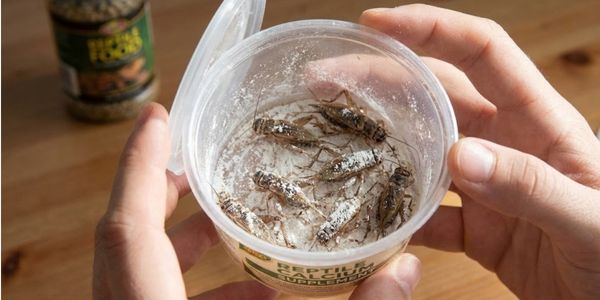
For reptiles with UVB: dust insects with calcium WITHOUT D3 at most feedings, calcium WITH D3 1-2 times monthly depending on species and UVB strength.
For reptiles without UVB (though this is increasingly controversial): calcium WITH D3 more frequently as directed by species-specific care guidelines. Over-supplementing D3 causes toxicity, there's a balance.
The Rep-Cal Calcium with D3 is a phosphorus-free supplement that countless breeders rely on for reptiles without adequate UVB access.
For regular dusting when UVB is provided, Zoo Med Repti Calcium without D3 offers pure calcium supplementation without risking D3 toxicity.
Gut-load feeder insects 24-48 hours before feeding. Give them quality food, not apple cores and potato scraps. Studies show properly gut-loaded insects have significantly better nutritional profiles.
Properly gut-loading feeders makes a measurable difference, Fluker's High-Calcium Cricket Diet gives insects the nutritional profile research shows they naturally lack.
Appropriate Diet for Species
Research your reptile's nutritional requirements, herbivore, insectivore, omnivore, their specific food preferences, and items to avoid.
Offer variety appropriate to the species. For herbivores, this means multiple types of greens with favorable Ca:P ratios, collard greens, dandelion greens, turnip greens. For insectivores, vary feeder types and sizes.
Avoid foods that block calcium absorption. Spinach, rhubarb, and beet greens contain oxalates. Some fruits contain compounds that interfere with mineral uptake. According to nutritional research, moderation and variety prevent most issues.

Maintain Proper Temperatures
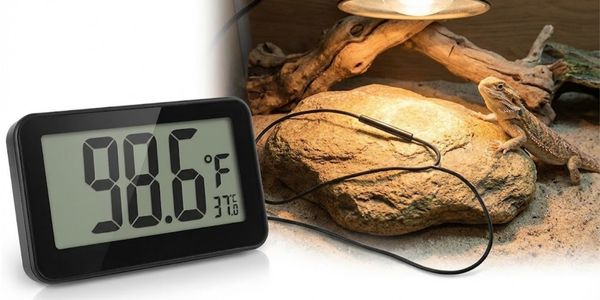
Provide appropriate temperature gradients with accurate thermometers, not stick-on strips that decoratively display meaningless numbers.
Accurate temperature monitoring isn't optional, a reliable dual thermometer like the REPTI ZOO unit ensures you're maintaining the thermal gradient necessary for proper nutrient metabolism.
Basking spots should reach species-specific requirements. Cool sides should offer thermal refuge. This enables proper thermoregulation, which directly affects digestive efficiency and nutrient metabolism.
Regular Health Monitoring
Weigh your reptile regularly and track trends. Sudden weight loss or failure to gain in growing individuals suggests problems.
Observe behavior patterns and activity levels. Changes often precede visible physical symptoms, catching issues early makes treatment significantly more effective.
Schedule veterinary checkups, particularly for young or newly acquired reptiles. Reptile veterinarians can detect early MBD through physical examination before it becomes obvious to owners.
Treatment Options (When Prevention Failed)
If MBD is diagnosed, treatment depends on severity. Early cases respond to husbandry corrections and supplementation. Advanced cases require veterinary intervention, and even then, some damage is permanent.
Mild to Moderate Cases
Immediate husbandry corrections: proper UVB lighting, increased calcium supplementation, temperature adjustments, appropriate diet modifications.
Oral calcium supplementation under veterinary guidance. Dosage matters, too little won't help, too much causes other problems. This isn't a "figure it out yourself" situation.
Increased UVB exposure or supervised natural sunlight (through untinted glass blocks UVB). Some veterinarians recommend brief outdoor sessions in appropriate weather conditions.
According to treatment studies, early-stage MBD can be halted and partially reversed if skeletal growth is still occurring. Bones that have already formed with deformities don't remodel.
Severe Cases Requiring Veterinary Care
Injectable calcium gluconate to rapidly address deficiency. Reptile veterinarians administer this to stop the body's calcium extraction from bones, it's emergency intervention, not routine care.
Pain management, particularly if fractures have occurred. Reptiles experience pain; managing it is both ethical and aids recovery.
Fluid therapy and vitamin injections to support overall health and appetite. Severely affected reptiles often stop eating, creating additional complications.
Physical therapy and assisted feeding for reptiles with permanent deformities. Research shows this improves quality of life, though it requires committed owners willing to provide ongoing special care.
Surgical intervention in extreme cases, fracture repair, jaw realignment, or other orthopedic procedures. These are expensive, invasive, and not always successful.
The Reality of "Reversing" MBD
Let's be clear: you can halt MBD progression. You cannot undo skeletal deformities that have already formed.
Bones don't remodel incorrectly formed structures in reptiles the way they might in mammals. A bent leg stays bent. A deformed jaw stays deformed. According to veterinary studies on MBD outcomes, affected reptiles may recover function but keep visible abnormalities.
This makes prevention infinitely preferable to treatment. The animals that show up in rescue situations with severe MBD often require specialized care for their remaining lifespan, assuming they survive at all.
Common Myths That Need to Die
Let's address some persistent misinformation that continues circulating despite being thoroughly debunked.
"My reptile is nocturnal, so it doesn't need UVB." Recent research challenges this for multiple species previously thought to manage without UVB. Even crepuscular species show improved health outcomes with appropriate low-level UVB exposure.
"I can just give calcium supplements instead of UVB." Supplemental D3 helps, but it's not identical to naturally synthesized D3 from UVB exposure. Studies show reptiles with UVB access have better calcium metabolism than those relying solely on dietary D3.
"The pet store said this setup was fine." Pet store employees are frequently undertrained or given incorrect information to pass along. Their job is selling products, not necessarily ensuring optimal reptile care.
"My reptile looks fine, so it must be healthy." MBD develops over months before becoming visually apparent. By the time skeletal deformities are obvious, significant internal damage has occurred.
"I'll just fix it later if there's a problem." MBD isn't fully reversible. Prevention is the only approach that guarantees your reptile won't experience this completely avoidable condition.
The Cost of Cutting Corners
Let's talk about money, since that seems to motivate decisions when animal welfare doesn't.
Proper UVB bulbs: $20-50 depending on type. Calcium supplements: $10-15. Quality feeder insects properly gut-loaded: marginally more expensive than the cheapest option.
Treating MBD at a veterinary clinic: easily $200-500 for moderate cases, significantly more for severe cases requiring injectable calcium, X-rays, pain management, and follow-up visits.
According to veterinary cost analyses, prevention is exponentially cheaper than treatment. And that doesn't account for the animal's suffering or reduced quality of life from permanent deformities.
Somehow, people balk at replacing a $30 UVB bulb every year but don't think twice about the initial reptile purchase. The math isn't mathing.
What I've Learned Seeing This Repeatedly
MBD cases follow a predictable pattern: inadequate research before purchase, reliance on outdated or incorrect care information, assumption that minimal effort is sufficient, and delayed recognition of symptoms.
The frustrating part? It's completely preventable. Every single case represents husbandry that could have been done correctly from day one.
Research consistently shows that proper UVB lighting, appropriate calcium supplementation, species-specific diets, and correct temperatures prevent MBD in captive reptiles. None of these requirements are particularly complicated or expensive.
What they do require: actually reading current care guidelines, investing in appropriate equipment, maintaining consistent supplementation, and monitoring the animal's health. Apparently that's where many people decide "easy beginner pet" means "I don't have to try."
If you're not willing to provide proper UVB lighting and calcium supplementation, you're not ready for a reptile. Consider a pet rock instead, lower maintenance, fewer vet bills, and you can't accidentally give it metabolic bone disease through neglect.
For those who actually do the research and maintain proper care: your reptile will likely never develop MBD. It's that simple, though apparently not simple enough for the number of cases that keep appearing.
🐾 Frequently Asked Questions
Q Can metabolic bone disease be cured completely?
Not exactly. You can halt the progression and prevent further damage, but bones that have already formed incorrectly don't remodel themselves in reptiles. If your gecko's legs are bent or the jaw is deformed, those structures stay that way permanently. The good news: if caught early before major skeletal changes occur, proper UVB and calcium supplementation can stop it from getting worse. The bad news: "reversing" MBD is misleading, you're managing the condition, not erasing it. This is why prevention beats treatment every single time.
Q How long does it take for MBD to develop in reptiles?
Typically several months of inadequate calcium, vitamin D3, or UVB exposure. It's not an overnight thing, MBD develops gradually as the body progressively depletes calcium from bones. Young, rapidly growing reptiles can show symptoms faster because their calcium demands are higher during skeletal development. Adults take longer, but they'll still develop it eventually with poor husbandry. The sneaky part: early symptoms are subtle enough that most people miss them until visible deformities appear, at which point significant damage has already occurred.
Q Do I really need to replace UVB bulbs if they still work?
Yes, and "still work" is doing heavy lifting here. UVB bulbs continue producing visible light long after their UVB output drops below useful levels. Most fluorescent UVB bulbs need replacement every 6-12 months despite still glowing. Mercury vapor bulbs last longer, typically 12-18 months. The bulb doesn't announce when it stops producing adequate UVB; it just gradually becomes an expensive regular light bulb. Unless you're testing with a UVB meter (which most people aren't), follow the replacement schedule. Skipping this step is one of the most common ways reptiles end up with MBD despite "having UVB lighting."
Q Can I use calcium supplements instead of UVB lighting?
Technically you can supplement with vitamin D3, but it's not ideal and research shows it's not equivalent to natural D3 synthesis from UVB exposure. Some species genuinely don't need UVB (like certain snake species), but for most commonly kept lizards, UVB provides benefits beyond just D3 production, it affects behavior, appetite, and overall health. The "supplement instead of UVB" approach works marginally for some species in the short term, but increasingly, research is showing that species we thought were fine without UVB actually thrive with it. Bottom line: if your species benefits from UVB, provide actual UVB rather than trying to hack it with supplements.
Q What's the difference between calcium with D3 and without D3?
Calcium without D3 is pure calcium carbonate or another calcium compound. Calcium with D3 includes added vitamin D3 (cholecalciferol) to help absorption. If your reptile has proper UVB lighting, they're producing their own D3 naturally, so you primarily use calcium WITHOUT D3 for regular dustings and only use calcium WITH D3 occasionally (1-2x monthly) to ensure they're not deficient. If you use calcium WITH D3 too frequently when they already have UVB, you risk vitamin D3 toxicity. For reptiles without UVB, calcium WITH D3 is used more frequently since they can't produce their own. The key is matching supplementation to your lighting setup, not just grabbing whichever bottle is cheaper.

📖 Related Articles

How to find & choose an exotic veterinarian: 5 Deadly Mistakes Owners Make in 2026
💬 Comments (0)
No comments yet. Be the first to share your thoughts! 👇
✍️ Leave a Reply