Reptile Heating Systems: Thermostats, Safety & Best Options
Heads up: This post contains affiliate links. If you buy something through them, I earn a small commission at no extra cost to you. It keeps the lights on and the kibble bowl full. Read the full boring legal stuff here.
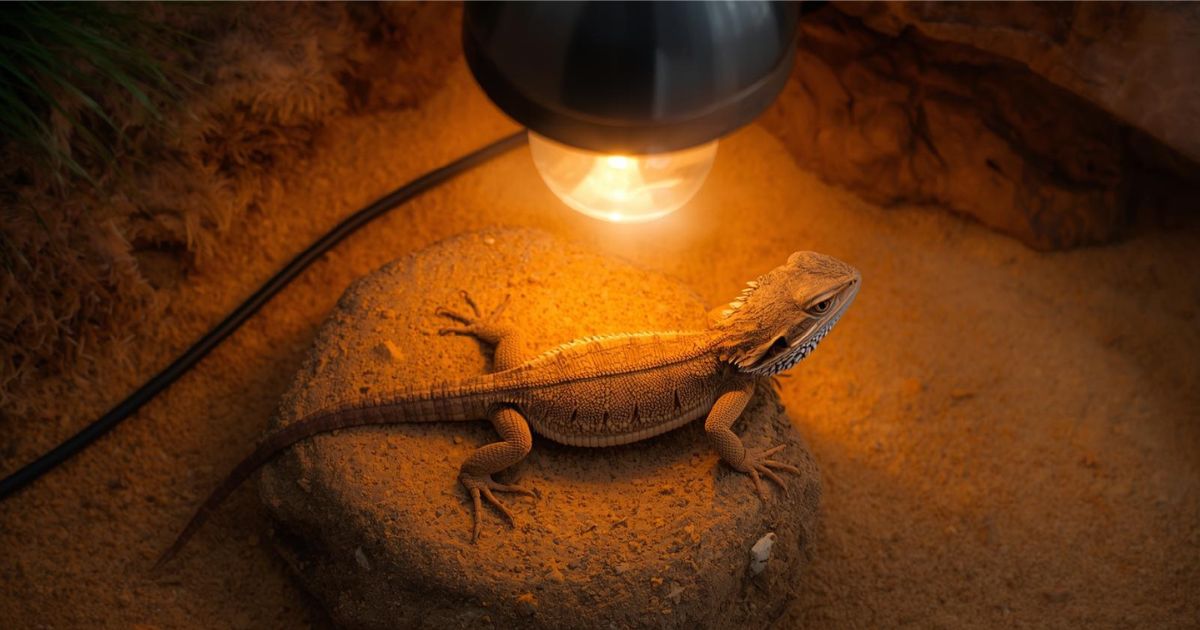
🔥 What You Need to Know About Reptile Heating
- Heat without a thermostat is a house fire waiting to happen — unregulated equipment routinely hits 150°F+ and burns animals, melts plastic, and ignites substrate.
- Ambient air temperature means nothing to a cold-blooded animal — reptiles need surface heat they can physically touch, not warm air floating around their heads.
- Most "reptile heaters" sold in pet stores are bottom-tier garbage — stick-on heat mats with no thermostat compatibility, basking bulbs that burn out in two weeks, and ceramic emitters mounted in plastic domes that warp under heat.
- Species-appropriate heating isn't optional — desert lizards need intense basking zones (110-120°F surface temp), while tropical snakes need ambient warmth with moderate basking (85-90°F).
- You need at least two types of heating equipment — one for daytime basking, one for nighttime ambient heat, both controlled by separate thermostats.
This guide compares every heating system used in reptile keeping, explains why most setups fail, and shows you how to build a heating plan that actually works.
Reptile Heating Systems Compared: Thermostats, Fire Hazards, and Fake Warmth
Most reptile deaths don't happen because the animal got too cold.
They happen because someone decided that "keeping it warm" meant sticking a heat source in the enclosure and hoping for the best.
Pet stores sell heating equipment like it's all interchangeable, like a "75-watt heat lamp" is the same thing as a "75-watt ceramic heat emitter" or a "75-watt halogen bulb."
It's not.
Wattage tells you how much electricity something uses, not how hot it gets, how far the heat radiates, or whether it's even delivering the type of heat your reptile needs to survive.
You can cook a gecko under a 50-watt bulb or leave a monitor lizard shivering under a 150-watt ceramic emitter, and both scenarios happen every single day because people think "heat" is heat.
It's not.
This article covers every heating system used in reptile keeping, how they actually work, which species need which setup, and why most of what you've been sold is either inadequate or actively dangerous.
← Back to complete reptile care guide
Why Reptile Heating Is Different from Warming Your Living Room
Reptiles are ectothermic, which is a polite way of saying they can't generate their own body heat.
You can. They can't.
When you're cold, your metabolism cranks up, you shiver, you burn calories, and your core temperature stays stable.
When a reptile is cold, its metabolism shuts down, digestion stops, immune function collapses, and it becomes a slow-moving infection magnet waiting for the first respiratory bug to finish the job.
That's why "my house is 72°F" doesn't mean your bearded dragon is warm.
It means the air around the dragon is 72°F, and the dragon itself is whatever temperature the surfaces it's touching happen to be.
Surface Heat vs Ambient Heat: The Difference That Kills
Reptiles don't warm themselves by floating in warm air.
They warm themselves by lying on hot rocks, basking under direct sunlight, or pressing their bellies against sun-warmed sand.
That's surface heat, direct contact with a warm object.
Ambient heat is the air temperature around them, and for most species, it's secondary.
A bearded dragon in a 90°F room with no basking spot is still cold.
A ball python in a 75°F room with a properly heated warm hide is fine.
The pet store employee who told you to "just keep the room warm" didn't understand this, and neither do the people parroting it online.
The Heating Equipment Breakdown: What Actually Works
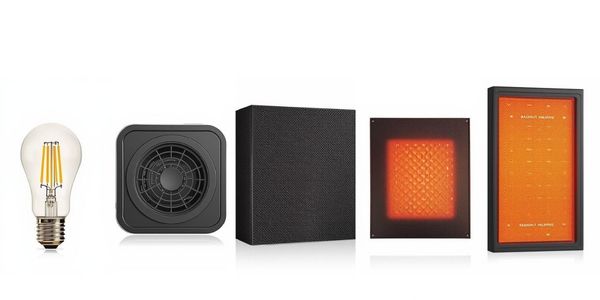
Here's every heating option used in reptile keeping, ranked by how well they work and how often they fail.
1. Halogen Basking Bulbs: The Gold Standard
Halogen bulbs produce infrared-A radiation, which penetrates skin and warms tissue the same way sunlight does.
This is the closest thing to natural basking heat you can provide indoors.
Best for: Diurnal (daytime-active) species that bask, bearded dragons, uromastyx, monitors, tegus, most tortoises.
Why they work:
- Penetrating heat that warms the animal from the inside, not just the surface
- Visible light output supports natural behavior and circadian rhythm
- Creates a thermal gradient, hot directly under the bulb, cooler as you move away
- Doesn't dry out the air like ceramic heat emitters
Why they fail:
- People use them without a dimming thermostat, so the basking spot hits 130°F and cooks the animal
- Mounted too close or too far, making the spot either dangerously hot or uselessly warm
- Used as the only heat source, so the enclosure goes cold at night when the bulb turns off
Halogen bulbs are daytime-only heat.
You need a separate nighttime heat source unless your room temperature stays above 70°F and your species tolerates a nighttime drop.
Most pet store basking bulbs burn out in 3-4 weeks and barely generate surface heat above 85°F.
The Zoo Med Repti Basking Spot Lamp uses a patented double reflector that focuses 35% more heat into a tight beam, creating proper basking zones (100-110°F surface temps) that actually penetrate tissue and warm cold-blooded animals from the inside out.
2. Deep Heat Projectors (DHP): The Halogen Alternative
DHPs produce infrared-B radiation, less penetrating than halogen, more penetrating than ceramic heat emitters.
They provide heat without visible light, making them usable 24/7.
Best for: Species that need basking heat but don't require intense light exposure—ball pythons, Brazilian rainbow boas, some monitor species.
Why they work:
- Can be used day and night without disrupting the photoperiod
- Penetrates deeper than surface-only heat sources
- Longer lifespan than halogen bulbs (typically 2-3 years vs 6-12 months)
Why they fail:
- Expensive upfront ($50-80 per bulb vs $10-15 for halogen)
- Still requires a thermostat—unregulated DHPs can hit 120°F+ surface temps
- Not suitable as the sole heat source for high-basking species like bearded dragons or uromastyx
3. Ceramic Heat Emitters (CHE): Ambient Heat Only
CHEs produce infrared-C radiation, which only heats surfaces, it doesn't penetrate skin.
Think of it like standing near a space heater: you feel warm, but your core temperature doesn't rise.
Best for: Nighttime ambient heating, supplemental warmth in large enclosures, species that don't require basking (like some nocturnal geckos).
Why they work:
- No light output, won't disrupt nocturnal species or mess with day/night cycles
- Long lifespan (3-5 years with proper use)
- Safe for use in high-humidity setups (won't short out like some bulbs)
Why they fail:
- Dries out the air aggressively, terrible for tropical species unless humidity is actively managed
- Doesn't provide basking-quality heat, surface temps are weak compared to halogen or DHP
- People mount them in cheap plastic dome fixtures that warp, melt, or crack under sustained heat
If you're using a ceramic heat emitter for nighttime warmth, don't waste money on no-name brands that crack after two months.
The Fluker's Ceramic Heat Emitter is one of the few CHEs that actually lasts 2-3 years with proper use, distributes heat evenly without hot spots, and works in both dry and humid setups without shorting out or developing cold zones.
Cheap plastic dome fixtures warp under sustained heat, crack around the socket, and become fire hazards within 6-12 months of normal use.
The Zoo Med Deluxe Porcelain Clamp Lamp uses a ceramic socket rated for high-wattage bulbs (up to 150W), has a spring-loaded clamp that actually stays put, and includes a built-in reflector that directs heat downward instead of radiating it in every useless direction like cheap alternatives.
CHEs are supplemental heat, not primary heat.
If your only heat source is a ceramic emitter, your reptile isn't basking, it's just… less cold.
4. Heat Mats: The Overrated Convenience Product
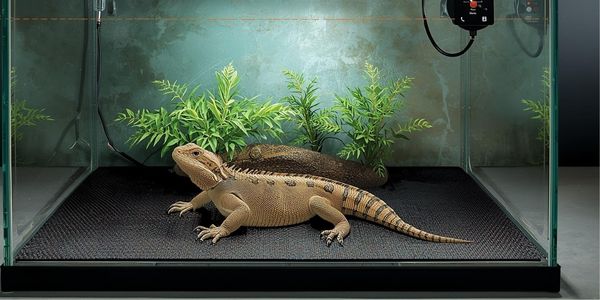
Heat mats are adhesive pads that stick to the outside of glass enclosures and warm the floor inside.
They're marketed as "easy" and "safe," which is code for "we know you won't use a thermostat, so we made it low-wattage so it probably won't start a fire."
Best for: Supplemental belly heat for snakes (ball pythons, corn snakes, king snakes) when used with overhead basking heat.
Why they work (barely):
- Provides localized warm spot for snakes that thermoregulate by lying on warm surfaces
- Low profile, doesn't take up internal enclosure space
Why they fail (constantly):
- Under-tank heat mats (UTH) don't penetrate thick substrates, if you have more than 1 inch of bedding, the heat never reaches the animal
- Most come with no thermostat compatibility, and the ones that do use cheap adhesive thermostats that fail within months
- They don't create a thermal gradient, the whole mat is one temperature, so the animal can't thermoregulate by moving
- Unregulated mats can hit 120°F+ and cause thermal burns
Heat mats are not a replacement for basking heat.
They're a supplement for species that benefit from belly heat in addition to overhead heating.
5. Radiant Heat Panels (RHP): The Professional Choice
RHPs are flat panels mounted to the enclosure ceiling that radiate heat downward.
They're expensive, require custom mounting, and are almost never sold in pet stores because they don't generate impulse purchases.
Best for: Large enclosures, rack systems for breeders, species that need consistent ambient heat without light (like ball pythons, carpet pythons, blue-tongue skinks).
Why they work:
- Even heat distribution across the entire enclosure
- Long lifespan (5-10 years)
- Low fire risk when properly installed
- Works well in high-humidity setups
Why they fail:
- Expensive ($80-150 per panel)
- Requires custom installation, you can't just screw it into a glass tank lid
- Doesn't provide intense basking heat—better for ambient warmth than hot spots
RHPs are what serious keepers use after they've burned through three ceramic emitters, two melted dome fixtures, and one minor electrical fire.
6. Heat Cable: The Forgotten Option
Heat cable is a flexible heating wire you can route through substrate, wrap around branches, or coil under enclosure floors.
It's controllable, customizable, and almost nobody uses it because it requires effort.
Best for: Custom bioactive setups, large naturalistic enclosures, species that burrow (like sand boas or blue-tongue skinks).
Why it works:
- You control exactly where the heat goes
- Can create localized warm zones in specific areas (under hides, along climbing branches, etc.)
- Works well in deep substrate setups
Why it fails:
- Installation is time-consuming and requires planning
- Must be used with a thermostat, unregulated cable can overheat and melt through plastic
- Not suitable as the sole heat source, needs to be paired with overhead heating

Thermostats: The Difference Between "Warm" and "On Fire"
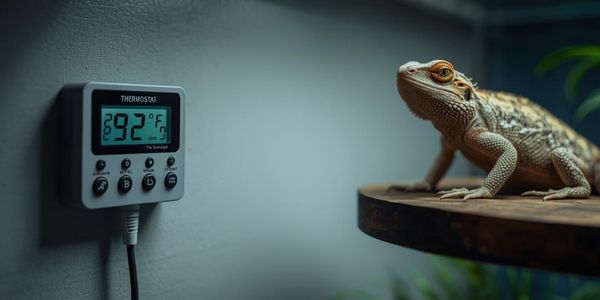
Every heating element you plug in should be controlled by a thermostat.
Not "eventually." Not "once I can afford it." Now.
Unregulated heat sources don't maintain a stable temperature, they run at full power until you unplug them.
A 100-watt ceramic heat emitter doesn't "stay at 90°F." It climbs to 140°F+, melts plastic, burns animals, and turns substrate into kindling.
Types of Thermostats
On/Off Thermostats: Cheapest option ($20-40). Turns the heat source completely off when the target temp is reached, then turns it back on when it drops. Works fine for heat mats and CHEs. Not ideal for basking bulbs, the constant on/off cycling shortens bulb lifespan.
Dimming/Proportional Thermostats: Mid-range option ($50-100). Gradually reduces power to the heat source to maintain a stable temperature. Best for halogen bulbs, DHPs, and any setup where you want precise control without flickering.
Cheap on/off thermostats will shorten your bulb's lifespan by constantly cycling power and creating temperature swings that stress reptiles.
The REPTIZOO Reptile Dimming Thermostat gradually reduces power output to maintain stable temps without flickering, extends bulb life by 40-60%, and gives you precise digital control with a large LED screen that actually shows what's happening.
Pulse-Proportional Thermostats: High-end option ($100-200). Rapidly pulses power on and off to maintain exact temperatures. Overkill for most setups, but useful for breeders or species with tight temperature requirements (like certain chameleons or dart frogs).
Where to Place the Thermostat Probe
The probe goes where the animal sits, not where it's convenient for you.
For basking bulbs: Mount the probe on the basking platform, not floating in mid-air.
For heat mats: Place the probe between the mat and the enclosure floor, or on the substrate surface directly above the mat.
For ambient heating (CHE, RHP): Mount the probe at animal height, not on the ceiling or floor.
If the probe isn't measuring the temperature the animal actually experiences, the thermostat is useless.
Common Heating Mistakes That Kill Reptiles
1. Using a Single Heat Source for Everything
One basking bulb doesn't cover daytime heat, nighttime heat, and ambient warmth.
You need at least two heat sources: one for daytime basking, one for nighttime ambient heat.
2. Measuring Air Temperature Instead of Surface Temperature
Your thermometer reads 85°F, so you assume the reptile is warm.
But the basking spot is only 78°F, and the animal is cold.
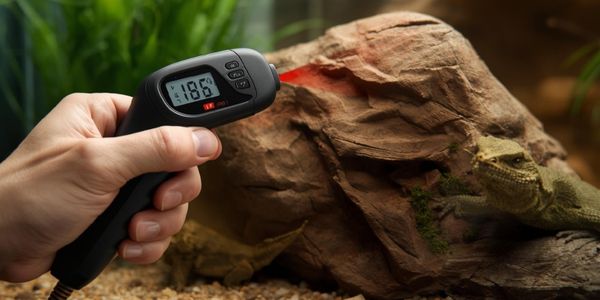
Use a temp gun to measure surface temps where the animal actually sits.
Stick-on thermometers measure air temperature 4 inches from where your reptile actually sits, giving you useless readings that have nothing to do with surface temps.
The Etekcity Infrared Thermometer Gun lets you point-and-click to measure basking platform temps, hide surface temps, and substrate temps instantly and accurately, the only way to verify your heating setup is actually working instead of guessing based on air temperature.
3. Heating the Entire Enclosure
Reptiles thermoregulate by moving between warm and cool zones.
If the whole enclosure is 90°F, the animal can't cool down, and you've just built a slow cooker.
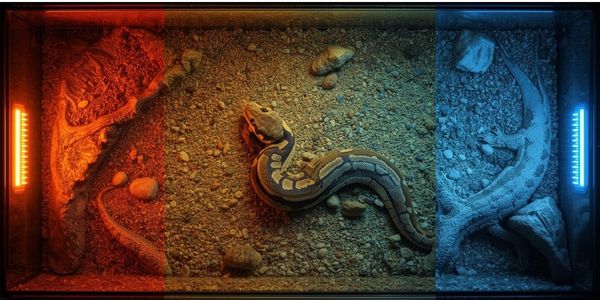
One end should be hot. The other end should be cooler. That's the gradient.
4. Using Colored "Nighttime" Bulbs
Red bulbs, blue bulbs, black bulbs, all marketed as "nighttime heat" that "won't disturb your reptile."
Reptiles see those wavelengths. You just gave them a disco light they can't escape.
Use a CHE, DHP, or RHP for nighttime heat. No light. Period.
5. Assuming "Reptile-Specific" Means "Safe"
Pet stores sell heat rocks (cause burns), coil heat lamps (fire hazards), and stick-on thermometers (wildly inaccurate).
Just because it has a gecko on the package doesn't mean it works.
How to Build a Heating Plan That Works
Step 1: Research your species' thermal requirements. What's the basking temp? What's the ambient temp? Does it need a nighttime drop?
Step 2: Choose your daytime heat source. For basking species: halogen bulb. For ambient-only species: DHP or RHP.
Step 3: Choose your nighttime heat source. CHE, DHP, or RHP. No light output.
Step 4: Buy a thermostat for each heat source. On/off for CHEs, dimming for bulbs.
Step 5: Measure temps with a temp gun, not a stick-on thermometer. Adjust wattage and probe placement until you hit target temps.
Step 6: Monitor for a week. Temps will shift as the animal moves substrate, as seasons change, as bulbs age. This isn't "set it and forget it."
Final Thoughts: Heat Is Not Optional
Reptiles don't adapt to cold.
They tolerate it until their immune system collapses, their digestion stops, and an infection finishes them off.
The difference between a thriving reptile and a slowly dying one is usually just proper heat.
Not "sort of warm." Not "the room feels fine to me." Proper, species-appropriate, thermostat-controlled heat.
If you're not willing to buy the right equipment and check temps daily, don't keep reptiles.
It's that simple.
🐾 Frequently Asked Questions
Q What's the best heating system for a bearded dragon?
A halogen basking bulb (75-100 watts depending on enclosure size) controlled by a dimming thermostat for daytime heat, plus a ceramic heat emitter or deep heat projector for nighttime ambient warmth if your room drops below 65°F. Halogen provides infrared-A radiation that penetrates tissue like natural sunlight, creating a proper basking spot (100-110°F surface temp). Heat mats alone don't work, bearded dragons are basking lizards that need overhead heat. Mount the basking bulb 12-18 inches above the basking platform, measure temps with an infrared temp gun, and adjust height until you hit target temps.
Q Do I really need a thermostat for my reptile's heat lamp?
Yes. Unregulated heat sources run at full power until unplugged, routinely hitting 130-150°F+ surface temps. That's hot enough to cause thermal burns within seconds, melt plastic enclosure components, ignite substrate, and kill your reptile. A $30 on/off thermostat or $60 dimming thermostat prevents all of this by automatically regulating power output to maintain your target temperature. Every heat source, bulbs, ceramic emitters, heat mats, radiant panels, should be plugged into a thermostat, not directly into a wall outlet. This isn't optional equipment; it's basic fire safety and animal welfare.
Q Can I use a heat mat as my only heat source for a ball python?
No. Heat mats provide localized belly heat but don't create a thermal gradient, don't penetrate thick substrate, and don't raise ambient enclosure temperature. Ball pythons need ambient warmth (78-82°F cool side, 88-92°F warm side) plus a heated hide they can curl up in. Use an overhead heat source (deep heat projector, radiant heat panel, or ceramic heat emitter) for ambient warmth, and optionally add a thermostat-controlled heat mat under the warm hide for supplemental belly heat. The mat alone leaves the snake chronically cold because it only heats a tiny floor section, the rest of the enclosure stays room temperature.
Q Why does my ceramic heat emitter keep drying out my enclosure?
Ceramic heat emitters produce infrared-C radiation that heats surfaces but also evaporates water aggressively. CHEs are terrible for tropical species (like green tree pythons, chameleons, or dart frogs) unless you're running misters, foggers, or heavy substrate moisture to compensate. Switch to a deep heat projector (DHP) or radiant heat panel (RHP) instead, both provide heat without the severe drying effect. If you must use a CHE, increase misting frequency, add a larger water bowl, use moisture-retaining substrate (like coconut coir or cypress mulch), and monitor humidity with a digital hygrometer at least twice daily.
Q What's the difference between a basking bulb and a ceramic heat emitter?
Basking bulbs (halogen or incandescent) produce visible light and infrared-A radiation that penetrates skin and warms tissue from the inside, mimicking natural sunlight. Ceramic heat emitters (CHEs) produce no light and only infrared-C radiation, which heats surfaces but doesn't penetrate tissue. Use basking bulbs for diurnal (daytime-active) species that need intense basking heat (bearded dragons, uromastyx, monitors), and use CHEs for nighttime ambient heating or for nocturnal species that don't require basking. CHEs dry out enclosures faster, have longer lifespans (3-5 years vs 6-12 months for bulbs), and work 24/7 without disrupting photoperiods.

📖 Related Articles

7 Ways to Socialize a Guinea Pig: The 2026 Guide

💬 Comments (0)
No comments yet. Be the first to share your thoughts! 👇
✍️ Leave a Reply