
7 Ways to Socialize a Guinea Pig: A Practical Guide
Last updated: October 4, 2026. This article is for general information and does not replace advice from your veterinarian. How we write our articles.
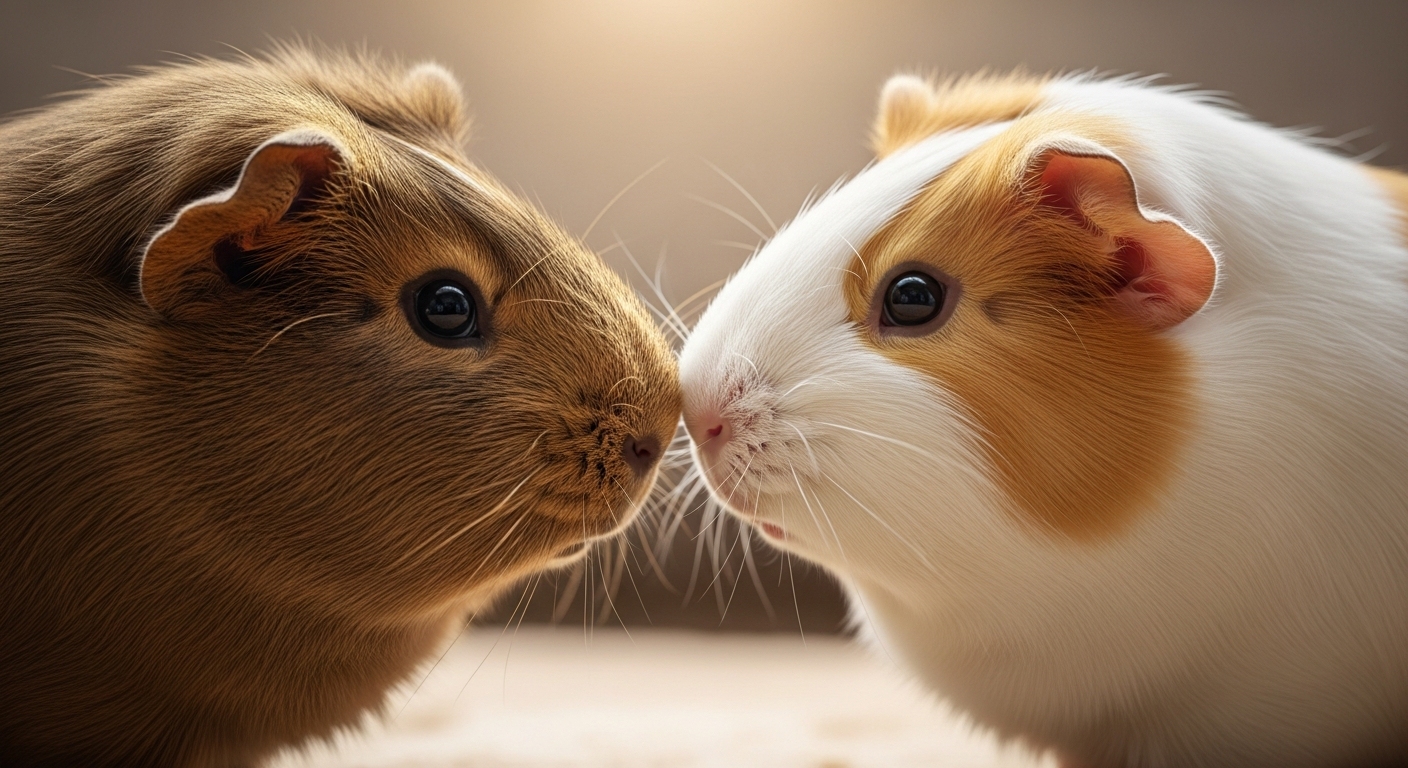
The person who sold you a single guinea pig probably meant well. But the advice that one pig is "easier" or "needs less space" is one of the most common and harmful things new owners are told. Rescues regularly see the consequences of that advice: withdrawn animals that have stopped exploring, stopped vocalizing, and stopped interacting with their environment. They sit in the corner, barely reacting when you open the cage. That is not a calm pet, that is an animal under chronic stress.
The single most effective welfare improvement you can make for a guinea pig is not organic bedding or premium pellets, it is a companion.
But you cannot drop a stranger into your pig's cage and expect it to go smoothly. That is a reliable way to end up with injuries and a broken bond before it ever starts.
Finding the right ways to socialize a guinea pig requires a clear strategy, patience, and understanding that these animals have complex social preferences that cannot be rushed.
This guide covers practical, widely recommended methods for guinea pig socialization, from professional bonding bootcamps to DIY neutral introductions, cage architecture, food-based strategies, and how to build trust between your pig and you.
Why Loneliness Is a Health Issue, Not Just a Comfort Issue
Many guinea pigs end up in rescue. In 2023, the RSPCA said it had rescued 237 guinea pigs in the first eight months of the year, 37% more than in the same period of 2022, and linked the rise to the cost of living crisis (Veterinary Nurse news, 2023). Understanding what guinea pigs need before you get them is the best way to avoid that outcome.
Guinea pigs are prey animals hardwired to be on alert 24 hours a day. In the wild, they live in family groups of 5 to 10, and the RSPCA says guinea pigs get lonely and shouldn’t be kept alone. A companion gives them another pig to communicate with, follow, and rest near, which is a big part of feeling safe for a prey animal.
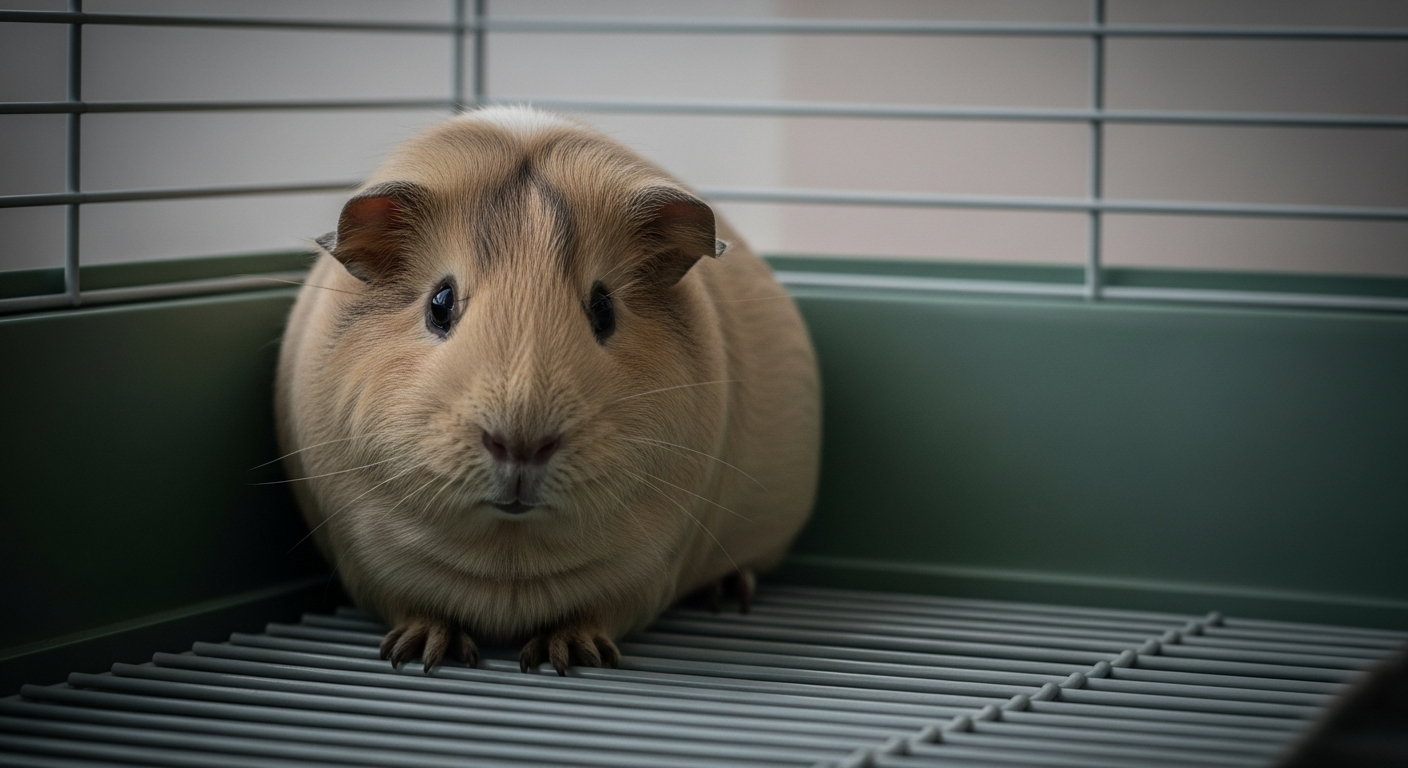
When a bonded companion is introduced successfully, the behavioral change is striking. Pigs that barely touched their hay begin eating actively, they start "popcorning", a behavior where guinea pigs leap into the air spontaneously, which is one of the clearest signs of genuine excitement and comfort.
The difference between a solo pig and a paired pig is not subtle.
One critical warning worth stating clearly: do not house rabbits and guinea pigs together. Rabbits can carry Bordetella bronchiseptica, a bacterium that can make guinea pigs very unwell, and rabbits often bully guinea pigs when they share a space (PDSA). A rabbit's powerful hind legs can also cause severe spinal injury to a guinea pig during play.
Animal welfare charities like the PDSA advise against keeping them together. If you want a rabbit, it needs a separate, fully divided enclosure.
Small prey animals often hide illness. Many of the warning signs that a rabbit needs a vet also apply to guinea pigs.
Way #1: Professional Bonding Bootcamps
Some specialist guinea pig rescues, especially in the UK, offer bonding services, sometimes called "guinea pig dating".
Rather than handing you a new pig and wishing you luck, these services let your existing pig meet one or more rescue pigs under experienced supervision, so the rescue can find a compatible companion.
These rescues work on the understanding that guinea pigs do not simply accept any other pig, they have personality-based preferences. Two very dominant pigs often clash, while the same pig may settle well with a more easygoing companion.
What a Professional Bonding Process Looks Like
Day 1: The Scent Swap. The pigs do not see each other, bedding is swapped between cages, and experts observe whether your pig investigates the new scent with curiosity or responds with tooth chattering and avoidance.
Day 2: The Mesh Introduction. Cages are placed side by side with a mesh barrier between them. The pigs can communicate and smell each other without contact, the staff watch for whether they sleep near the barrier or actively try to push through it aggressively.
Day 3: Neutral Territory. The pigs are introduced in a large, scent-neutral pen, mutual ignoring and calm exploration are the green light. Active aggression means the pairing is not a match, and a different partner is tried.
The expertise you are paying for is the ability to distinguish between normal dominance negotiation and genuine incompatibility. If you have access to this service, it is worth the cost. It removes the guesswork and protects both animals.
Way #2: The DIY Neutral Territory Introduction
Most owners do not have access to a professional bonding service and need to manage introductions themselves. The most important rule for a successful DIY introduction is this: never introduce a new pig inside your existing pig's enclosure. That space has been marked as territory, defending it is instinctive.
You need a location neither animal has claimed, what experienced owners call "neutral ground."
The Bathtub Method: Step by Step
For first introductions in a small home, the bathtub works well, the enclosed sides prevent escape, the space is easily cleaned, and it has no prior scent marking from either pig.
- Sanitize the surface: Clean the tub with a 50/50 mix of white vinegar and water. Rinse thoroughly until no vinegar scent remains.
- Add grip: Lay two old towels flat on the tub surface. Guinea pigs panic on slippery surfaces, and panic can escalate into biting.
- Create a focal point: Place a generous pile of Timothy hay in the center, when both pigs are occupied eating, they are not focused on confronting each other.
- Introduce simultaneously: Place one pig at each far end of the tub at the same time, rather than one after the other.
- Observe for 15 minutes: Watch their body language closely, you want to see curiosity, not stiff posturing. Two pigs eating from the same hay pile is an excellent sign.
- Have an exit plan: Keep a thick towel within reach. If a fight breaks out, both animals locked together rolling, drop the towel over them to interrupt contact. Never use bare hands to separate fighting guinea pigs.
If the 15-minute session passes without injury, move both pigs to a temporary, clean enclosure for the night. Do not move them directly into the main cage yet, repeat the neutral introduction for two to three more sessions before making the arrangement permanent.
Way #3: Understanding Dominance Behavior (And Not Interfering)
One of the most common mistakes owners make during introductions is separating the pigs the moment they see dominance displays. This can restart the whole process and stop the animals from settling into a stable hierarchy.
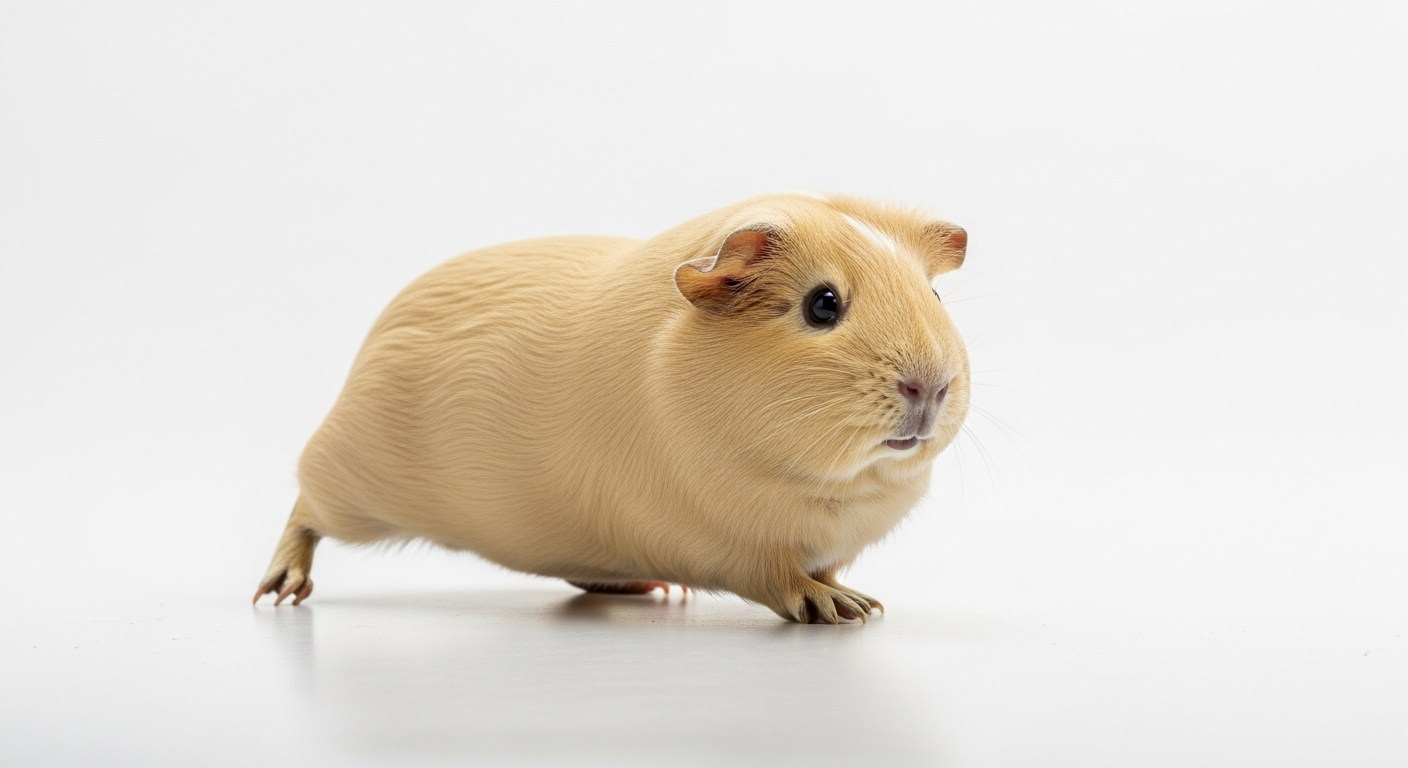
The "rumble strut" is the primary dominance display. One pig lowers its head, swings its hindquarters slowly from side to side, and produces a low, rumbling vocalization. It looks threatening to a new owner, but it is normal negotiation. They are working out who holds social authority.
If you separate them every time you see it, they never resolve that question.
Here is what normal dominance behavior looks like:
- Mounting: Both males and females do this regardless of sex. It typically lasts a few seconds, let it happen.
- Nose-offs: Both pigs raise their heads and stretch their necks upward, each trying to appear taller. This is a non-contact dominance check.
- Chasing: One pig follows the other around the enclosure. As long as the pig being chased is not vocalizing in distress, this is acceptable.
Intervene only for real fighting: visible blood, or both animals locked together and rolling. In either case, separate them immediately with a towel. Short of that, sit on your hands and let them work it out.
Way #4: Boar-Specific Bonding Strategies
Male guinea pigs are more difficult to pair than females, and this reputation leads many rescues to have a backlog of adult boars with no suitable matches. But they can be successfully bonded, they simply require additional structure.
With boars, the dominance phase runs longer, a pair of males may rumble-strut for several weeks before settling. This is within the normal range, the bond is still forming, it just takes more time.
The "Two of Everything" Rule for Males
Competition over resources is a common trigger for fights between boars. The solution is straightforward: remove scarcity.
- Two water bottles positioned at opposite ends of the enclosure
- Two hay sources, racks or piles, placed apart so neither pig is forced to share one feeding spot
- No food bowls during bonding, scatter feeding on a foraging mat eliminates bowl-guarding entirely
Cage Geometry Matters for Boars
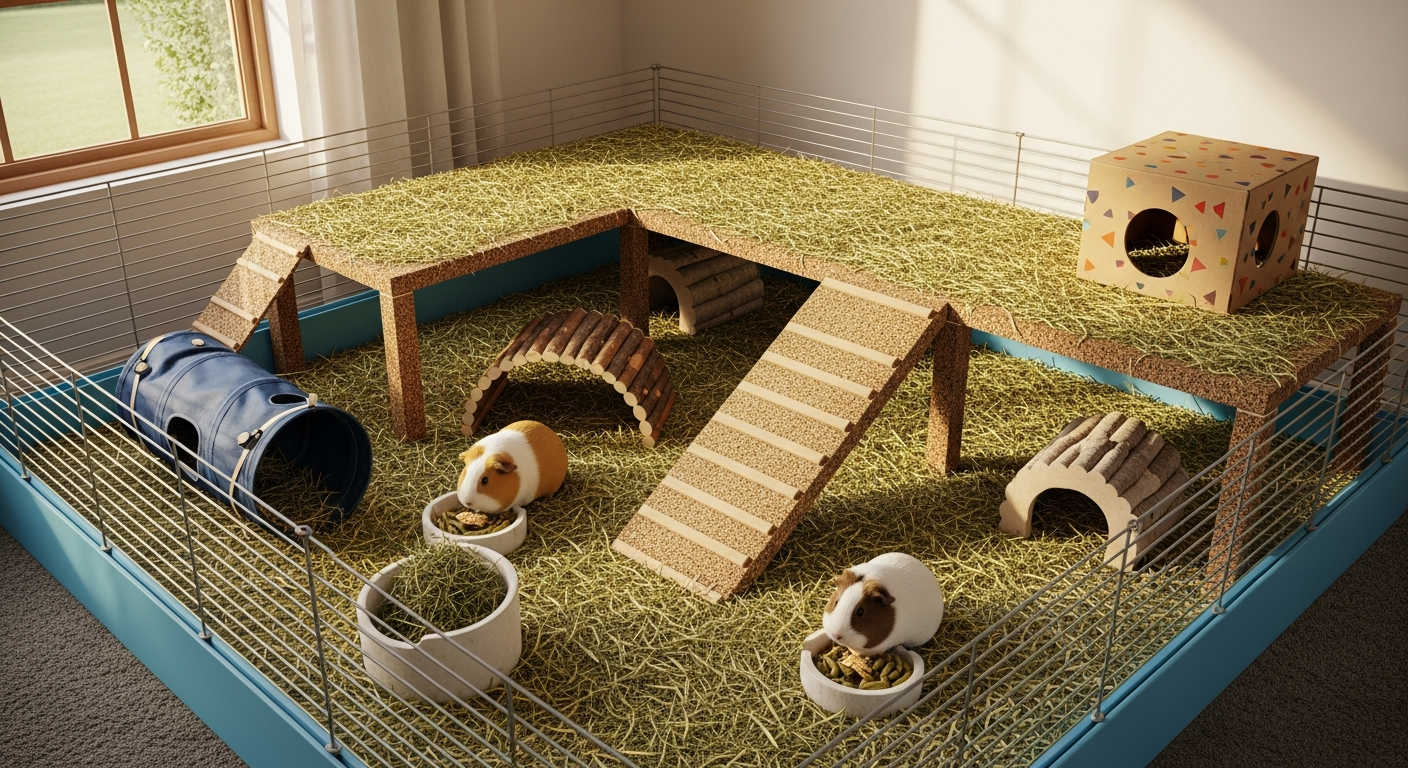
Avoid any enclosure with dead ends for male pairs. If a submissive boar retreats into a solid-sided hide and the dominant boar blocks the entrance, the submissive one will bite out of fear, not aggression. Every hiding space should have at least two exits, tunnels work well, cardboard boxes with holes cut into two or more sides also work. If the lower-ranking pig can always move away, he rarely needs to escalate.
Way #5: Cage Architecture That Supports Socialization
You cannot successfully socialize two guinea pigs in an undersized enclosure. Proximity without adequate space generates constant stress, and chronic stress leads to chronic fighting.
The Humane Society’s often quoted minimum of 7.5 square feet is a bare minimum for one or two pigs. Kavee recommends at least 10.5 square feet for a pair, and more for boars: a 2x4 C&C grid (about 10 square feet) at the very least for two males, ideally 2x5 (about 12 square feet). Many pet store cages are much smaller than any of these figures.
C&C Cages vs. Pet Store Enclosures
The modular C&C (Cubes and Coroplast) cage format has become the clear standard for welfare-conscious owners. These cages are open-topped, fully customizable in size, and can be expanded horizontally as your herd grows. Brands like Kavee and similar modular systems allow you to configure layouts that suit your space.
The current trend among experienced owners is the lofted design, a second level with a ramp, this gives each pig the ability to separate voluntarily. During high-tension periods, such as adolescence, when young boars in particular squabble more, having a second level available can prevent conflicts that would otherwise require intervention.
The Retreat Rule
The PDSA advises always giving guinea pigs hiding places so they can retreat when they feel frightened or overwhelmed. A pig that knows it can retreat is more likely to feel secure enough to approach. Place a hide in every corner of the enclosure, more retreat options equals more relaxed interaction.
Keeping rabbits too? See our rabbit litter training guide.
Way #6: Food-Based Socialization Strategies
Food is one of the most practical tools for reducing tension during the bonding phase. The goal is to shift eating from a competitive activity to a shared one.
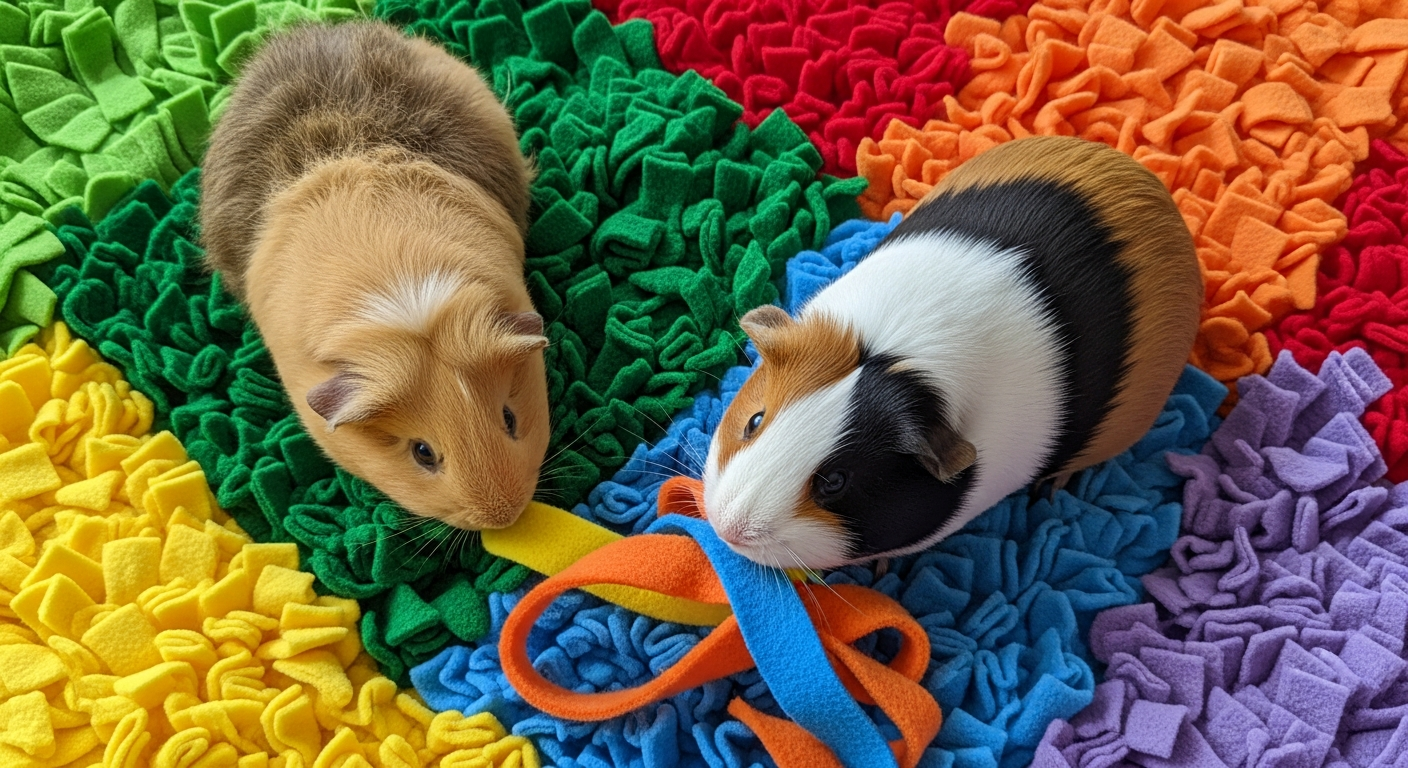
Snuffle Mats Over Food Bowls
During the socialization phase, remove all food bowls entirely. Use a snuffle mat, a fabric mat with strips of fleece where pellets are hidden, instead. Both pigs forage across the same surface without their heads competing over a single point. It distributes food broadly, eliminates bowl-guarding, and mimics natural grazing behavior. When both animals are occupied searching for food, they are not focused on each other.
Hanging Vegetables
For pairs that are still tense after the initial introduction phase, try hanging a piece of vegetable, a strip of bell pepper or a slice of cucumber, from the cage ceiling on a short length of sisal rope. The swinging motion means both pigs naturally orient toward the same object, they focus on getting the food rather than monitoring each other. It is a low-cost, practical way to create a shared goal between two animals still establishing their relationship.
Way #7: Building Trust with Your Guinea Pig
Socialization is not only about pairing guinea pigs with each other. Your relationship with them matters to their overall wellbeing, and how you build that relationship determines whether your pig views you as a threat or a reliable part of its environment.
The Passive Introduction Technique
The same idea of choice applies to you: a guinea pig that can always choose to engage or withdraw learns to trust you faster than one that is grabbed.
- Open the cage door and sit on the floor beside it.
- Hold a small amount of cilantro or parsley in your open palm.
- Do not reach in, do not call them, do not move.
- Wait for them to approach on their own terms.
If you reach into the cage to pick up a guinea pig that has not yet approached you voluntarily, you are triggering a predator response. From their perspective, something larger than them is reaching in from above. Sitting at floor level and letting them walk onto your hand or into your lap, in their own time, builds a fundamentally different association.
Read aloud nearby, so they become accustomed to the sound of your voice without any physical pressure. Some pigs take a few days and some several weeks. The bond that results from patient, choice-based interaction is stable.
A health check by an exotic vet is a good first step. Here is how to find and choose an exotic veterinarian.
When Socialization Doesn't Work: The Neighbor Option
Some guinea pigs are genuinely incompatible. After methodical introductions, proper neutral territory sessions, and appropriate enclosure setups, some pairs still show persistent aggression. This is not a failure on your part, it is a reality of individual animal personalities.
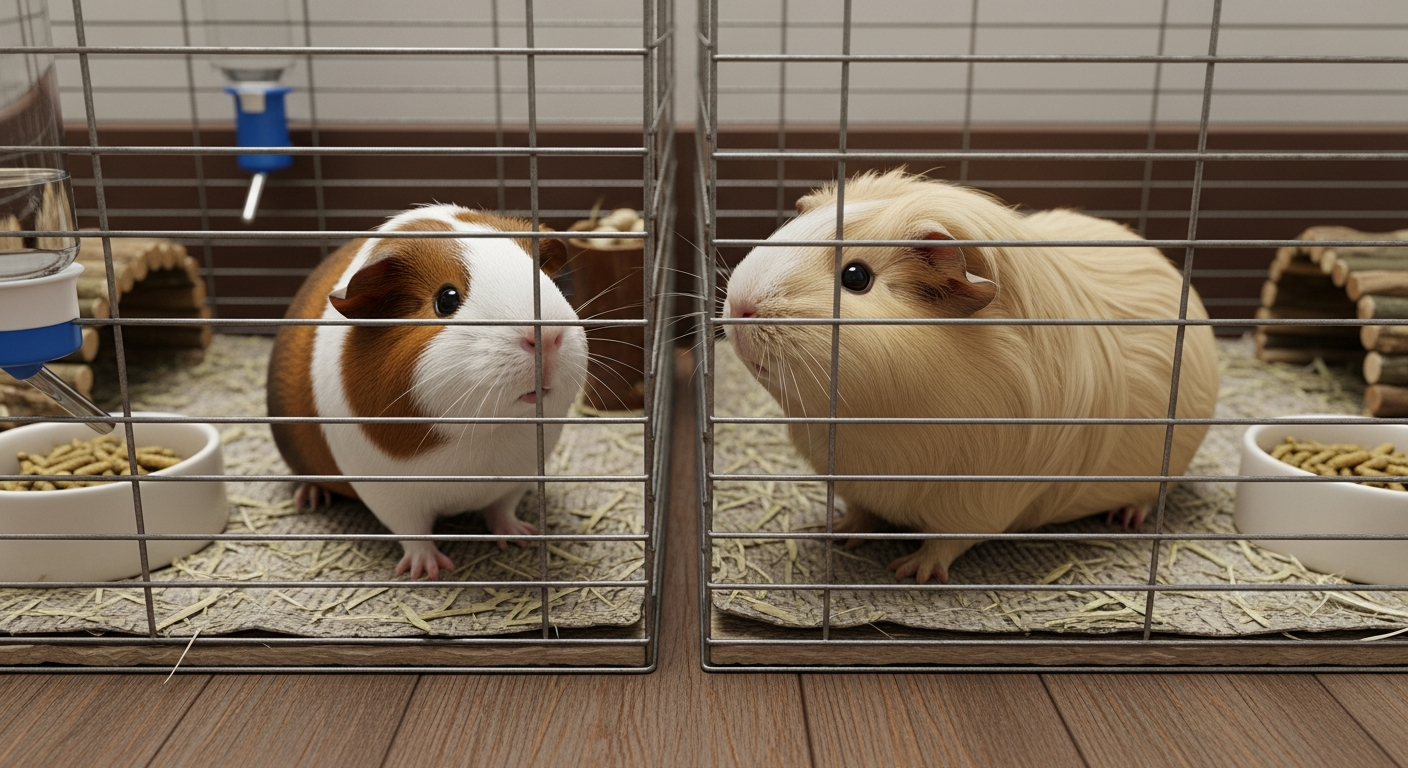
If you have worked through all of the ways to socialize a guinea pig covered here and blood continues to be drawn at every introduction, permanent separation is the right decision.
But separation does not mean isolation.
Place both cages side by side with a one-inch gap between the bars, close enough for scent and sound contact, but not close enough for biting. They retain the benefit of herd presence, the sound of another animal, and scent communication, without the physical risk.
It is a legitimate welfare outcome for pigs that simply do not get along when housed together.
Resources & References
Frequently Asked Questions
What is the bathtub method for guinea pigs?
The bathtub method involves placing two guinea pigs in a dry bathtub lined with towels and hay. It serves as a neutral territory that neither pig has marked, which lowers territorial aggression, and the high sides keep both pigs in. The towels give grip, because guinea pigs panic on slippery surfaces.
What does rumble strutting mean?
Rumble strutting is a dominance display where a guinea pig sways its hips and makes a low, rumbling sound. It is normal communication to establish hierarchy. Do not separate them unless they actually fight (blood drawn, or both locked together and rolling), as interrupting too early can restart the process.
Why are my guinea pigs chattering their teeth at each other?
Teeth chattering is a warning sign of aggression or strong annoyance. If you hear loud chattering, watch closely. If they lunge with open mouths, draw blood, or lock together and roll, separate them immediately using a towel to protect your hands.
How long does it take to socialize guinea pigs?
It varies wildly. Some pairs settle within a day, while others need several sessions of 'dating' on neutral ground. If introductions keep ending in real fights after several careful attempts, they may simply be incompatible, and a rescue that offers bonding can help you find a better match.
Can I keep two male guinea pigs together?
Yes, boar bonding is very possible but requires more space. Kavee recommends at least a 2x4 C&C cage (about 10 square feet) for two males, ideally 2x5 (about 12 square feet). You must ensure there are no dead ends in the cage and two of every resource (water bottles, hay spots, hides) to prevent guarding.

Related Articles

7 Signs Your Rabbit Needs a Vet Visit: What to Watch For
The 7 warning signs that mean your rabbit needs a vet, which ones are emergencies, and why a rabbit that stops eating can't wait.
Litter Train Your Rabbit: A Practical Guide
Rabbit litter training made simple: the right box and safe litter, where to place it, step by step training, and what to do when accidents happen.
How to Find and Choose an Exotic Vet: 5 Mistakes to Avoid
How to find and choose an exotic vet before an emergency: real directories, questions to ask, and mistakes to avoid for reptiles, birds and small pets.

Parasites in Reptiles: 7 Warning Signs and Treatment
How to spot internal and external parasites in reptiles: 7 warning signs, how vets test and treat them, and how to prevent mites.
Reptile Impaction: Causes, Symptoms & Emergency Care Guide
What causes reptile impaction, the early and emergency signs, how vets treat it, and the husbandry habits that prevent it.
Reptile Respiratory Infections: Symptoms & Treatment Guide
Reptile respiratory infections: early and advanced signs, what the vet will do, treatment, and the husbandry habits that prevent most cases.
Comments (0)
No comments yet. Be the first to share your thoughts!
Leave a Reply