5 Taurine-Rich Raw Diet Recipes for Cats (2026 update)
Heads up: This post contains affiliate links. If you buy something through them, I earn a small commission at no extra cost to you. It keeps the lights on and the kibble bowl full. Read the full boring legal stuff here.
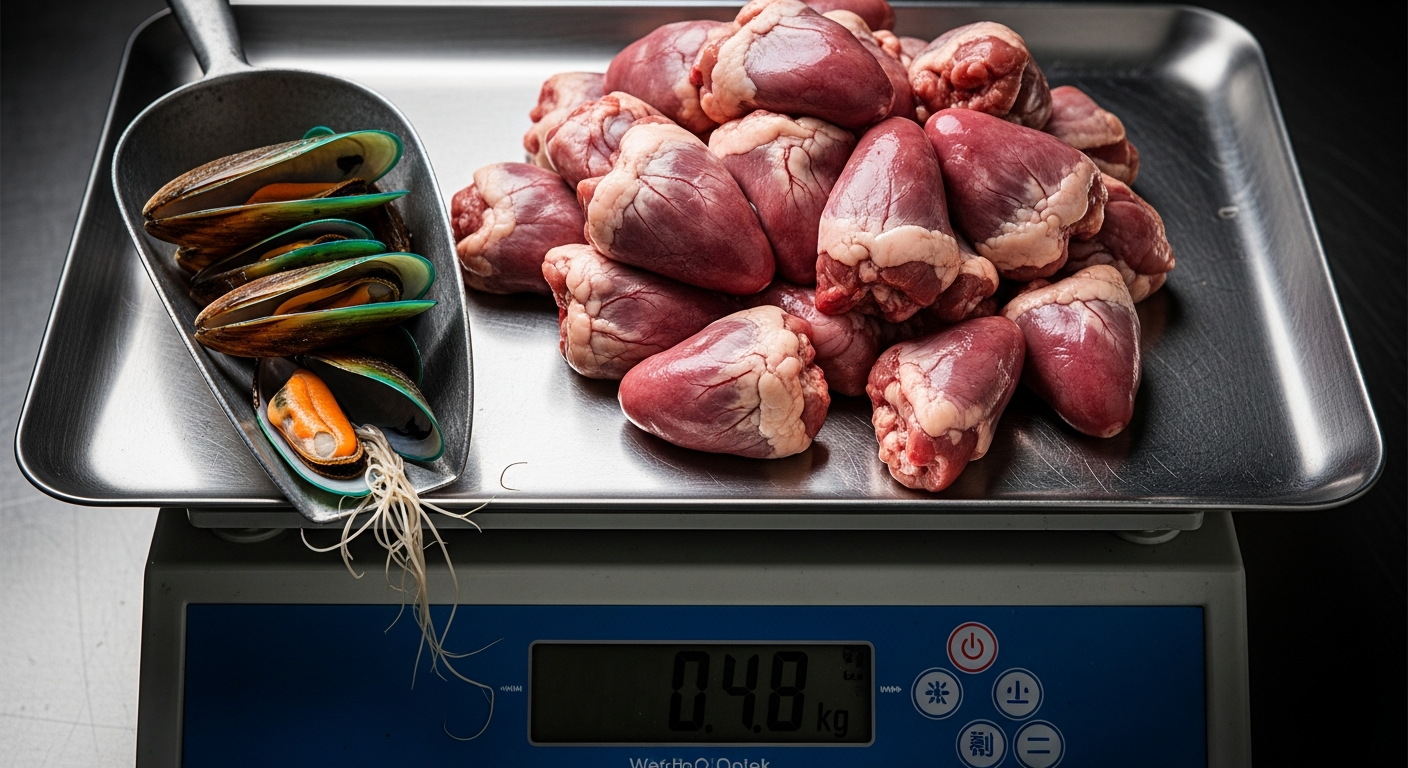
Taurine is not a marketing buzzword that pet food companies place on a brightly colored bag to justify a premium price tag. It is the essential amino sulfonic acid that keeps a feline heart beating, their retinas functioning, and their digestive system moving.
To truly understand feline nutrition, we must look back thousands of years to the desert ancestors of the domestic cat.
As obligate carnivores, felines evolved in environments where their prey, mice, small birds, and insects, provided an absolute abundance of taurine.
Because their natural diet was so saturated with it, the feline body simply stopped wasting metabolic energy trying to synthesize taurine on its own, and they lost the biological machinery required to make it.
Today, modern cats depend entirely on the blood and tissue of their diet to deliver this critical nutrient directly to their organs.
When a homemade raw diet provides these adequate levels, you unlock incredible vitality, a gleaming coat, and remarkable longevity for your cat. However, when a diet fails to provide enough taurine, the consequences are devastating and largely irreversible, first manifesting as central retinal degeneration (blindness), followed by catastrophic cardiac failure.
These five taurine-rich raw diet recipes are built on current laboratory data, evolutionary biology, and field-tested nutritional frameworks.
They provide the exact tools you need to prepare meals with absolute confidence, entirely free from the guesswork and the dangerous blind spots of outdated formulation software.
RELATED: Cat Nutrition Guide: Discover what your cat really need to eat.
Unlocking Real Nutrition: Why Whole Foods Beat Software
The modern pet food formulation industry often rests on a foundation of outdated math and incomplete data sets.
An October 2025 report by Solutions Pet Products took a hard look at the reliability of standard formulation software.
Programs like Animal Diet Formulator and Pet Diet Designer are frequently the go-to tools for DIY raw feeders, but they produce wildly inaccurate results. Why? Because they rely heavily on United States Department of Agriculture (USDA) databases that were designed for human nutrition, not feline biology.
These databases simply lack official, peer-reviewed taurine data for whole-food ingredients like chicken hearts, green-lipped mussels, or spleen.
When the software cannot find a numerical value for taurine in a specific cut of meat, it does not flag it as "unknown", it defaults the value to absolute zero.
As a result, perfectly balanced raw diets built on rich, dark meat and heavy organ content get falsely flagged as dangerously deficient. This software deception leads well-meaning owners to panic, unnecessarily overloading their cats with synthetic supplements when the raw food already contained a biological abundance of the nutrient.
To understand actual taurine yields, independent laboratory breakdowns of raw tissue are essential. The following values represent the top natural taurine sources per 3.5 oz (100g) of raw ingredient, proving that whole foods deliver what software cannot see:
- Blue or Green-Lipped Mussels: 655 to 827 mg per 3.5 oz (100g)
- Raw Chicken Heart: 117 to 220 mg per 3.5 oz (100g)
- Raw Beef Heart: 63 to 200 mg per 3.5 oz (100g)
- Turkey Dark Meat: 30 to 70 mg per 3.5 oz (100g)
Pet nutritionists have continually noted that formulating a proper feline diet requires relying on the ingredients themselves and understanding how a cat digests them.
Feeding a cat is a biological demand requiring specific, high-yield organ meats.
Furthermore, unlike dogs and humans who can use different amino acids to conjugate bile acids for digestion, cats can only use taurine. This means a massive amount of their daily taurine intake is tied up simply digesting their food.
Raw, whole-food sources consistently outperform synthetic alternatives in long-term clinical outcomes because of their superior bioavailability and their ability to perfectly support this unique digestive mechanism.
Protecting Their Heart: Feline DCM and The Silent Killer
A recent 2025 veterinary review highlighted a critical, dual-sided finding: well-formulated raw diets yield superior stool quality, lean muscle retention, and excellent long-term health markers. However, improperly constructed DIY attempts frequently lack the concentrated taurine required to support a healthy feline heart.
The standard baseline requirement for any feline raw diet sits at roughly 250 mg of taurine per 1,000 kilocalories just to maintain basic physiological function.
Diets built primarily on lean, white muscle meat, such as plain turkey breast or chicken breast, which contain only minimal amounts of taurine, cannot sustain cardiac function without heavily concentrated organ inclusion.
Supplementation has a defined role in raw feeding, but it cannot ever substitute for proper nutritional architecture.
Understanding Feline Dilated Cardiomyopathy (DCM)
Veterinary cardiologists began noting a highly concerning increase in Dilated Cardiomyopathy (DCM) cases in domestic cats in early 2026.
Strikingly, this is not happening in cats fed standard commercial diets; it is happening primarily in cats fed improperly formulated DIY raw, heavily cooked homemade, or vegan diets.
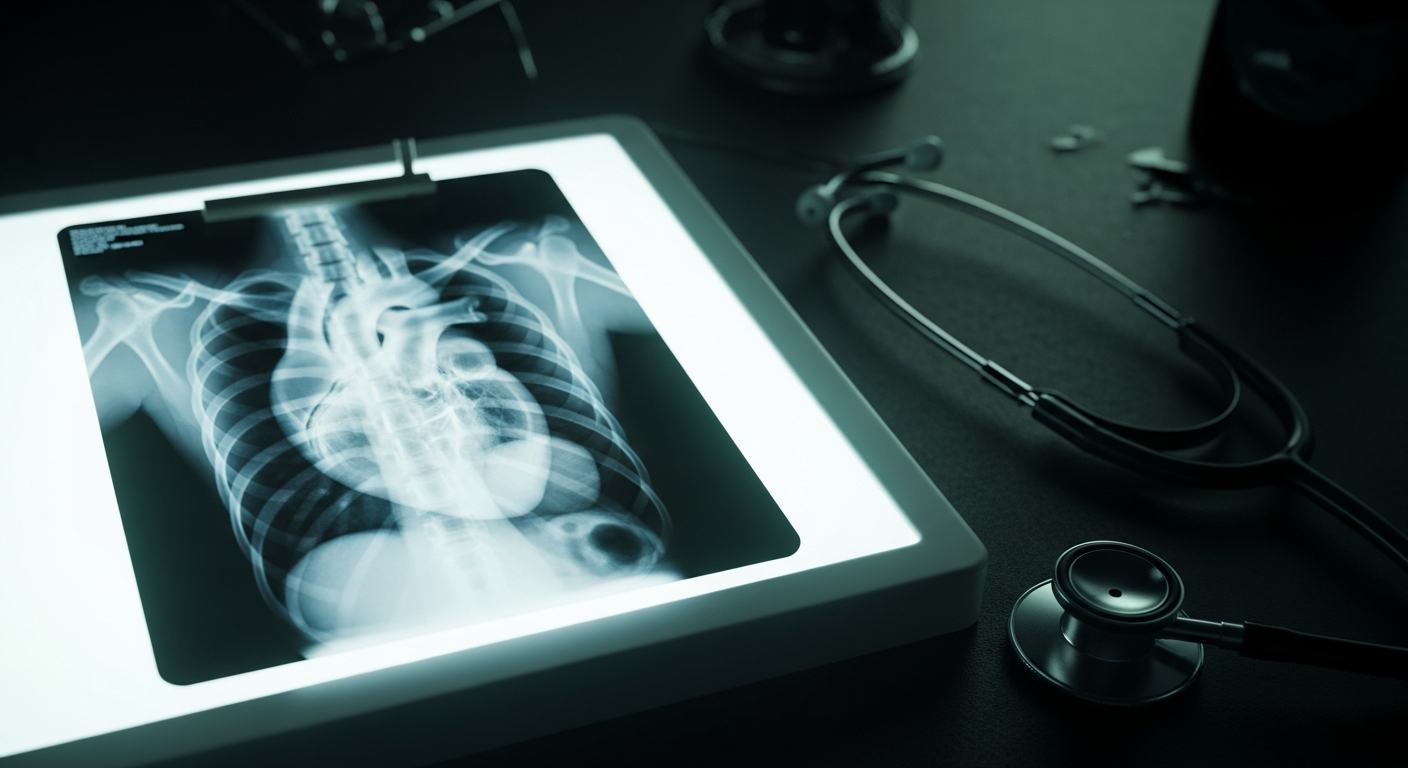
In feline DCM, the heart muscle becomes thin, flabby, and incredibly weak, the ventricular walls lose their elasticity and their capacity to pump blood effectively through the body.
Because the heart cannot pump efficiently, blood backs up, and fluid begins to rapidly accumulate in the lungs and the chest cavity, causing severe respiratory distress. Cats are masters of hiding pain, meaning that falling short of the taurine metric for even a few months allows this myocardial damage to compound silently.
By the time a cat shows visible symptoms, such as lethargy, open-mouth panting, or hiding, the heart damage is often severe.
The good news? This terrifying condition is almost entirely preventable with correct nutritional formulation.
By understanding exactly which meats hold the highest taurine concentrations, you provide the exact biochemical building blocks your cat needs for a strong, healthy cardiovascular system.
The Grinding Myth and The Dangers of Oxidation
For decades, the standard visual of a raw diet was a bowl of ground-up "mush."
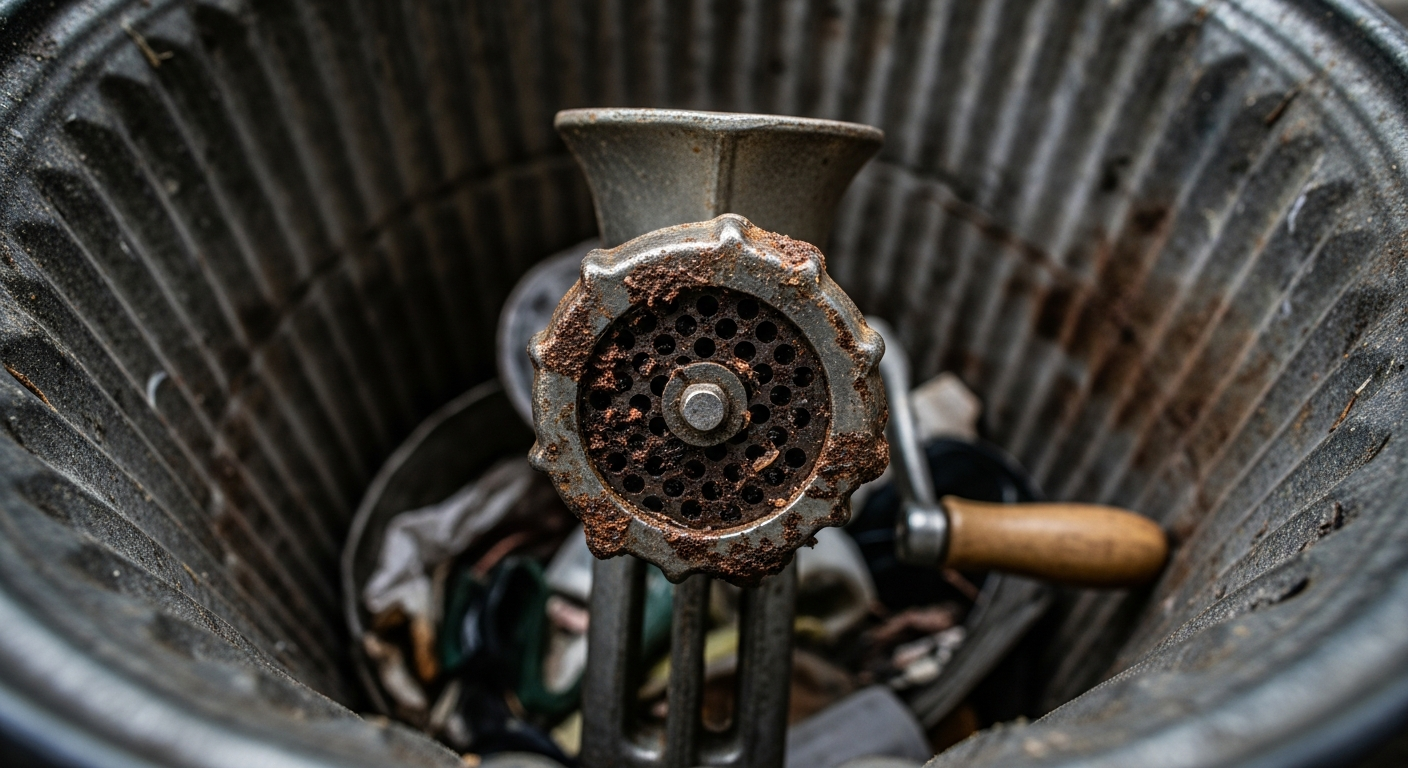
However, grinding raw meat causes significant moisture loss and exposes an exponentially larger surface area of the meat to oxygen, this heavily accelerates oxidation and creates the perfect breeding ground for bacterial growth.
Crucially, the bacteria that proliferate on ground meat actively consume and degrade taurine before your cat even takes a single bite. Every single pass through a meat grinder mechanically reduces the taurine concentration of the finished product.
Cats fed exclusively ground raw diets without robust synthetic supplementation face a measurably elevated risk of deficiency over time simply because the food degrades in the bowl.
For cats that strictly require ground food due to severe dental extractions or advanced senior age, compensating with an external buffer is absolutely mandatory.
For absolute peace of mind, especially when feeding ground or transitional meals, keeping a bottle of NOW Foods Pure Taurine Powder in the pantry allows you to safely buffer any meal. Taurine is water-soluble and non-toxic in excess; the feline kidneys easily and safely excrete any surplus through their urine, making supplementation in these specific cases a safe and necessary practice.
The Chunking Method: Why Prey Model Raw is the Standard
Because of the massive taurine loss associated with meat grinders, the modern raw feeding community has broadly shifted toward what is known as "chunking," or Prey Model Raw (PMR). Rather than serving a bowl of homogenous ground meat, the chunking method involves feeding whole, distinct pieces of muscle, bone, and secreting organs.
This method allows the cat to engage its sharp carnassial teeth, slicing through muscle fibers exactly as nature intended. It acts as natural dental floss, mechanically scraping plaque from the gumline. More importantly, it preserves the nutritional integrity of the meal by keeping the muscle fibers intact, minimizing oxygen exposure, and locking the water-soluble taurine safely inside the meat.
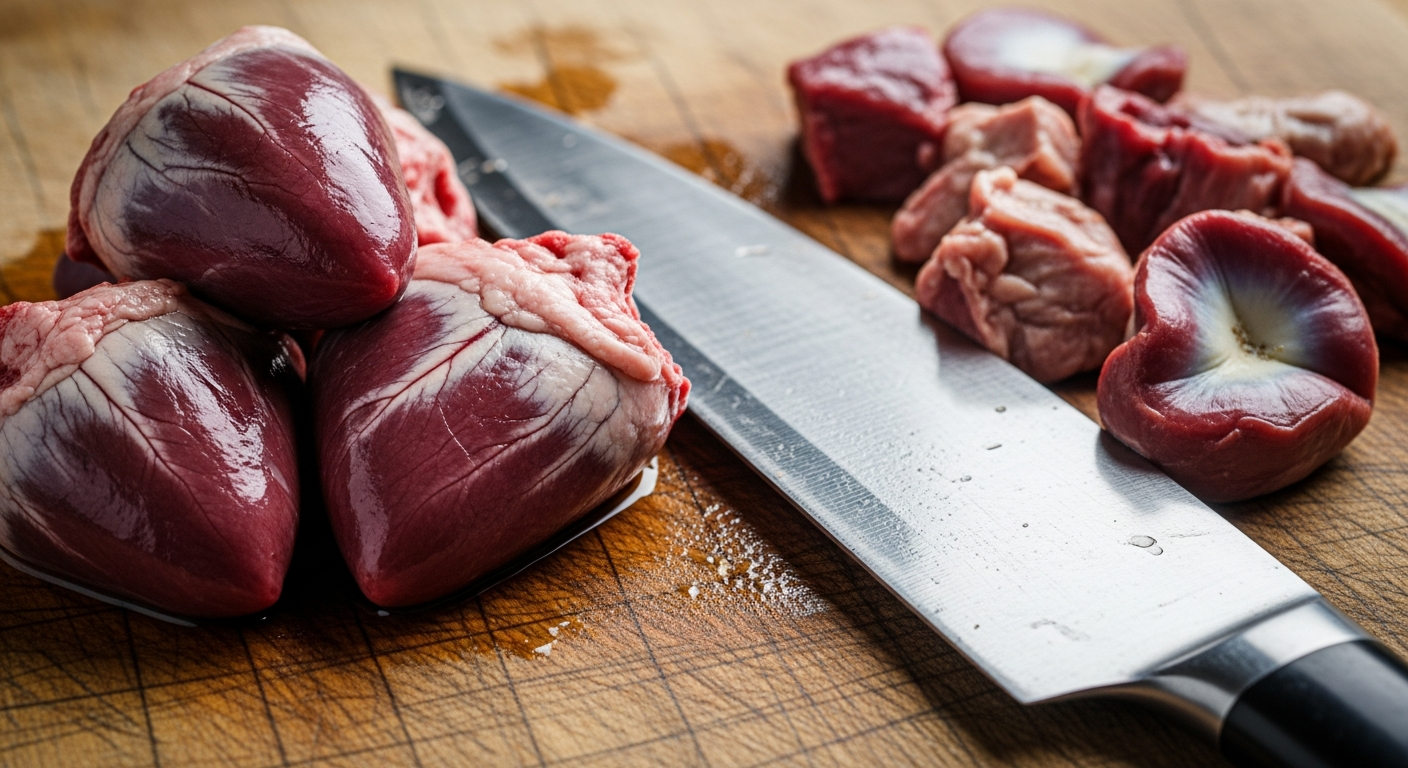
Prepping chunked meals requires the right equipment. Attempting to cut through slippery poultry skin, connective tissue, and dense muscle with a dull kitchen knife is both frustrating and dangerous.
To cleanly slice through these tough muscle fibers, we highly recommend keeping a Mercer Culinary Millennia 6-Inch Boning Knife in your kitchen arsenal, it handles raw poultry and tough beef heart far better than standard chef knives, making your weekly meal prep incredibly fast.
Overcoming Feline Neophobia: The Transition Protocol
Cats suffer from "neophobia", a biological fear of new things, particularly new foods. A kibble-addicted cat will not recognize a chunk of raw beef as food immediately.
Transitioning requires immense patience. The following four-step protocol has proven highly effective for gradual adaptation:
- Step 1: Scent Familiarization. Before introducing raw chunks to the bowl, rub a halved, room-temperature raw chicken heart against the cat's regular kibble or canned food. Repeat this process for three to five days to acclimate their olfactory system to the scent of raw myoglobin.
- Step 2: The Matchstick Cut. Using your boning knife, slice raw chicken thigh into incredibly thin strips, roughly the size of a matchstick. Mix two or three strips thoroughly into their favorite wet food. The small size encourages accidental consumption without requiring active chewing, allowing their stomach acid to adapt.
- Step 3: The Dice. After a full week of successful matchstick feeding, cut the meat into pieces the size of a standard six-sided die. This size requires the cat to engage its jaw at least once per piece, waking up their natural jaw muscles.
- Step 4: The Full Chunk. Progress to chunks approximately the size of a golf ball cut in half. At this size, the cat will instinctively tilt its head sideways to use its carnassial teeth to shear through the muscle fibers, providing maximum nutritional and dental benefits.
RELATED: How to Transition your cat to a new diet
💡 Troubleshooting the Transition: If your cat turns their nose up at Step 2 (The Matchstick Cut), do not force it or starve them out. Lightly sear the outside of the chicken strips in a dry, ungreased pan for 10 seconds just to release the warm aromatics, leaving the inside entirely raw. Gradually reduce the sear time over the next week until they accept it fully raw.
Quick Reference: The Recipe Matrix
Use the table below to find the recipe that best matches your cat's current stage in their raw diet journey. Every cat is different; respect their pace.
| Recipe Name | Primary Protein Source | Best Used For | Prep Effort Level |
|---|---|---|---|
| Recipe 1: The Beginner's Bowl | Chicken | Cats newly transitioning to raw diets; sensitive stomachs. | Low |
| Recipe 2: Budget-Friendly Mix | Beef & Duck | Multi-cat households; high-energy felines. | Medium |
| Recipe 3: The Omega Boost | Mussels / Sardines | Weekly supplemental topping for joint & brain health. | Very Low |
| Recipe 4: Organ-Heavy Boost | Mixed Poultry & Beef | Fully adapted cats needing a massive nutrient surge. | Medium |
| Recipe 5: Long-Term Raw | Chicken & Turkey | Daily, sustainable feeding (AAFCO/FEDIAF aligned). | High (Batch Prep) |
Recipe 1: The Beginner's Chicken Heart Bowl
This recipe is designed specifically for owners who are brand new to raw feeding.
It relies on widely available, affordable, and highly digestible poultry ingredients, and it provides a reliable, gentle nutritional foundation before introducing richer, darker proteins. Chicken hearts are the absolute centerpiece here, delivering 117 to 220 mg of taurine per 3.5 oz (100g).
Ingredients per 7 oz serving (approx. 200g):
- 3.5 oz bone-in chicken thigh (Provides the protein, fat, and natural calcium base)
- 2.75 oz raw chicken hearts (The primary taurine engine of the meal)
- 0.35 oz raw chicken liver: strictly 5% of total meal weight (Provides essential vitamin A and copper)
- 1 raw egg yolk: discard the white (An incredible source of choline and biotin)
- A small squirt of high-quality fish oil (Provides Omega-3 fatty acids for anti-inflammatory support)
Prep Note: Liver is nature's multivitamin, but it is incredibly potent. Exceeding the 5% liver threshold risks severe vitamin A toxicity and immediate digestive upset (diarrhea). Weighing liver to the exact gram is non-negotiable; using a highly accurate device like the Ozeri Pronto Digital Multifunction Kitchen and Food Scale ensures you never accidentally overfeed secreting organs. Always serve the meal at room temperature, as cold meat straight from the refrigerator will suppress a cat's appetite and slow their digestion.
Recipe 2: The Budget-Friendly Beef & Gizzard Mix
Feeding a multi-cat household can become expensive quickly.
This recipe prioritizes economic efficiency without compromising an ounce of nutritional completeness. Raw beef heart is incredibly dense, rich in CoQ10, and typically one of the most affordable organ meats available at local butchers, its intense richness is perfectly balanced by fibrous duck or chicken gizzards.
Ingredients per 7 oz serving (approx. 200g):
- 2.75 oz bone-in chicken thigh (Base protein and calcium)
- 2.5 oz raw beef heart, cut into chunks (Primary taurine source)
- 1 oz duck or chicken gizzards, quartered (Excellent for dental health and additional muscle protein)
- 0.35 oz beef or chicken liver: strictly 5% of total meal weight, precisely weighed
- A squirt of premium pet-safe fish oil
The contrast in texture between the soft, bleeding beef heart and the firm, rubbery gizzards keeps cats highly engaged during feeding.
Because beef is naturally lower in anti-inflammatory fats than wild prey, balancing this recipe with a squirt of Nordic Naturals Omega-3 Pet Cats liquid is an essential step to keep their coat glossy and their joints lubricated.

Recipe 3: The Fish-Forward Omega Boost
This recipe functions as a weekly supplemental topper rather than a daily complete meal.
It leverages the absolute highest concentration of taurine found in nature: blue and green-lipped mussels, which contain an astounding 655 to 827 mg per 3.5 oz (100g), and delivers a concentrated nutritional surge once or twice per week.
Ingredients per topper serving:
- 1 to 1.5 oz raw or thawed green-lipped mussels, or one can of sardines packed in pure water
- All liquid from the can, if using sardines
- A generous squirt of premium salmon oil
If using sardines, mash them directly into their packing water and combine with the salmon oil. Pour the mixture directly over the cat's standard raw meal. Never drain the sardine water down the sink!
Because taurine is water-soluble, it leaches heavily into the canning water; keeping the water ensures you capture the full taurine payload.
Note: An all-fish diet will lead to severe thiamine (Vitamin B1) deficiency over time. Use this strictly as a weekly addition to a poultry or beef base, never as a daily staple.
Recipe 4: The Organ-Heavy Super Boost
This is a high-intensity, organ-only meal designed to replicate the massive nutrient surge a wild cat experiences when consuming the internal organs of freshly caught prey in the wild. It should only be introduced after a cat has been successfully eating basic raw food for at least four to six weeks.
Ingredients per 6.5 oz serving (approx. 180g):
- 2.5 oz raw chicken hearts (High-density taurine, iron, B-vitamins)
- 2 oz raw beef heart, chunked (Secondary taurine source, rich in CoQ10)
- 1.5 oz duck or chicken gizzards, halved (Fibrous texture, digestive motility support)
- 0.3 oz chicken or beef liver: strictly 5% of total weight
- No muscle meat in this specific meal
💡 Troubleshooting Digestion: Because this recipe omits bone and standard muscle meat entirely, it is incredibly rich. If loose stools or diarrhea occur following this meal, do not panic. Simply reduce the liver component slightly the following week and add a pinch of bone meal. Your goal is to find the exact organ load your individual cat's gut microbiome can process cleanly.
Recipe 5: The Balanced Long-Term Raw
This is the ultimate, everyday workhorse of a complete raw feeding protocol. Formulated to meet strict AAFCO and FEDIAF micronutrient baselines, this is the recipe used for daily, sustainable feeding once your cat is a raw-feeding champion.
Ingredients per 8 oz serving (approx. 220g):
- 3.25 oz bone-in chicken thigh (Base protein, fat, and natural calcium)
- 2 oz turkey heart, chunked (Provides a varied amino acid profile and additional taurine)
- 1 oz duck gizzards, quartered (Dental abrasion and lean muscular protein)
- 0.4 oz chicken liver: strictly 5% of total weight, precisely weighed
- 1 raw egg yolk: white discarded (Crucial for choline and biotin)
- A squirt of high-quality fish oil (Omega-3 balance)
- 3 to 4 drops of liquid vitamin E (Prevents fat oxidation in stored freezer batches)
- 1/16 teaspoon of Organic Kelp powder (Provides trace iodine, which is often missing from grocery store meats)
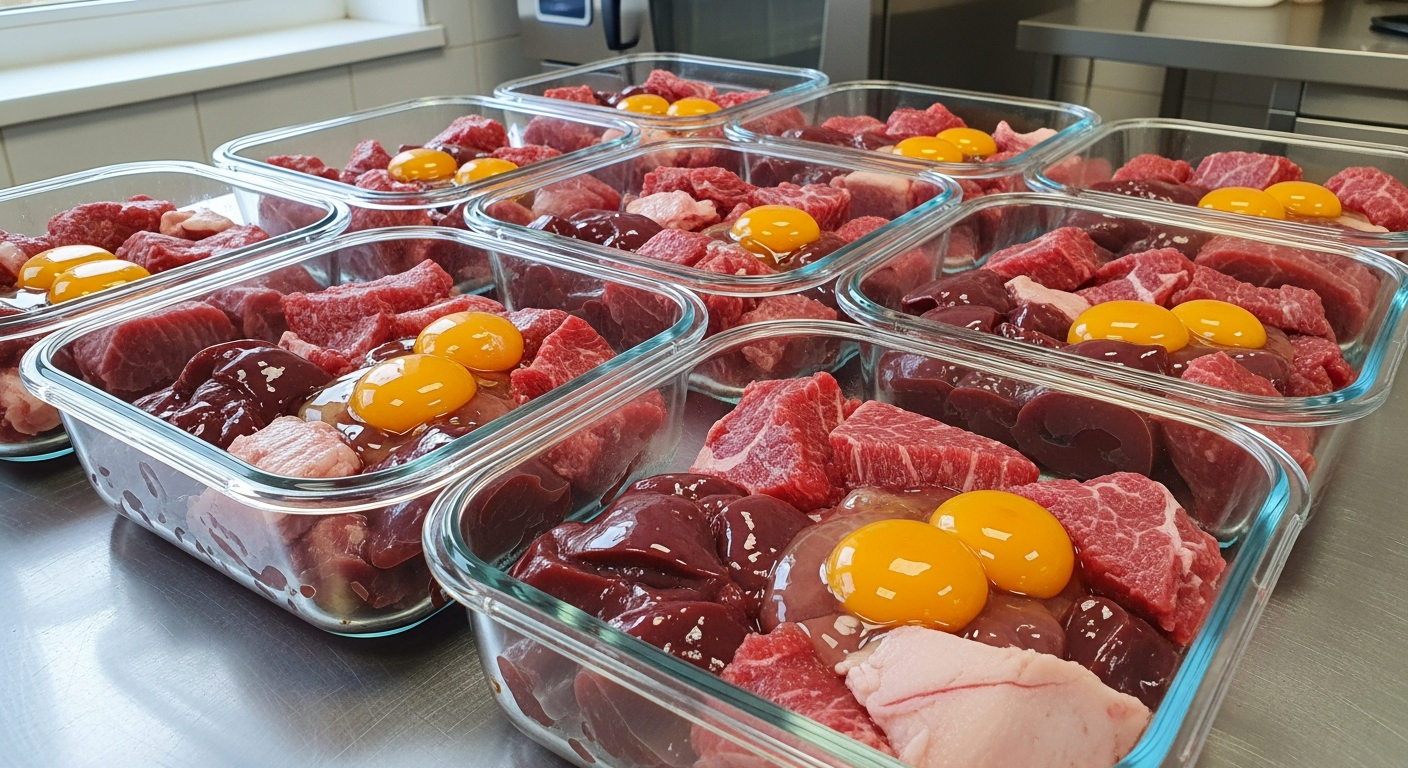
This highly specific recipe is optimally prepared in large, monthly batches.
To preserve the integrity of the fatty acids, prevent freezer burn, and avoid microplastics leaching into your cat's food, store your prepped meals in airtight Pyrex 4-Cup Glass Food Storage Containers rather than porous plastic bags.
Move one container from the freezer to the refrigerator 24 hours before feeding to allow for a safe, slow thaw.
Debunking the Myths: Freezing, Cooking, and the Whole Rabbit Trap
The internet is filled with persistent, dangerous myths regarding raw feeding that create unnecessary confusion and genuine nutritional risk for your cat. Understanding the actual biochemistry behind these myths is essential.
Myth 1: Freezing meat destroys all the taurine.
This is entirely false and was thoroughly debunked by laboratory analysis in 2025. While freezing does cause moisture to expand and burst some cellular walls, frozen whole prey and chunked meat stored for up to three months showed absolutely zero measurable taurine degradation.
Freezing your raw batches is a perfectly safe, practical, and highly recommended preservation method to keep pathogens at bay.
Myth 2: Lightly cooking the meat retains all the nutrients but makes it safer.
Because taurine is highly water-soluble, the moment heat hits the meat, the cellular structure contracts and rapidly leaches taurine into the cooking water or the pan drippings. Boiling a chicken breast and discarding the cloudy water means you have just poured the majority of the taurine payload down the kitchen sink. Furthermore, the Maillard reaction (the browning process of meat) can chemically bind the remaining taurine to other proteins, rendering it entirely biologically unavailable to the cat's digestive system.
Cooking is fundamentally incompatible with optimal feline nutrition.
Myth 3: A whole ground raw rabbit is a perfect, nutritionally complete diet.
Rabbit meat is notoriously and uniquely deficient in taurine compared to poultry and ruminants. Cats fed exclusive, whole-rabbit-based diets face a severely elevated risk of cardiac issues. Rabbit is a fantastic, highly digestible protein that can absolutely be included as a rotation within a broader raw diet, but it must be paired with targeted, heavy organ supplementation (like beef or chicken hearts) to make it safe.
RELATED: Raw diet for cats and dogs guide
Conclusion: Empowering Your Cat's Health
Transitioning a domestic cat to a biologically appropriate raw diet is not an overnight task; it is a rewarding, long-term commitment that requires a baseline of nutritional literacy, precise measurement, and consistent sourcing.
However, it is one of the most profoundly impactful decisions you can make for their health. The five taurine-rich raw diet recipes detailed in this guide are structured to support you every step of the way, from the gentle, beginner-friendly chicken heart bowl all the way through to the meticulously balanced long-term framework.
By stepping away from the flawed math of commercial formulation software and leaning into the proven biochemistry of whole foods, you take complete control of the bowl. Remember the golden rules of feline nutrition: always prioritize whole, dark organ meats over pale, lean muscle meat; weigh your liver to exactly 5% of the total meal weight to protect their liver; preserve that precious taurine by chunking instead of grinding; and remember that surplus natural taurine is completely safe.
Begin with Recipe 1. Move entirely at your cat's individual pace, celebrating the small victories when they finally chew through their first real piece of meat. The investment of your time, patience, and knowledge in the kitchen directly translates to a vibrant, energetic cat with a strong heart that will thrive by your side for years to come.
🐾 Frequently Asked Questions
Q Can I use synthetic powder instead of 5 Taurine rich raw diet recipes for cats?
While synthetic taurine powder is a necessary backup, it should never replace natural, bioavailable organ meats. Cats absorb taurine much more efficiently from raw heart tissue and mussels than from processed powders.
Q Why do 5 Taurine rich raw diet recipes for cats focus so heavily on chicken hearts?
Chicken hearts are one of the most affordable, easily accessible, and taurine-dense meats available. They provide between 117 and 220 milligrams of taurine per 100 grams, making them an ideal base for any feline raw diet.
Q Does freezing the meat ruin these 5 Taurine rich raw diet recipes for cats?
No. Extensive laboratory testing in 2025 proved that freezing meat does not degrade taurine levels. You can safely batch-prep and freeze your raw meals for months without losing any nutritional value.
Q Why shouldn't I grind the meat for my 5 Taurine rich raw diet recipes for cats?
Grinding meat causes moisture loss and exposes a massive amount of surface area to oxygen. This oxidation breeds bacteria that actively consume and destroy the natural taurine before your cat can eat it.
Q Can I feed whole raw rabbit as one of my 5 Taurine rich raw diet recipes for cats?
Absolutely not. Rabbit meat is notoriously deficient in taurine. If you feed a rabbit-based diet, you must heavily supplement it with high-taurine organs like beef or poultry hearts to prevent fatal cardiac issues.

📖 Related Articles

The truth about Whisker Fatigue: Myths, Facts & Solutions
💬 Comments (0)
No comments yet. Be the first to share your thoughts! 👇
✍️ Leave a Reply