
Raw Diet for Dogs & Cats: The Complete Beginner's Guide (2026)
Last updated: October 4, 2026. This article is for general information and does not replace advice from your veterinarian. How we write our articles.
Let's cut the crap.
You're here because you're curious. Maybe a friend swears by raw feeding, or you've looked at the ingredient list on your pet's food and wondered whether there is a better way.
Raw feeding is popular, passionate, and controversial. Fans describe big improvements. Veterinary organizations warn about real risks. And the honest answer sits in between: most of the claimed benefits have never been properly tested, while the risks are well documented.
Important Disclaimer: Always consult a veterinarian or a board-certified veterinary nutritionist before starting a raw diet, especially for growing puppies and kittens, senior pets, pets with health problems, and homes with young children, elderly, pregnant or immunocompromised people.
This guide isn't selling a lifestyle. It gives you the facts about what raw feeding involves, what is and isn't known, and how to reduce the risks if you go ahead.
What Is a Raw Diet? (The Unsanitized Version)
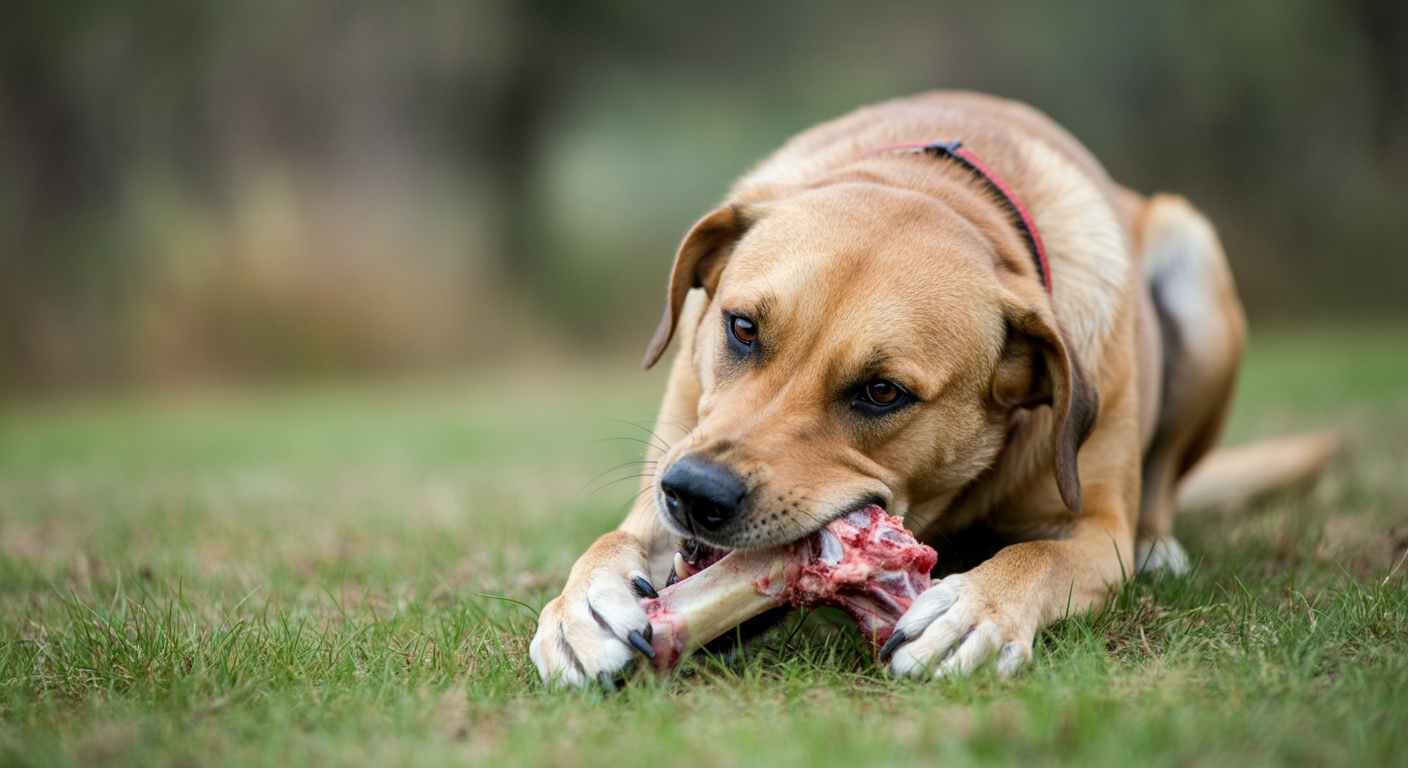
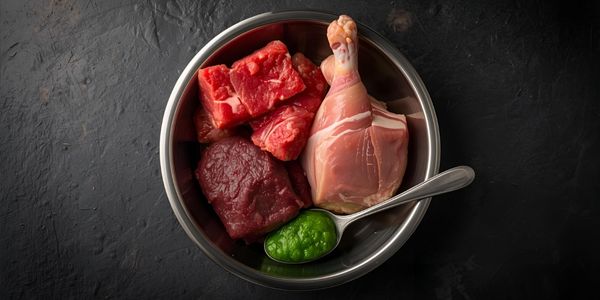
A raw diet is exactly what it sounds like: uncooked meat, bones and organs, sometimes with vegetables or supplements, either bought ready-made (frozen or freeze-dried) or prepared at home.
Two main philosophies exist in the raw feeding community:
- BARF (Biologically Appropriate Raw Food): meat, bone and organs, plus dog-safe vegetables, fruits and seeds.
- Prey Model Raw (PMR): tries to copy a whole prey animal (meat, bone, organs) with no plant matter.
Dogs and cats are not the same. Cats are obligate carnivores with specific needs, such as taurine and preformed vitamin A, and they need more protein than dogs. A diet built for a dog is not safe as a cat's main food, raw or not.
Why People Feed Raw (And What the Evidence Says)
Owners who feed raw often report smaller stools, shinier coats and more energy. These reports are real experiences, but they are not proof. A review by four board-certified veterinary nutritionists concluded that many claimed benefits of raw meat diets are largely unproven and based mostly on testimonials, and that the long-term effects of feeding them have not been critically evaluated (Freeman et al., 2013).
1. Smaller Stools
Raw and other high-protein, low-fiber diets often produce smaller, firmer stools, because there is less indigestible fiber. That is a difference in the diet's makeup, not a sign that one diet is healthier than another.
2. Coat Changes
Some owners notice a shinier coat, often linked to a higher fat content in the new diet. A coat can also improve on a good commercial or cooked diet, and persistent itching, smell or shedding usually has a medical cause (allergies, skin infection, parasites) that a vet should look at.
3. Energy
You'll read that kibble causes "sugar crashes". There is no good evidence for that in dogs or cats. Changes in energy after a diet switch can come from many things, including calories, weight changes and simply more attention at mealtime.
What to Expect During the Transition
Every animal adjusts at its own pace, and results vary:
- Stools: softer stools or diarrhea are common at first if you switch too fast.
- Skin and coat: any change takes several weeks to appear, because hair grows slowly. Persistent itching or hot spots still need a vet visit.
- Eating speed: some cats that gulp kibble and vomit eat more slowly with larger chunks. Frequent vomiting is never normal, though, and should be checked by a vet.
Looking for a simpler way to feed fresh?
We know that sourcing ingredients and prepping homemade meals daily can be exhausting. If you are considering ready-made raw food, our comparison guide covers the main delivery services and what to check, including food safety.
Read the 2026 Raw Dog Food Delivery Guide →The Risks: Don't Skip This Part
If you get this wrong, you can hurt your pet, and yourself. Let's not pretend otherwise.
1. Bacteria (and Viruses) Are Real
When the FDA tested 196 commercial raw dog and cat foods, 15 contained Salmonella and 32 contained Listeria monocytogenes, while the dry and semi-moist foods tested were almost all negative (FDA). Pets that look perfectly healthy can still carry these bacteria and shed them in their feces: cats fed raw meat diets have been found shedding Salmonella (Freeman et al., 2013). That matters most in homes with young children, elderly, pregnant or immunocompromised people.
For cats, there is an extra risk. Cats are particularly sensitive to H5N1 avian influenza, and the FDA recommends thoroughly cooking raw meat before feeding it to them (FDA). In 2025, the FDA linked H5N1 cases in cats to contaminated raw cat food, including a cat that became ill and was euthanized after eating one lot of a raw chicken cat food (FDA).
2. Bones
Bones are part of many raw diets, and they carry risks: broken teeth (especially with hard, weight-bearing bones), choking, and blockages in the throat or intestines. Never feed cooked bones, which splinter. Many raw feeders use ground bone or commercial complete diets to avoid these problems.
3. Nutritional Imbalances
This is the big one. When researchers analyzed 95 raw (BARF) rations that German owners were feeding their adult dogs, 60% had at least one significant imbalance, such as too little calcium, iodine, zinc, copper or vitamin A (Dillitzer et al., 2011). These problems don't show up overnight. They build up over months, and puppies and kittens are the most vulnerable.
Cats need taurine. A lack of it can cause heart disease and blindness, and commercial complete cat foods add it for that reason. A homemade raw diet for a cat has to be formulated to supply enough.
The Cost Reality: Prepare Your Wallet
Raw feeding usually costs more than kibble, and ready-made raw costs the most. Prices vary a lot with your pet's size, the proteins you choose, where you live and whether you buy in bulk. Before you commit, price out a month of the exact product or recipe you plan to use, including any supplements your vet nutritionist recommends.
The Tool Kit: What You Actually Need to Buy
If you prepare raw food at home, the right gear makes it safer and easier.
1. The Kitchen Scale (Non-Negotiable)
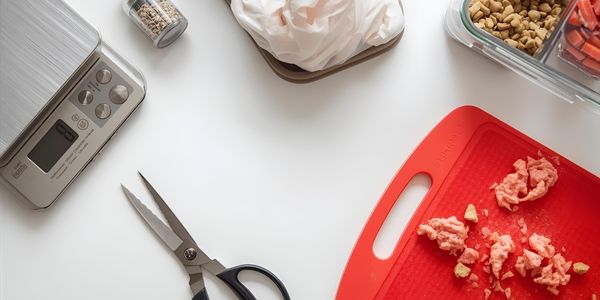
Eyeballing it is how you get a fat dog or an underfed cat. You need a digital kitchen scale that measures in grams to follow a formulated recipe exactly.
2. Dedicated Cutting Boards
Do not use the same board you cut your salad on. Use separate plastic boards for raw meat that can go in the dishwasher or be disinfected.
3. Poultry Shears
If your recipe includes small raw bones, heavy-duty poultry shears are far safer than a chef's knife.
4. Freezer Space (The Big One)
Buying in bulk requires space. A small chest freezer helps, and keeps raw pet food separate from your own food.
5. Container Strategy
Prep a few days' worth at once, freeze the portions, and move one to the fridge each night to thaw. Never thaw raw food on the counter.
The Blueprint: How to Get a Balanced Diet
You will see simple rules online, such as "80% meat, 10% bone, 10% organ" for dogs. These ratios are a rough starting point used by raw feeders, not a balanced diet: as the study above shows, rations built this way often miss key minerals and vitamins.
For Dogs
The safest options are a commercial raw food labeled complete and balanced for your dog's life stage, ideally one treated with a validated pathogen-reduction step such as high-pressure processing, or a homemade recipe written for your dog by a veterinary nutritionist. Your vet can also work out how much to feed from your dog's ideal weight and activity, rather than a generic percentage.
For Cats
Cats need a diet formulated for cats, with enough taurine, vitamin A and other essential nutrients. Given the H5N1 risk, talk to your vet about whether a raw diet is a good idea for your cat at all, and if you go ahead, choose a complete and balanced commercial product from a manufacturer with strong safety testing, or a nutritionist-formulated recipe.

Prefer cooked meals? See our homemade pet food recipes.
Safe Transition Protocol
Do not just swap the bowl today. A sudden change often causes diarrhea.
For Dogs:
Mix a small amount of the new food into the old food, and increase it gradually over one to two weeks, watching the stools. If they get loose, go back a step.
For Cats:
Cats can be very suspicious of new textures. Mix a tiny bit of the new food into their usual wet food, and increase it slowly over three to four weeks. Never use hunger to force the change: a cat that stops eating can develop fatty liver disease (hepatic lipidosis), which can be fatal. If your cat eats less, go back to the old food and call your vet.
Safety Protocols (Print This Out)
The FDA's advice for anyone handling raw pet food:
- Wash your hands with soap and water for at least 20 seconds after handling raw food or anything it touched.
- Clean, then disinfect counters, bowls and utensils: hot soapy water first, then a disinfectant such as 1 tablespoon of bleach in 1 quart of water, or run them through the dishwasher.
- Thaw in the fridge, never on the counter or in the sink, and don't rinse raw meat.
- Pick up leftovers: cover and refrigerate what your pet doesn't eat right away, or throw it out.
- No face licking: don't let your pet lick your face, especially right after a raw meal, and wash your hands after touching your pet.
- Secure the trash: raw meat packaging smells amazing to pets.
The Bottom Line
Raw feeding isn't a religion. It's just food, with real trade-offs.
Its benefits are mostly anecdotal, while the risks (bacteria, avian influenza for cats, bones, and nutritional imbalances) are documented, and the FDA warns that raw pet food diets can be dangerous to you and your pet.
If you still want to feed raw, do it as safely as possible: a complete and balanced product or a nutritionist-formulated recipe, strict hygiene, regular vet checkups, and extra caution with cats and in homes with vulnerable people. If you want fresh food without the raw risks, a complete and balanced cooked diet is a good middle ground.
Curious about the opposite end of the spectrum? We also looked at whether vegan diets are safe for dogs.
Resources & References
- FDA: Get the Facts! Raw Pet Food Diets can be Dangerous to You and Your Pet
- FDA: Ways to Reduce the Risk of HPAI (H5N1) in Cats
- Freeman LM, Chandler ML, Hamper BA, Weeth LP. (2013). Current knowledge about the risks and benefits of raw meat-based diets for dogs and cats. Journal of the American Veterinary Medical Association, 243(11), 1549–1558.
- Dillitzer N, Becker N, Kienzle E. (2011). Intake of minerals, trace elements and vitamins in bone and raw food rations in adult dogs. British Journal of Nutrition, 106, S53–S56.
- Merck Veterinary Manual: Dog and Cat Foods
- CDC: Salmonella
Frequently Asked Questions
Can I feed my cat and dog the same raw food?
No. Cats and dogs have different needs: cats need more protein than dogs and must get enough taurine and preformed vitamin A from their diet. A raw mix made for dogs is not a complete diet for a cat. Use a food formulated for the species you are feeding.
Will my pet become bloodthirsty if I feed raw?
No. There is no evidence that eating raw meat makes pets aggressive. Behavior changes after a diet switch usually have other causes, and if you notice any, talk to your vet.
My cat refuses to eat the raw meat. What do I do?
Welcome to cat ownership. Cats imprint on texture. If they grew up on dry pebbles, wet meat feels weird. Try "bribing" them: crush some of their favorite treats over the raw food, or use Bonito flakes (fish flakes) as a topper. Patience is key.
Can I just feed raw grocery store chicken wings?
Only as a snack. As a full diet? No. That lacks the organ meat, iodine, and vitamins they need. You need the whole animal ratio (Meat/Bone/Organ) to prevent deficiencies. Don't be lazy, or you'll hurt them.
My vet says raw feeding will kill my pet. Is he lying?
Veterinary concerns about raw feeding are based on WSAVA (2018), AVMA, and FDA guidance regarding pathogen risks (Salmonella, Listeria) and nutritional imbalance. These are real risks. If you choose raw feeding, source from reputable suppliers, follow safe food handling practices, and have complete diets formulated by a board-certified veterinary nutritionist (DACVIM Nutrition).

Related Articles

Cat Zoomies: Why Cats Go Crazy at Night and After Pooping (and When It's Not Normal)
Cat zoomies explained: why cats race around at night and after the litter box, a timing decoder to read your own cat, the warning signs that need a …

5 Best Orthopedic Dog Beds for Large Dogs & Seniors
Looking for the best orthopedic dog bed in 2026? We compared 5 options for large breeds and senior dogs by foam density, support and durability.

7 Best Dog Joint Supplements (2026)
7 dog joint supplements compared by active ingredients, dose and NASC quality seals, with what the research says about glucosamine, omega-3s and more.

5 Best Raw Dog Food Delivery Services in the US (2026 Ranked)
Looking for the best raw dog food delivery in 2026? Compare top US services like We Feed Raw and Darwin's. Expert reviews, pricing and a transition guide.
5 Taurine-Rich Raw Diet Recipes for Cats (2026 update)
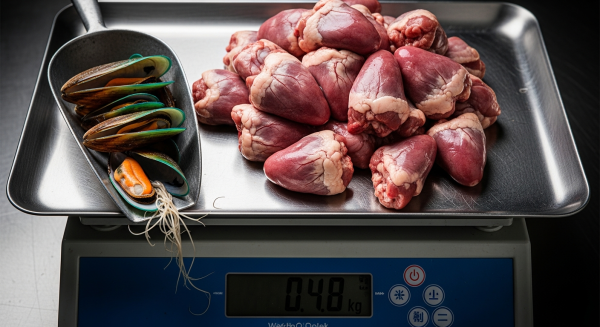
Taurine-rich raw toppers for cats: 5 easy recipes with hearts, sardines and more, plus FDA raw feeding safety tips and how to get a complete diet.

The Truth about Whisker Fatigue: Myths, Facts & Solutions
Discover the truth about Whisker Fatigue. We debunk the myths, analyze 2026 veterinary data, and reveal why your cat's bowl might not be the real problem.
Comments (0)
No comments yet. Be the first to share your thoughts!
Leave a Reply