
5 Best Orthopedic Dog Beds for Large Dogs & Seniors
Last updated: October 4, 2026. This article is for general information and does not replace advice from your veterinarian. How we write our articles.
This post contains affiliate links. If you buy something through them, I earn a small commission at no extra cost to you. Details.

Veterinary Disclaimer: This article is for informational purposes only and does not constitute veterinary medical advice. Always consult a licensed veterinarian if your dog shows signs of joint pain, mobility difficulties, or changes in sleep quality, especially in senior dogs or large breeds predisposed to orthopedic conditions.
Osteoarthritis is estimated to affect about 1 in 5 adult dogs, and it becomes more common with age and in large breeds (Johnston, 1997).
Large dogs spend a big part of the day lying down, so the surface they rest on matters for comfort, especially when their joints are stiff or sore.
The problem: the word "orthopedic" is not a regulated term for dog beds. Any manufacturer can stamp the label onto a 1-inch (2.5 cm) slab of low-density foam and charge a premium for it. The critical difference between a genuinely therapeutic orthopedic dog bed and a marketing-only one comes down to foam density, ILD (Indentation Load Deflection) rating, and structural integrity over time, specifications that most brands don't publish.
A bed that flattens under a large dog leaves hips and elbows pressing through to the floor, which defeats the purpose.
This guide looks for beds that back up their promises with published specs, real warranties or actual evidence.
This guide compares five orthopedic dog beds on the criteria that actually matter: foam engineering, durability, accessibility for dogs with limited mobility, hygiene maintenance, and price-to-support ratio, based on manufacturer specifications, warranties, and published information.
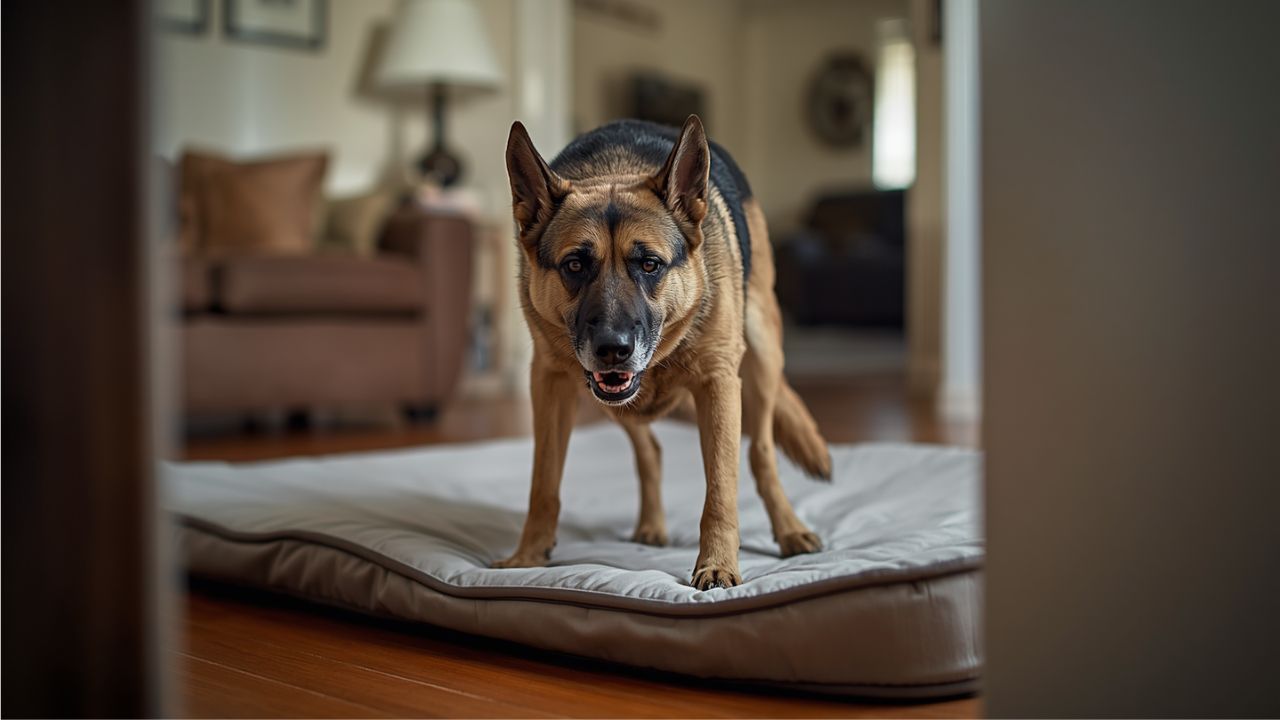
How We Evaluated These Orthopedic Dog Beds
Every bed on this list was assessed against six criteria:
- Foam construction: published foam type and layer thickness. Density is one of the best predictors of how long foam keeps its shape, but there is no veterinary standard for dog beds and most brands don't publish it, so we give credit to beds that say what is inside
- Firmness: rarely published for dog beds (as ILD). The bed should be firm enough that your dog doesn't sink to the floor, yet soft enough to cushion bony points such as elbows and hips
- Waterproofing: a separate waterproof inner liner protects the foam better than a water-resistant cover
- Entry height: a low side or lowered entrance for dogs with stiff hips and knees
- Certified foam: CertiPUR-US, a third-party program that tests foam for certain chemicals and emissions
- Durability: warranty length and terms, and a washable cover
Signs Your Dog Needs an Orthopedic Bed
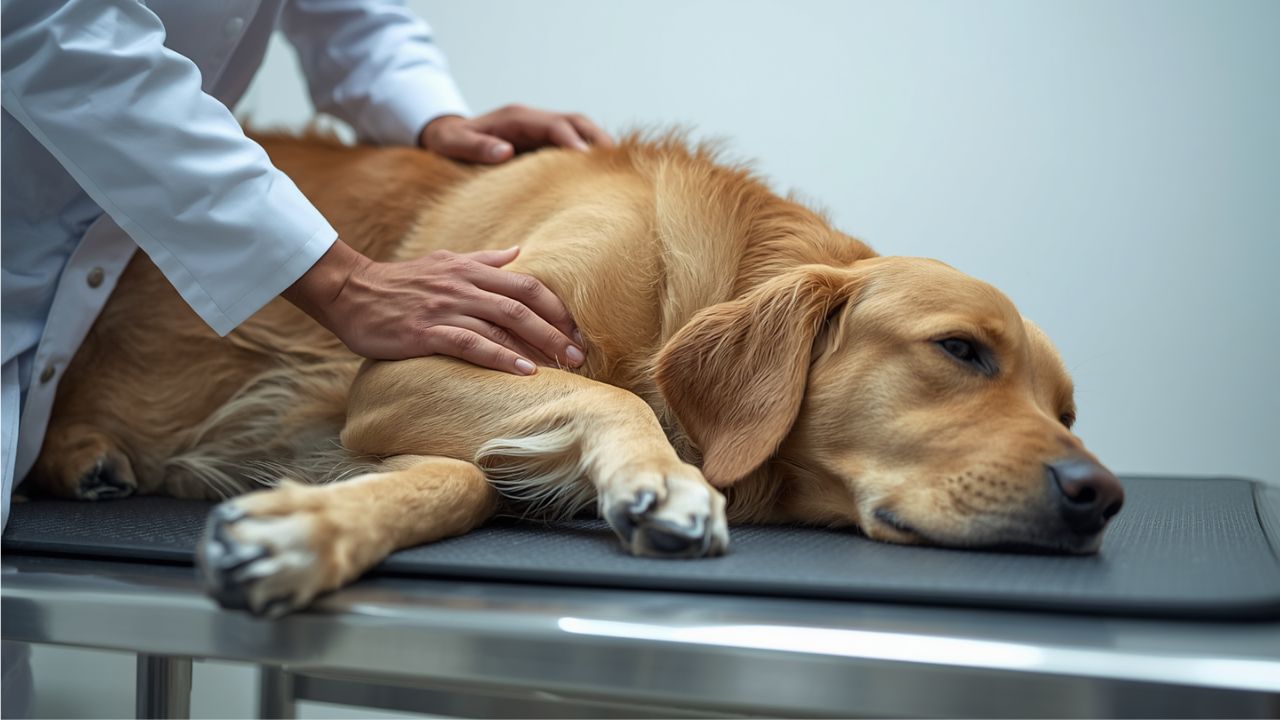
Joint deterioration rarely presents as a single dramatic event, and most owners recognize it only after months of gradual, easy-to-rationalize behavioral changes.
Below are the warning signs that a standard bed is no longer adequate:
- Struggling to rise from a lying position, legs slip, multiple attempts needed, especially after prolonged rest
- Circling, pawing, or repositioning more than twice before settling, a sign the surface is uncomfortable and the dog is attempting to find relief
- Preferring hard tile or hardwood floors over their current soft bed, counter-intuitive, but some dogs with arthritis find overly plush, unstable surfaces more painful to exit than firm floors
- Visible calluses on elbows, hips (greater trochanter), or hocks, caused by repeated contact with hard or inadequately padded surfaces
- Hair loss or skin thickening over bony prominences, particularly the elbows in large breeds
- Restlessness at night, waking frequently, changing positions every 30–60 minutes
- Stiffness that is notably worse after long rest periods compared to short ones, the classic pattern of inflammatory joint disease
- Reluctance to use an elevated or bolstered bed that requires any jumping or stepping up
If you observe three or more of these patterns consistently over two weeks, schedule a veterinary evaluation.
Radiographs (X-rays) remain the definitive diagnostic tool for osteoarthritis and hip dysplasia. Switching to an orthopedic bed is an appropriate management step but does not replace veterinary diagnosis or pharmaceutical pain management in dogs with significant disease.
Stiffness and reluctance to lie down can point to joint problems. Learn the early signs of arthritis in dogs.
Omega-3s can complement a supportive bed. Read about the benefits and risks of fish oil for dogs.
What Actually Makes a Dog Bed "Orthopedic"?
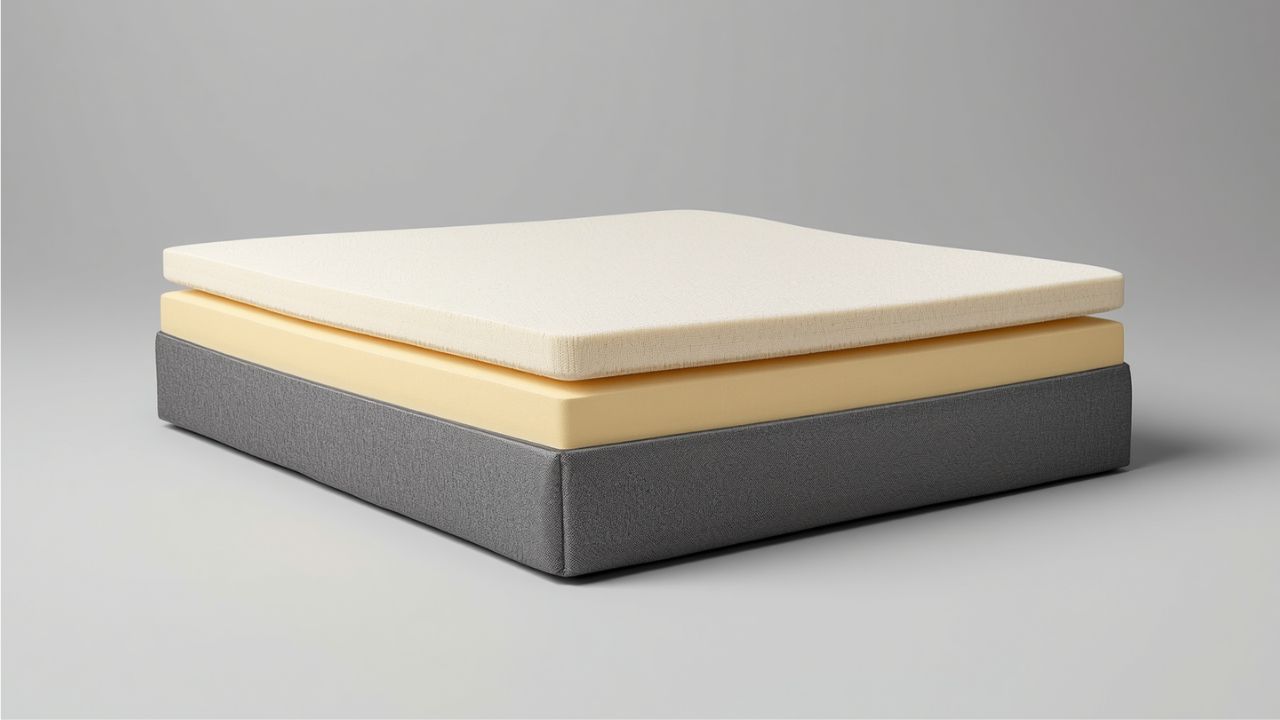
Before evaluating products, understanding what the engineering terms actually mean allows you to see past marketing language and evaluate any bed on objective merit.
Foam Density: The Most Important Spec
Foam density, measured in pounds per cubic foot (lb/ft³) or kilograms per cubic meter (kg/m³), is one of the best predictors of how long a foam keeps its shape: denser foam generally holds up longer under repeated weight. Dog bed brands rarely publish it, though, and there is no veterinary standard for an "orthopedic" density. When a brand publishes layer thicknesses, density figures or a warranty against flattening, that is useful information.
Cheap, thin foam can flatten ("bottom out") under a heavy dog, leaving hips, elbows and hocks resting close to the floor. A quick test: press your hand flat into the center of the bed. If you can feel the floor, the bed isn't doing its job.
ILD Rating: Firm Support, Not Just Softness
ILD (Indentation Load Deflection) measures the force in pounds required to compress a foam sample 25% of its original thickness over a 50 square inch (323 cm²) area.
There is no veterinary standard for dog bed firmness, and almost no dog bed brand publishes ILD. In practice, look for a bed firm enough that your dog doesn't sink to the floor, yet soft enough to cushion hips and elbows.
Memory Foam vs. High-Density Orthopedic Foam
Memory foam (viscoelastic polyurethane foam) conforms to body shape in response to body heat, reducing pressure at specific contact points. High-density orthopedic foam provides uniform structural support across the entire surface.
The best orthopedic dog beds combine both: a high-density base layer for structural integrity under large dogs, topped with a memory foam or egg-crate comfort layer for pressure point relief. Beds that use only a thin layer of soft memory foam, with no firmer base, are more likely to flatten under heavy dogs.
Both the base density and the comfort layer construction matter.
Waterproof Inner Liner: Non-Negotiable for Senior Dogs
Urinary incontinence affects a significant proportion of senior dogs, particularly spayed females. A waterproof inner liner is a sealed, non-permeable membrane around the foam core.
It matters because once urine soaks into foam, it is very hard to clean out completely. A water-resistant outer cover alone is insufficient. Look for products that specify a sewn-in, sealed waterproof liner as a distinct layer beneath the removable outer cover. For dogs with any history of incontinence, this is not an optional feature.
CertiPUR-US Certification: Verified Material Safety
CertiPUR-US is an independent foam testing and certification program that screens for VOCs (volatile organic compounds), formaldehyde, phthalates, mercury, lead, and other heavy metals.
Dogs spend many hours a day on their bed, and certification tells you what the foam was tested for. On the listings we checked, Big Barker and Bedsure state CertiPUR-US certified foam; Furhaven, K&H and PetFusion don't mention it. If certification matters to you, ask the brand before buying.
The 5 Best Orthopedic Dog Beds
1. Big Barker 7" Pillow Top Orthopedic Dog Bed: Best Overall

→ Check Price & Reviews on Amazon
Specifications: 7 inches (18 cm) of foam in 3 layers: 2" base + 3" support + 2" comfort top | CertiPUR-US certified foam, made in the USA | Linked listing: Large 48" × 30" (122 × 76 cm) for dogs of 50 to 70 lb; XL and Giant sizes also offered | 10-year No-Flatten warranty
Big Barker is the only bed on this list that has been tested in a study of dogs with arthritis.
An open-label pilot study conducted at the University of Pennsylvania School of Veterinary Medicine (Dr. Grace Anne Mengel, VMD) followed 40 dogs over 70 lb with X-ray-confirmed osteoarthritis sleeping on a Big Barker mattress for four weeks. Owners reported statistically significant improvements in pain severity (about 22% better on the Canine Brief Pain Inventory), joint stiffness and joint function. The study had no control group, owners knew their dog was on the new bed, and it was carried out with the manufacturer, so it is encouraging rather than conclusive.
The dogs also wore activity monitors. The study summary reports that half of them had at least a 13% drop in night-time activity, but in the raw data the overall change in night-time activity was not statistically significant.
The foam itself: three layers totaling 7 inches, a 2-inch base, a 3-inch support layer and a 2-inch comfort top, according to the Amazon listing.
The 10-year No-Flatten warranty promises that the foam keeps at least 90% of its shape and support, and Big Barker replaces it if it doesn't (registration required; covers, chewing and misuse are excluded). That is far longer than the other warranties on this list.
A waterproof liner is sold separately by Big Barker, so add one if your dog has accidents. The linked Large fits dogs of 50 to 70 lb; for bigger dogs, the XL (52" × 36" / 132 × 91 cm) gives more room to stretch out on their side, a position many large dogs like.
What we like: Pilot study in arthritic dogs; 10-year No-Flatten warranty; 7 inches of high-density foam; washable cover; made in the USA.
What to consider: The premium price is real, upsizing to XL or Giant adds significant cost. The pillow top makes the entry height approximately 7 inches (18 cm); for dogs with very severe hip or stifle disease, place on the floor (not elevated) and use a short ramp if needed.
Best for: Large and giant breeds (Labradors, German Shepherds, Golden Retrievers, Bernese Mountain Dogs, Rottweilers, Great Danes) over 50 lbs (23 kg); dogs with diagnosed hip dysplasia or moderate-to-severe osteoarthritis; post-TPLO and FHO surgical recovery.
2. Furhaven Orthopedic Sofa Bed: Best Value
→ Check Price & Reviews on Amazon
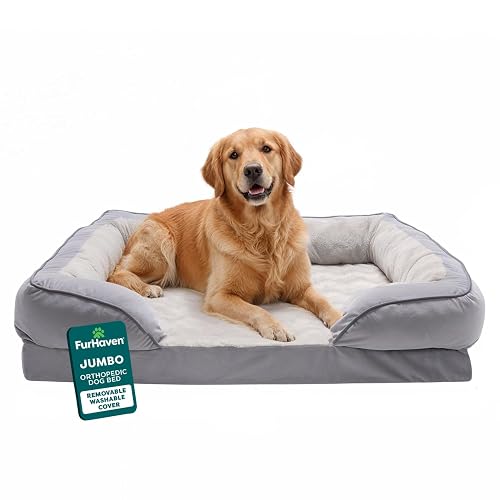
Specifications: Egg-crate orthopedic foam over a solid orthopedic foam base | Three-sided removable bolsters | Removable, machine-washable cover | Linked size: Jumbo/XL, 40" × 32" × 9.5" (102 × 81 cm), for dogs up to 95 lb | 60-day worry-free warranty (register within 14 days) plus a 90-day limited warranty
The Furhaven Sofa Bed earns its popularity with a genuine value proposition.
The egg-crate foam spreads your dog's weight at a much lower cost than premium brands, and the three-sided bolsters give dogs something to lean on and a headrest, while the open front makes the bed easy to step onto.
Furhaven does not publish density or ILD data, which is a limitation worth acknowledging. Heavier dogs compress any foam faster, so check the center of the bed regularly.
The open front is lower than the bolsters, which helps seniors with stiff hips. The cover is removable and machine washable, which matters in any household with a senior dog prone to accidents.
What we like: Good value; Jumbo/XL size for dogs up to 95 lb; removable, machine-washable cover; bolsters for dogs that like to lean; widely available; 60-day worry-free warranty.
What to consider: Foam density is not published. Under heavy dogs with active arthritis, check the foam regularly and replace it when it flattens. Not recommended as the sole orthopedic surface for giant breeds over 100 lbs (45 kg) with significant joint disease.
Best for: Dogs up to about 95 lb (the linked Jumbo/XL) with mild-to-moderate joint stiffness; multi-dog households needing an affordable option in several rooms; dogs that like to lean or rest their head on a bolster; a secondary bed for dogs whose main bed is a high-density mattress.
3. K&H Pet Products Thermo-Snuggly Sleeper: Best Heated Bed for Small Senior Dogs

→ Check Price & Reviews on Amazon
Specifications: Thermostatically controlled 6-watt heater that warms to your dog's normal body temperature only when the dog is on the bed, removable for use in all seasons | Soft foam walls | Removable, machine-washable cover and pillow | Linked size: Medium 26" × 20" (66 × 51 cm), for pets up to about 30 lb | Safety certified by MET Labs | 1-year limited warranty
Many owners notice that arthritic dogs are stiffer on cold days, and gentle warmth is one of the physical therapy tools used in canine rehabilitation, although there are relatively few dog-specific studies (Millis & Ciuperca, 2015).
The K&H Thermo-Snuggly Sleeper addresses this directly with a built-in thermostatically controlled heater: it warms to about your dog's normal body temperature only when your dog is lying on it, using 6 watts of power, comparable to a small LED bulb.
The thermostat is designed to avoid the overheating risk of generic heating pads that aren't made for continuous pet use. K&H says the whole product, not just its parts, is safety certified by MET Labs against US and Canadian electrical standards.
Gentle warmth is especially helpful for senior dogs with chronic arthritis, including breeds prone to spinal problems such as Basset Hounds and Dachshunds. Heat can ease morning stiffness and help dogs get up more comfortably, particularly in cold climates.
The linked Medium (26" × 20") suits pets up to about 30 lb. It is a cuddler with soft foam walls, not a thick orthopedic mattress, so for large dogs think of a heated bed as an extra warm spot rather than their main orthopedic bed.
What we like: Thermostatically controlled warmth; MET safety certified; low power use (6 watts); removable heater for year-round use; machine-washable cover and pillow; great for dogs that seek warm spots.
What to consider: The linked Medium suits pets up to about 30 lb, and it is not a thick orthopedic mattress. Some dogs need a few days to get used to a heated bed.
Best for: Small dogs with arthritis, especially in cold homes; senior dogs whose stiffness is worse in winter; any small dog that seeks out warm surfaces.
4. PetFusion Ultimate Dog Bed: Best Premium Choice for Medium-to-Large Dogs

→ Check Price & Reviews on Amazon
Specifications: Solid 4" memory foam base | Recycled poly-fill bolsters | Waterproof inner liner | Water-resistant, removable and washable cover | YKK zippers | Linked size: Extra Large 44" × 34" (112 × 86 cm), rated up to 150 lb | 24-month warranty against manufacturer defects
The PetFusion Ultimate Dog Bed pairs a solid memory foam base with plush bolsters.
The construction uses a solid 4-inch memory foam base, which gives even support across the whole sleeping surface, surrounded by recycled poly-fill bolsters that give your dog a place to rest their head.
For dogs that sleep stretched out on their side, a solid foam base spreads their weight over a wide area.
The cover is a polyester and cotton blend, which the maker describes as breathable.
A separate waterproof inner liner protects the memory foam, under a water-resistant outer cover. The zippers are YKK, a well-known premium zipper brand.
What we like: Solid 4-inch memory foam base; separate waterproof inner liner; polyester-cotton cover; YKK zippers; 24-month warranty; clean modern aesthetic.
What to consider: The linked Extra Large (44" × 34") may be tight for giant dogs that sprawl, who are better served by the Big Barker's bigger sizes. The warranty covers manufacturer defects for 24 months, compared with Big Barker's 10-year no-flatten warranty. The bolsters will compress somewhat over time.
Best for: Medium-to-large dogs up to about 100 lb (45 kg), with the linked XL rated up to 150 lb by the maker; dogs with moderate arthritis or recovering from orthopedic surgery; owners who prioritize cover breathability; households where repeated washing frequency is high and zipper durability matters.
5. Bedsure Orthopedic Dog Bed: Best Budget Option

→ Check Price & Reviews on Amazon
Specifications: High-density egg-crate foam | 4-sided bolsters with a lowered entrance | Laminated waterproof layer in the cover | Non-skid bottom | Linked size: 42" × 32" × 6.5" (107 × 81 cm); sizes from 20" × 15" up to 52" | CertiPUR-US certified foam, OEKO-TEX Standard 100 certified | Machine-washable cover
For budget-conscious owners or multi-dog households needing orthopedic surfaces at multiple sleep locations, Bedsure delivers a genuinely capable foam bed at a fraction of premium market pricing.
The egg-crate surface spreads your dog's weight and lets some air circulate, and the lowered entrance makes it easier to step in for dogs with stiff knees.
Waterproofing comes from a laminated layer in the cover itself, not a separate inner liner. It helps with spills and small accidents, but for a dog with regular incontinence, add a separate liner or bed protector. CertiPUR-US certification is stated on the listing.
Foam density is not published, which is a limitation. For younger large-breed dogs, or as a supplementary bed for dogs whose main bed is a higher-density mattress, Bedsure performs well for the price. The largest size (52") gives big dogs more room to stretch out.
What we like: CertiPUR-US certified foam at a budget price; waterproof cover layer; lowered entrance; many sizes up to 52"; non-skid bottom; machine-washable cover.
What to consider: Foam density not published; check it regularly under heavy dogs. Not recommended as the sole orthopedic surface for large breeds with active joint disease, best positioned as a secondary bed, travel option, or primary bed for dogs under 50 lbs (23 kg).
Best for: Younger large-breed dogs; secondary sleeping spots in multi-dog households; dogs under 50 lbs (23 kg) with mild stiffness; budget-conscious owners.
Side-by-Side Comparison
| Product | Foam Type | Total Depth | Waterproof Liner | CertiPUR-US | Best For (Weight) |
|---|---|---|---|---|---|
| Big Barker 7" | High-density ortho + pillow top | 7" (18 cm) | Sold separately | Yes | 50 to 70 lb (Large); bigger sizes available |
| Furhaven Sofa | Egg-crate foam + bolsters | Not stated (bed 9.5" tall) | Not listed | Not stated | Up to 95 lb (Jumbo/XL) |
| K&H Thermo Sleeper | Heated cuddler, soft foam walls | Not stated | Not listed | Not stated | Up to 30 lb (Medium) |
| PetFusion Ultimate | Memory foam + bolsters | 4" foam base | Yes | Not stated | Up to 150 lb (XL, per listing) |
| Bedsure Orthopedic | Egg-crate foam + bolsters | Not stated (bed 6.5" tall) | Laminated cover layer | Yes | Large dogs (42" × 32") |
When a Bed Upgrade Is Not Enough: When to Call Your Vet
An orthopedic bed is a management tool, not a treatment. Contact your veterinarian promptly if your dog:
- Cannot rise from a lying position without physical assistance, regardless of the sleeping surface
- Drags one or more limbs, or shows progressive hindlimb weakness over days to weeks, possible IVDD or degenerative myelopathy, both of which require urgent veterinary evaluation
- Has developed pressure sores (decubital ulcers), open wounds, raw skin, or persistent crusting over bony prominences such as elbows, hips, or sternum
- Refuses to lie down at all, stands, paces, or sits continuously but will not rest, indicating acute or severe chronic pain
- Vocalizes when lying down, rising, or when any limb or hip is touched or manipulated
- Has shown no improvement in morning stiffness or rise difficulty after 4 consistent weeks on a properly sized orthopedic bed
In these scenarios, prescription NSAIDs (such as Galliprant/grapiprant, Carprofen, or Meloxicam), veterinary physiotherapy, laser therapy, acupuncture, or surgical consultation may be necessary and appropriate. An orthopedic bed remains valuable as part of a multimodal management plan but cannot substitute for medical treatment of significant disease.
Some owners also discuss joint support with their vet. Compare the best joint supplements for dogs.
Final Recommendations
For any large or giant breed dog over 50 lbs (23 kg) with diagnosed osteoarthritis, hip dysplasia, or recovering from orthopedic surgery, the Big Barker 7" Pillow Top is the most defensible choice. It is the only bed on this list evaluated in a clinical study in arthritic dogs, an open-label pilot study at the University of Pennsylvania in which owners reported less pain and stiffness, and the only one with a 10-year foam shape guarantee.
The premium cost is real, but if the foam lasts as long as the warranty promises, it can work out cheaper over time than replacing budget beds.
For dogs with mild-to-moderate joint stiffness, or for owners managing a multi-dog household, the Furhaven Orthopedic Sofa Bed delivers effective pressure distribution at a price point that makes it practical to place in every room your dog frequents. The bolsters give dogs something to lean on, and the linked Jumbo/XL fits dogs up to 95 lb.
In cold climates or for dogs whose stiffness is clearly worst on winter mornings, the K&H Thermo-Snuggly Sleeper is a good heated bed for small senior dogs (the linked Medium suits pets up to about 30 lb); for a large dog, think of a heated bed only as an extra warm spot.
The thermostatically controlled warmth adds something foam alone can't, and the low power use (6 watts) makes it practical to run through the cold months. For medium-to-large dogs up to about 100 lb where premium engineering matters but full Big Barker sizing is unnecessary, the PetFusion Ultimate Dog Bed offers solid memory foam construction, a separate waterproof liner, and a polyester-cotton cover.
And for prevention-focused households or secondary sleep locations, the Bedsure Orthopedic Bed delivers CertiPUR-US certified foam and a waterproof cover layer at a budget-friendly price.
Whichever bed you choose, the most common mistake is selecting the wrong size. A dog should be able to lie fully extended laterally without any part of its body overhanging the edge. Sleeping stretched out on the side, a position many large dogs like, requires significantly more surface area than the curled position most product specifications are optimized for. When in doubt, size up.
References
- Johnston SA. "Osteoarthritis. Joint anatomy, physiology, and pathobiology." Vet Clin North Am Small Anim Pract. 1997;27(4):699–723. PubMed
- Millis DL, Ciuperca IA. "Evidence for canine rehabilitation and physical therapy." Vet Clin North Am Small Anim Pract. 2015;45(1):1–27. PubMed
- Brown DC, et al. "Development and psychometric testing of an instrument designed to measure chronic pain in dogs with osteoarthritis." Am J Vet Res. 2007;68(6):631–637. PubMed
- WSAVA Global Pain Council. "Pain management guidelines for dogs and cats." WSAVA.org
- American Veterinary Medical Association. "Osteoarthritis in pets." AVMA.org
- CertiPUR-US. "Foam certification standards and testing program." certipur.us
Frequently Asked Questions
What makes a dog bed truly orthopedic vs. just soft?
A genuinely orthopedic dog bed uses supportive foam, thick and firm enough that your dog doesn't sink to the floor, that keeps its shape under repeated use. A bed that is merely soft flattens and leaves hips and elbows close to the floor. "Orthopedic" isn't a regulated term for dog beds, so look at what the brand actually publishes: foam type and thickness, a warranty against flattening, and certifications like CertiPUR-US. If a brand tells you nothing about the foam, be cautious.
What size orthopedic dog bed should I get for my dog?
Size up rather than down. A dog should be able to lie fully extended in a lateral position, flat on their side with all four legs straight, without any part of their body overhanging the edge. Many large dogs like to sleep this way, and it requires significantly more surface area than the curled sleeping position most product size charts are designed around. As a rough guide: a 70 lb (32 kg) Labrador typically needs at least a Large (48" × 30" / 122 × 76 cm) to sleep fully extended. Measure your dog from nose tip to tail base while lying stretched out, then add 6–8 inches (15–20 cm) to find the minimum bed length. When in doubt, choose the next size up.
How often should I replace my dog's orthopedic bed?
It depends on the foam and your dog's weight. Beds with a long warranty against flattening, like the Big Barker's 10-year No-Flatten warranty, are built to last for years, while cheaper foam beds usually flatten sooner under large dogs. The simplest test: press your hand flat into the center of the bed. If you can feel the floor, or the foam stays dented, the bed is no longer giving real support. Check it every few months.
Are heated dog beds safe for dogs with arthritis?
Yes, with the right product. Thermostatically controlled heated beds made for pets, like the K&H Thermo-Snuggly Sleeper, warm only to about your dog's normal body temperature when the dog lies on them (6 watts for the Medium), and K&H has the whole product safety certified by MET Labs. Many arthritic dogs enjoy the warmth, especially in cold weather. Don't use human electric blankets, standard heating pads or space heaters instead: they aren't designed for unsupervised pet use and can cause burns, particularly in older dogs that move less. Check the cord regularly for wear and chewing.
Can an orthopedic dog bed really help with hip dysplasia?
It can help with comfort, as part of a broader plan. A supportive bed spreads your dog's weight so the hips aren't pressing on a hard surface. Evidence specific to beds is limited: a small open-label pilot study at the University of Pennsylvania, carried out with a bed manufacturer, reported owner-assessed improvements in pain and stiffness in 40 large dogs with osteoarthritis after four weeks on a high-density orthopedic mattress. A bed doesn't treat the joint itself. Dogs with hip dysplasia need a vet plan: weight management, appropriate exercise, pain medication if needed, and sometimes supplements or surgery.

Related Articles

Cosequin vs Dasuquin: Which Joint Supplement Is Right for Your Dog?
Cosequin vs Dasuquin side by side: the exact amounts per tablet, what the extra ASU in Dasuquin does, dosage by weight, the cat versions, and a checklist to …
Signs of Arthritis in Dogs: How to Spot Joint Pain Before the Limp
Discover the hidden signs of arthritis in dogs before obvious limping occurs. Learn the early behavior changes, how vets diagnose it, and current treatments.

7 Best Dog Joint Supplements
7 dog joint supplements compared by active ingredients, dose and NASC quality seals, with what the research says about glucosamine, omega-3s and more.

5 Best Raw Dog Food Delivery Services in the US
5 raw dog food delivery services in the US compared on formulation, food safety steps and format, with what the WSAVA and FDA say about raw feeding.

Why Do Dogs Chase Their Tails? The Thin Line Between Play and Pathology
Why do dogs chase their tails? Play, boredom, attention, itching, pain or a compulsive disorder: how to tell them apart and when to see your vet.

Why Do Dogs Tilt Their Heads? What Research Shows (and When to Worry)
Why do dogs tilt their heads? What the research shows (Coren, Sommese 2022), the hearing and vision hypotheses, and when a head tilt is a medical red flag.
Comments (0)
No comments yet. Be the first to share your thoughts!
Leave a Reply