
Signs of Arthritis in Dogs: How to Spot Joint Pain Before the Limp
Last updated: October 4, 2026. This article is for general information and does not replace advice from your veterinarian. How we write our articles.
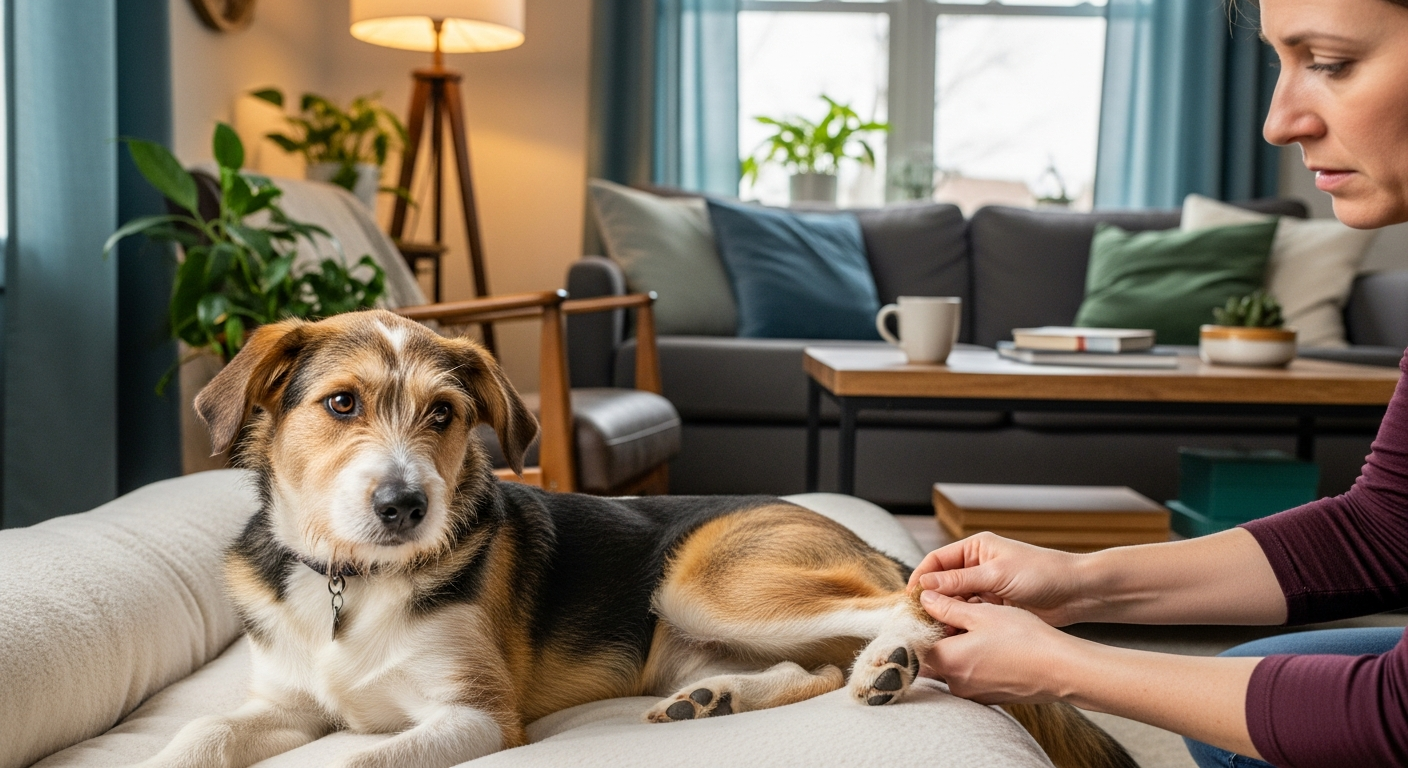
Nearly 40% of young dogs already show signs of osteoarthritis on x-rays. In a 2024 study, researchers examined 123 randomly selected dogs aged eight months to four years from a single practice and x-rayed all their limb joints under sedation (Enomoto et al., 2024). Overall, 39.8% had radiographic osteoarthritis in at least one joint, and depending on how strictly pain was defined, 16% to 24% had joints that were both changed on x-ray and painful on examination. Yet most owners wait for a dramatic limp before they even consider the possibility of pain.
By the time you notice obvious signs of arthritis in dogs, the disease has usually been progressing for a while, and joint changes cannot be undone. Pain can also show up as behavior: a dog that growls when touched in a certain spot, avoids a particular hand, or becomes irritable may be protecting a joint that hurts, not showing a temperament flaw. To be clear: a dog with an actual bite history around people or other animals still needs professional behavioral and safety guidance alongside any pain workup. Pain can be part of the picture, but it never replaces supervision and training.
Veterinary Disclaimer: The information in this article is for educational purposes only and does not replace professional veterinary advice, diagnosis, or treatment. If your pet shows signs of illness or you have health concerns, consult a licensed veterinarian promptly.
The Myth of "Just Getting Old"
"Slowing down" is often a euphemism for chronic pain. When a Retriever stops chasing the tennis ball, it may not be age alone. It may be that running has started to hurt.
According to the American Animal Hospital Association, osteoarthritis is a progressive disease, and joint changes begin well before pain becomes evident. We write off their reluctance as laziness, and we miss the joint changes that are already underway.
Osteoarthritis pain also appears to be underdiagnosed and undertreated. In the 2024 study of young dogs, only 2 of the dogs with clinical osteoarthritis were receiving any pain management, and owners noticed signs of impairment in only about 30% of the affected dogs (Enomoto et al., 2024). Part of the reason is that the early signs are behavioral and easy to miss.
A short walk across a slippery clinic floor shows very little, and many dogs are too stressed at the vet to show how they really move at home. That is why what you notice at home matters so much.
Behavior changes deserve a medical look first. When a dog changes its routine or suddenly becomes reactive or withdrawn, ask your vet to check for pain before you assume it is a training problem. If a bite or genuine safety concern is involved, that still calls for a qualified behaviorist alongside the pain workup, not instead of it.
Identifying Micro-Signals Before the Limp Appears
Limping is a late sign, not an early warning system. By the time your dog is consistently holding up a limb or dragging a paw, the joint is structurally compromised. Early detection relies entirely on noticing subtle gait changes and minor behavioral shifts. Most people brush these off as quirky habits. Watch closely how your dog moves from resting to standing. Treatment works best when it starts early, before a limp appears.
Dogs are very good at compensating. They shift their weight to healthier limbs, often carrying more weight on the front legs to spare painful hips. Over time you may see the hind leg muscles thin out while the shoulders look comparatively bulky. Watch for these specific indicators:
- Stiffness after resting, particularly in the morning hours.
- Hesitation to jump into cars or onto familiar furniture.
- Excessive licking or chewing at specific joints.
- A sudden reluctance to walk on slippery hardwood floors.
Reading the subtle geometry of canine movement takes practice. A dog that scuffs a back toenail on the pavement every few steps may have an orthopedic or neurological problem worth checking, even if it never cries out. Learn your dog's baseline normal: if you know what their healthy stride looks like, you will spot changes much earlier.
Morning Stiffness and the Couch Hesitation
The most common early indicator is stiffness right after a long rest. Instead of a fluid stretch and a trot to the door, the dog takes a few stiff, stilted steps and then gradually loosens up as it moves.
Stiffness after rest is a classic sign of osteoarthritis, and it becomes a daily ritual that owners slowly normalize, assuming the dog is just groggy.
Then comes the distinct hesitation at the edge of the couch or the back of the SUV. A dog that used to clear the tailgate of a truck with a single, effortless bound suddenly stops. They calculate the trajectory. They might put their front paws up and wait for you to lift their rear end. They might pace back and forth before attempting the jump. This is not them asking for attention. This is likely them weighing the pain they'll experience on landing. The jump has started to hurt.
RELATED: Check out our 5 Best Orthopedic Dog Beds article.
The Deceptive "Bunny Hop" on Stairs
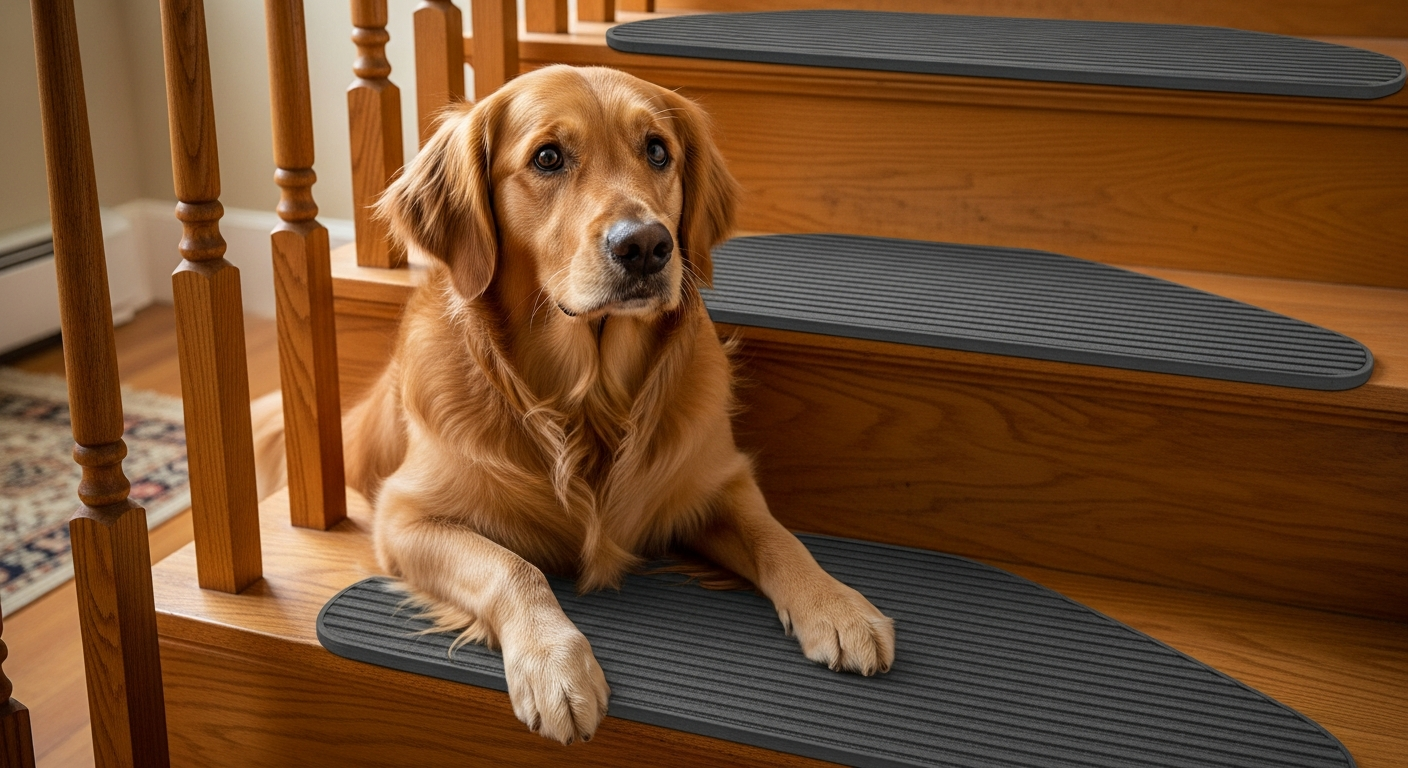
Stairs are a useful test. A healthy dog walks up a flight of stairs by alternating their back legs. When the hips or knees hurt, some dogs start pushing off with both back legs at once, a "bunny hop".
Bunny hopping can be a sign of pain in both hind limbs, for example from hip dysplasia, or of a spinal problem. It can look like puppy-like enthusiasm. Watch how your dog climbs, not how fast it gets to the top, and mention any change to your vet.
Arthritis in Young Dogs
We want to believe that joint pain only affects old dogs, but the 2024 study described above found joint changes in many dogs under four years old.
As described above, not every changed joint was painful, and very few of the dogs in pain were treated. The authors concluded that osteoarthritis pain appears underdiagnosed and undertreated in young dogs.
The most commonly affected joints in these young dogs were the elbow, hip, tarsus, and stifle, in that order. In young dogs, osteoarthritis is often linked to developmental joint problems such as elbow or hip dysplasia, rather than to years of wear and tear. That is a good reason to ask your vet about joint health well before a dog is a senior, especially in large and at-risk breeds.
If you adopt a large breed puppy, manage their environment from day one: traction on slippery floors, sensible exercise while they are growing, and above all a lean body condition. Prevention is far cheaper and kinder than managing advanced joint disease later.
The Silent Language of Chronic Joint Pain
Dogs rarely whine or cry out from chronic pain. They tend to adapt quietly, moving less, resting more, and avoiding what hurts. If you are waiting for your dog to vocalize, you may miss a long period of discomfort. Learn to read the subtle changes in their daily habits.
Signs of pain often show up as behavior changes, and owners frequently mistake them for bad training. The dog that loved being brushed now growls when you run the comb over their lower back. These are not random acts of defiance. They can be a dog protecting a sore body.
Licking or chewing at one joint is easy to mistake for a skin problem. Skin issues and allergies are real and common, but if the licking is focused on a joint, ask your vet to check that joint for pain too.
You have to look at the whole picture. Map their behavioral shifts against their physical limitations. A dog in pain will often withdraw from the chaos of a busy household. They seek out quiet, isolated corners where they cannot be bumped or jostled. When their baseline behavior shifts dramatically, your first stop should be a thorough orthopedic exam.
Sleep Disruptions and Pacing
Chronic pain is loudest in the quiet hours of the night. The distractions of the day fade away. When the house settles, the throbbing in a degraded hip joint becomes impossible for the dog to ignore. You will start to notice your dog pacing the hallways at 2 AM. You hear the click of their nails on the floor. They are unable to find a comfortable position on their bed. They lie down, sigh heavily, and stand right back up two minutes later to try again.
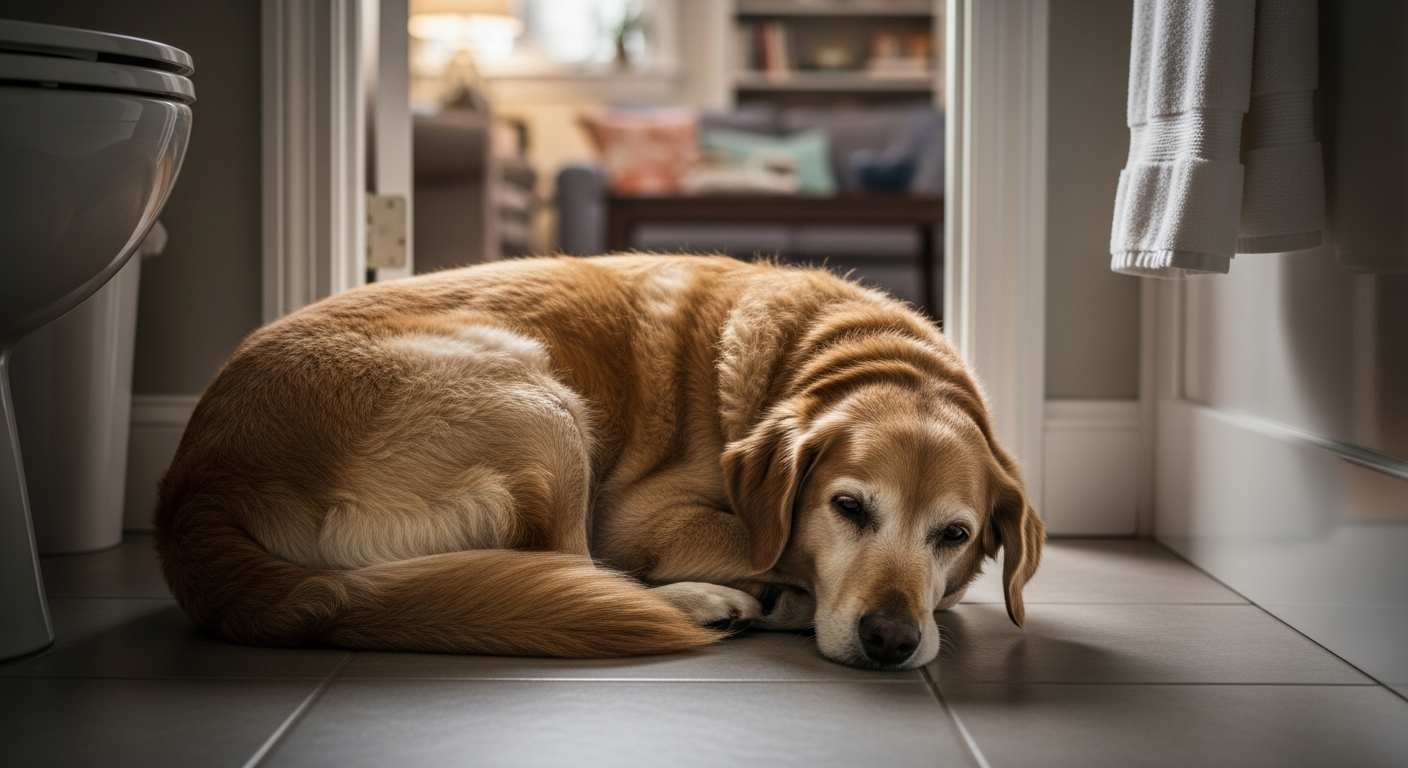
Broken sleep affects quality of life and can make a dog less tolerant of daily stress, which feeds a cycle of pain, fatigue, and irritability. If your dog's sleep suddenly changes, ask your vet to check for joint pain as well as other causes, such as cognitive dysfunction.
Uncharacteristic Grumpiness and Isolation
Pain drains a dog's patience. A previously social dog may start avoiding other dogs at the park, or snap when a younger dog tries to play rough. Keeping boisterous playmates at a distance can be a way to protect a sore body.
This isolation extends to the human family as well. It breaks the bonds that took years to build. They might stop sleeping at the foot of your bed. They opt instead for a hard floor in the guest bathroom. They are removing themselves from the traffic patterns of the house. They want to avoid accidental impacts from kids or other pets. When a dog actively chooses isolation over connection, take it seriously and mention it to your vet.
Modern Diagnostics Beyond the Visual Exam
Diagnosis is also moving beyond watching a dog walk down a clinic hallway. Wearable sensors are one area of research: a 2025 study in Frontiers in Veterinary Science tested a single accelerometer placed on different parts of the body of 24 healthy dogs, and found the sternum and pelvis were the most useful positions for analyzing gait. Tools like this are still mostly used in research, but they show where objective gait assessment is heading.
Activity monitors worn on the collar have also been used in clinical studies to track how much dogs move over days or weeks, which can reveal changes that a short visit does not.
Validated owner questionnaires, such as the Canine Brief Pain Inventory (CBPI), ask owners to rate their dog's pain and how much it interferes with daily activities. Filling one in can be a reality check for people who have slowly normalized their dog's condition over months.
Sedation often helps with joint x-rays. A tense, awake dog is hard to position, and the hips in particular need careful positioning to be evaluated properly. In the 2024 study of young dogs, all radiographs were taken under sedation. If your vet suggests sedated x-rays for a young dog with an unusual gait, it is worth discussing.
How Arthritis in Dogs Is Treated Today
Treatment of osteoarthritis pain is usually multimodal: medication, weight control, exercise and rehabilitation, and changes at home, adjusted over time with your vet.
NSAIDs (non-steroidal anti-inflammatory drugs) such as carprofen, meloxicam, or firocoxib remain a mainstay. They need veterinary supervision and monitoring, because they can affect the stomach, liver, and kidneys. When an NSAID alone is not enough, vets may add other drugs: in a placebo-controlled study, adding amantadine to meloxicam made dogs with refractory osteoarthritis pain more active (Lascelles et al., 2008). Gabapentin is also sometimes used, always under veterinary direction.
The primary goal now is to break the pain cycle early. You must preserve muscle mass and maintain joint function. If a dog hurts too much to walk, they lose muscle rapidly. When they lose muscle, the joints lose their physical support system. Weaker muscles leave the joints with less support, and the damage progresses faster. Modern pain management is about keeping the dog moving comfortably. Their own anatomy must help bear the physical load.
The impact of proper pain management can be dramatic. Many dogs that seemed withdrawn or grumpy become more active and engaged once their pain is controlled.
Biologic Therapies and Monoclonal Antibodies
Librela (bedinvetmab), from Zoetis, was approved by the FDA in May 2023. It is a once-monthly injection of a monoclonal antibody that targets nerve growth factor, a key player in osteoarthritis pain. It works differently from NSAIDs: like the body's own proteins, it is broken down into small peptides rather than processed by the liver enzymes that handle many drugs. Ask your vet whether it suits your dog, especially if NSAIDs are not an option.
It is not a magic bullet without risks. In December 2024, the FDA published a letter to veterinarians about adverse events reported in dogs treated with Librela, including ataxia, seizures, other neurologic signs, increased thirst and urination, and in some cases death. Zoetis updated the US label in February 2025 to add these post-approval reports. Talk through the benefits and risks with your vet, and report any new signs after an injection.
Regenerative Options and Laser Interventions
Some clinics also offer regenerative options such as platelet-rich plasma (PRP) and stem cell injections into the affected joint. Research is ongoing and results vary, so ask your vet what evidence exists for your dog's specific joint problem, as these treatments can be expensive.
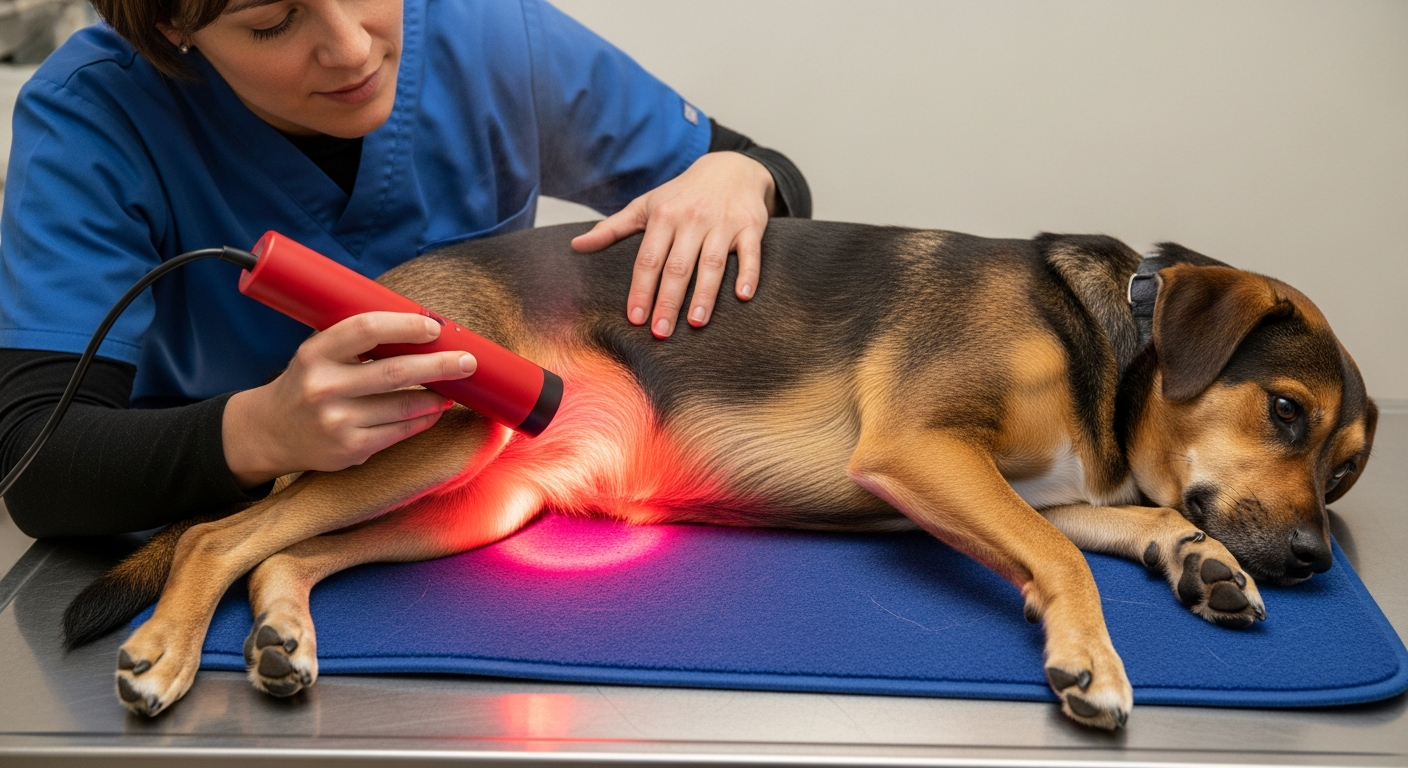
Laser therapy and pulsed electromagnetic field (PEMF) devices, such as the Assisi Loop, are also used as add-ons. The evidence is still limited, so treat them as possible extras, not replacements for proven pain control, weight management, and exercise.
Rethinking Daily Nutrition and Supplements
The pet supplement industry is crowded with marketing claims that outrun the science. Many over-the-counter joint chews contain only modest amounts of glucosamine, and the evidence for joint supplements is mixed. They can support a treatment plan, but they do not replace pain control from your vet.
Supplements on their own do not stop active inflammation or reverse joint changes. Of the common options, omega-3 fatty acids from fish oil have some of the best evidence: in a randomized controlled trial, dogs with osteoarthritis fed a food enriched with fish oil omega-3s improved their weight bearing on the affected leg (Roush et al., 2010). Talk to your vet about whether a fish oil supplement or a joint diet makes sense for your dog and at what dose. This is not a self-directed dosing decision.
Diet matters too. Some veterinary joint diets are enriched with omega-3 fatty acids, and choosing one is a decision to make with your vet.
If you are looking for joint supplements, see our 7 Best Dog Joint Supplements article.
And then there is the reality of canine obesity, one of the biggest drivers of joint problems. In a lifelong study of 48 Labrador Retrievers, dogs fed 25% less than their pair-mates lived longer and developed signs of chronic disease later (Kealy et al., 2002). One of the cheapest joint interventions is strict portion control: weigh your dog's food with a kitchen scale, in partnership with your vet's recommended target weight.
Learn more about the benefits and risks of fish oil for dogs.
Redesigning Your Home for a Compromised Gait
You can pursue the best treatments on the market, and the environment still dictates comfort. Slippery floors make every step harder for a dog with sore joints, and a slip can cause a painful strain.
You have to redesign their environment to support their failing mechanics, whether you like the look of it or not. Lay down heavy-duty mats or strategically placed rugs to give them purchase. Washable runners work well, and you can also cut cheap yoga mats to fit tight corners. Create a continuous runway of traction from their bed to the back door to the water bowl. They should not have to risk a bad slip just to get a drink of water.
A ramp is worth introducing early, before your dog really needs it. Trying to teach a terrified, painful dog how to walk up a steep wooden ramp into the back of an SUV is a nightmare. Teach your dog to use it with high-value treats like boiled chicken. Make it the only acceptable way to enter the vehicle. By the time their joints start failing, the ramp is just a normal, stress-free part of their routine.
Managing a dog with chronic joint issues is a demanding, ongoing commitment. It will test your patience and your wallet. It requires consistent vigilance, financial planning, and a willingness to confront the uncomfortable reality of their physical decline.
If you suspect your dog is hiding joint pain right now, stop guessing. Take three specific steps today.
- First, record a video of your dog walking up the stairs and getting up from a nap.
- Second, book an appointment with your vet and explicitly ask about sedated radiographs of their hips and elbows.
- Third, ask your vet about a target weight and a feeding plan to get there.
Catching pain early is one of the kindest things you can do for your dog. Recognizing the early signs of arthritis in dogs is where that protection begins.
Frequently Asked Questions
How can I modify my home for a dog with joint pain?
The most crucial step is providing traction. Place heavy-duty yoga mats or non-slip area rugs along your dog's primary walking paths to prevent micro-slips on hardwood floors. Additionally, introduce ramps for cars and furniture early on so the dog learns to use them before their pain becomes severe.
What are the earliest signs of arthritis in dogs?
The earliest indicators are often behavioral rather than physical. Look for stiffness after resting, hesitation to jump onto furniture, a shortened stride, and excessive licking or chewing at specific joints. Behavioral shifts like uncharacteristic grumpiness or withdrawing from the family are also common early signs.
Can young dogs get arthritis?
Yes. A 2024 study found that 39.8% of dogs aged eight months to four years had signs of osteoarthritis on x-rays in at least one joint, and some of those joints were also painful. In young dogs it is often linked to developmental joint problems such as elbow or hip dysplasia, not just old age.
Why does my dog 'bunny hop' up the stairs?
Bunny hopping, where a dog uses both hind legs at once to push up a stair, can be a way to compensate for pain in both hind limbs, for example from hip dysplasia, or for a spinal problem. It is worth mentioning to your vet.
Do over-the-counter joint supplements work for dogs?
Supplements alone do not stop active inflammation. Of the common options, omega-3 fatty acids from fish oil have some of the best evidence for dogs with osteoarthritis, while the evidence for many glucosamine chews is weaker. Ask your vet about the right product and dose for your dog.

Related Articles

Cosequin vs Dasuquin: Which Joint Supplement Is Right for Your Dog?
Cosequin vs Dasuquin side by side: the exact amounts per tablet, what the extra ASU in Dasuquin does, dosage by weight, the cat versions, and a checklist to …

5 Best Orthopedic Dog Beds for Large Dogs & Seniors
Looking for the best orthopedic dog bed? We compared 5 options for large breeds and senior dogs by foam layers, warranty, waterproofing and support.

7 Best Dog Joint Supplements
7 dog joint supplements compared by active ingredients, dose and NASC quality seals, with what the research says about glucosamine, omega-3s and more.

Fish Oil for Dogs: Benefits, Risks and 5 Warning Signs
Fish oil for dogs: what omega-3s can do for skin and joints, how to dose by EPA and DHA with your vet, side effects, and 5 warning signs …

Homemade Dog Food for Kidney Disease: How to Make It Safe (Low Phosphorus Guide)
Thinking about homemade food for a dog with kidney disease? What a kidney diet needs to do, why none of 39 published recipes met dogs' needs, phosphorus in …

The Ultimate Dog Parasite Prevention Guide: Keep Your Pup Safe
Dog parasite prevention guide: heartworm, fleas, ticks and worms, a year-round schedule based on CAPC and heartworm society advice, and product safety tips.
Comments (0)
No comments yet. Be the first to share your thoughts!
Leave a Reply