
Cat Zoomies: Why Cats Go Crazy at Night and After Pooping (and When It's Not Normal)
Last updated: October 5, 2026. This article is for general information and does not replace advice from your veterinarian. How we write our articles.
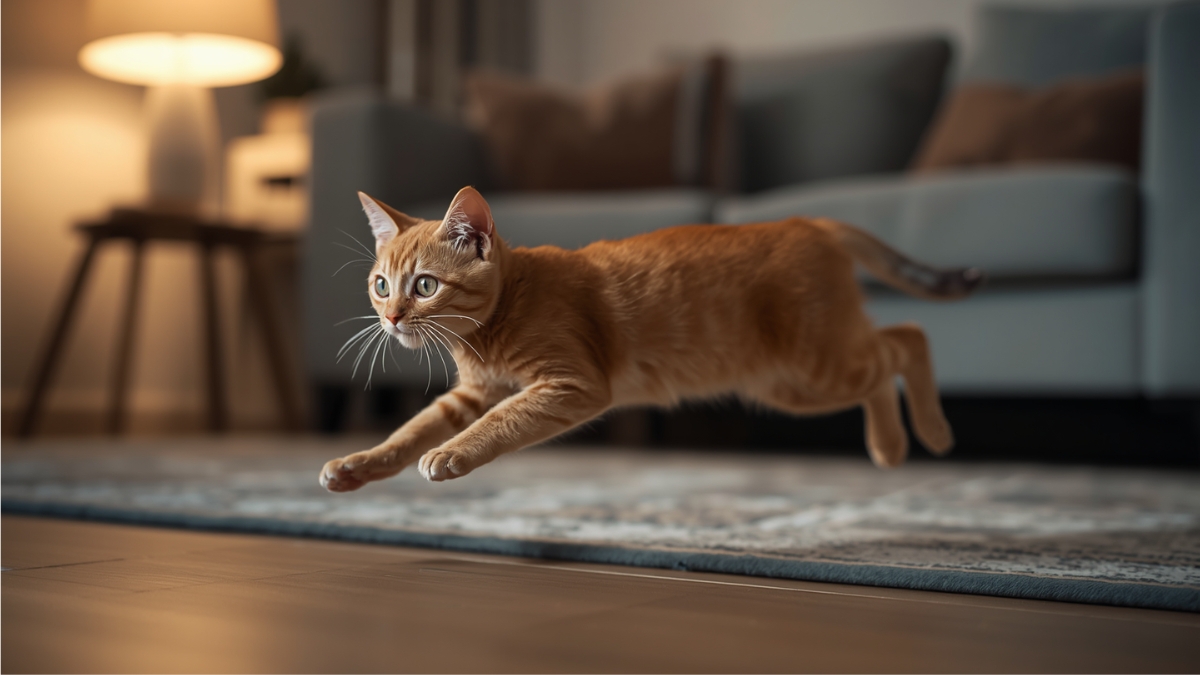
It is 3 a.m. The house is silent. Then something thunders down the hallway, skids across the kitchen floor, bounces off the couch and disappears. A few seconds later your cat is sitting calmly on the windowsill, licking a paw as if nothing happened.
Welcome to the cat zoomies. Most of the time, these sudden bursts of speed are a healthy and completely normal part of being a cat. But not always. A cat who starts zooming after years of calm nights, or who runs from the litter box crying, may be telling you something important.
This guide explains what zoomies are, why they happen at night and after pooping, how to read them by the time of day, and the specific signs that mean a call to your veterinarian is a better idea than a laugh and a video.
Quick answer: Cat zoomies are short bursts of frantic running and jumping that release stored energy and the drive to hunt. They are most common at dawn, dusk and night, and in young cats. They are usually normal. Sudden new zoomies in an older cat, or zoomies with crying, skin twitching or weight loss, deserve a vet check.
What Are Cat Zoomies?
Behaviorists call zoomies FRAPs, short for Frenetic Random Activity Periods. During an episode a cat may sprint from room to room, climb furniture or curtains, leap at nothing, skid around corners and make chirps or trills. Pupils are often wide, the tail may puff or flick, and the whole thing usually lasts from a few seconds to a few minutes.
Three things explain most zoomies:
- Stored energy. Cats sleep for a large part of the day. That rest builds up energy that needs an outlet, and it often comes out all at once.
- A hunting drive with nowhere to go. Cats are built to stalk, chase and pounce several times a day. Indoor life rarely offers that, so the sequence sometimes plays out in the hallway instead. The AAFP and ISFM Environmental Needs Guidelines list the opportunity for play and predatory behavior as one of the five pillars of a healthy cat environment.
- Timing. Cats are naturally most active around dawn and dusk, when their wild relatives hunt. In a home, that often translates into a 5 a.m. stampede or a late evening race.
In other words, cat zoomies are not a sign that something is wrong with your cat. They are usually a sign that a very capable predator has had a quiet day.
The Zoomies Decoder: What the Timing Tells You
Most articles about cat zoomies stop at "zoomies are normal." The more useful question is when they happen, because the timing usually points to the cause, and to the fix. Use this table as a first read of your own cat.
| When it happens | Most likely reason | What to do |
|---|---|---|
| Late at night or before dawn | Natural dawn and dusk activity, plus energy saved during a quiet day | Play hard in the evening, then offer the last meal right before bed |
| Right after using the litter box | Relief, a burst of energy, or an instinct to move away from the scent. Rarely, pain | Usually nothing. Check the stool and watch for straining or crying |
| After a bath, a vet visit or a stressful event | Release of tension once the stress is over | Give space and a quiet room. It should settle within minutes |
| Just after waking up | Stored energy and a stretch that turns into a sprint | Normal. A short play session can channel it |
| Soon after a meal | A full, energized cat with nothing to do | Normal in young cats. Use puzzle feeders to slow eating |
| Kitten, many times a day | Growing body, high energy, learning to hunt | Expected. Several short play sessions a day help |
| Senior cat, suddenly and often | Possibly a medical cause such as hyperthyroidism | Book a vet check, especially with weight loss or more hunger |
| When the back is touched, with skin rippling | Possible feline hyperesthesia syndrome or back pain | Film an episode and show it to your vet |
Why Cats Get Zoomies at Night
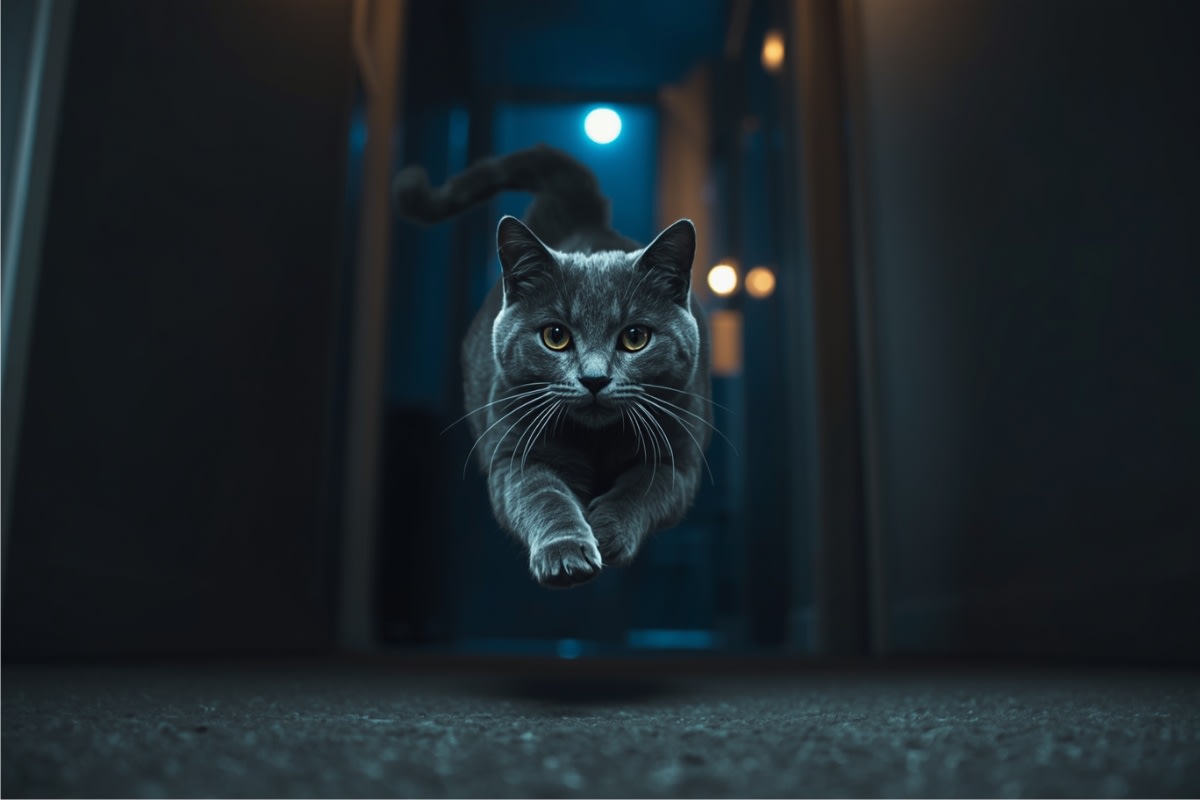
Night time cat zoomies are the most common complaint, and they usually come down to a mismatch between a cat's natural rhythm and a human household. Cats are crepuscular, which means they are wired to be most active in the low light of dawn and dusk. While you are at work, your cat sleeps. When you go to bed, the day's energy is still there.
Night zoomies also tend to be worse when:
- The cat is young, alone for long periods, or the only pet in the home.
- Play happens early in the evening but not right before bed.
- The last meal is given hours before lights out, so hunger adds to the restlessness.
- The cat has learned that racing around gets attention, even a sleepy "stop it."
Night activity that comes with loud crying is a slightly different story. If your cat is vocal at night as well as active, our guide on why cats meow so much at night covers the causes in detail.
Why Do Cats Get Zoomies After Pooping?
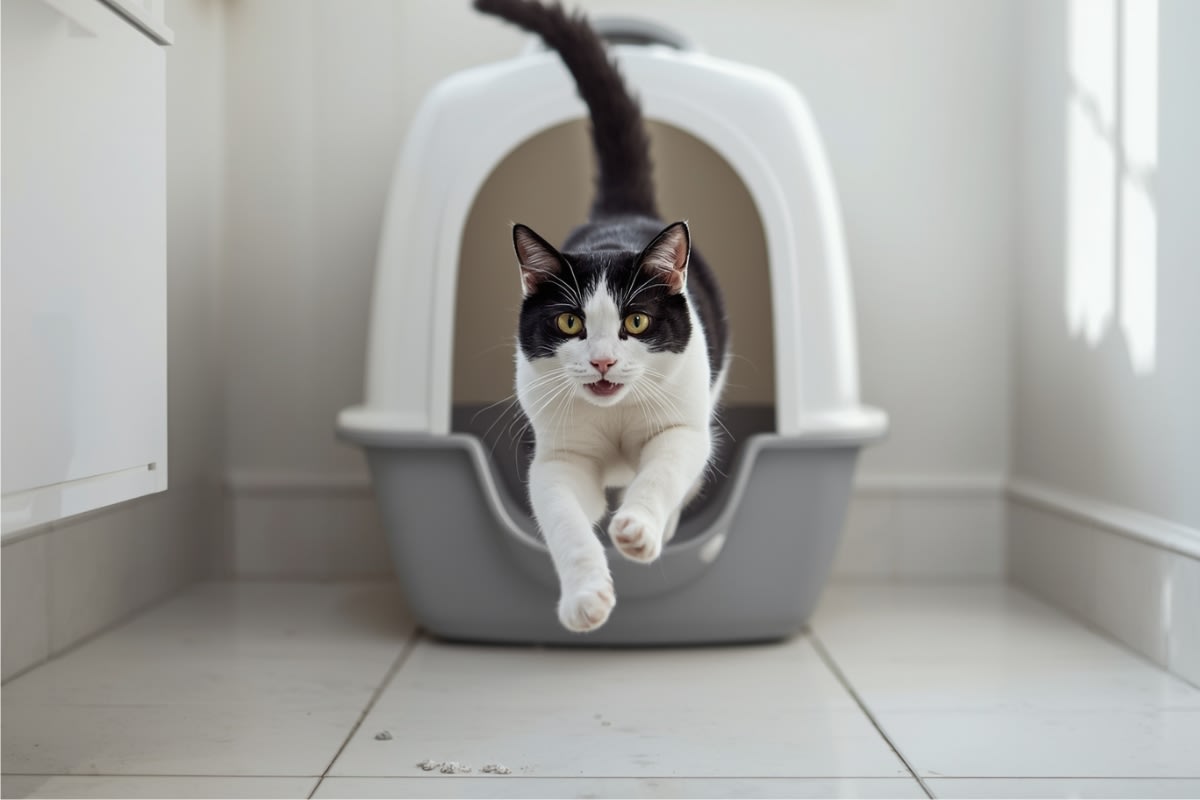
Post litter box zoomies are one of the most shared cat behaviors online, and one of the least understood. Here is an honest look at the common explanations. No published study has tested any of them directly, so treat them as plausible ideas rather than proven facts.
- Relief. Passing a large stool can bring a sudden feeling of lightness, and some cats seem to celebrate it.
- Vagus nerve stimulation. Straining during a bowel movement can stimulate the vagus nerve, which affects heart rate and blood pressure. This is often cited online as the trigger for a "rush," but the link to zoomies has not been shown in cats.
- Moving away from the scent. In the wild, the smell of fresh feces could attract predators or rivals. Running away quickly may be an old instinct.
- Bad timing. Many cats visit the box right after waking up, which is exactly when stored energy is highest.
What matters more for you is the small group of cases where the sprint is a reaction to discomfort. Watch for crying in the box, straining, repeated trips with little result, very hard or very soft stools, blood, or licking of the rear end. Those point to constipation, inflammation or a urinary problem rather than celebration. The Cornell Feline Health Center lists crying out while urinating and frequent trips to the box among the classic signs of lower urinary tract disease. A cat who strains and passes little or no urine needs a vet the same day, because a urinary blockage is an emergency. Where the box is placed can also make some cats leave it in a hurry, and our article on litter box placement mistakes explains why.
When Zoomies Are Not Normal
The single most useful rule is this: a change matters more than the behavior itself. A cat who has zoomed every evening for six years is probably fine. A calm cat who suddenly starts racing around is worth a closer look, especially past middle age. These are the situations that deserve a vet visit.
1. A senior cat who is suddenly hyperactive
Hyperthyroidism is a common disease of middle-aged and older cats. According to the Cornell Feline Health Center, its most common signs are weight loss, increased appetite, and increased thirst and urination, and it may also cause vomiting, diarrhea and hyperactivity. The pattern to watch for is an older cat who seems more energetic and hungrier than ever, yet is getting thinner. Many owners read that as a "second youth." It is often a thyroid problem, and it is very treatable once diagnosed with a simple blood test.
2. Rippling skin, tail attacks and episodes when touched
Feline hyperesthesia syndrome, sometimes called "twitchy cat" or rolling skin syndrome, can look like zoomies at first. The Cornell Feline Health Center describes dilated pupils, rippling skin along the back, drooling, intense scratching and tail chasing, often noticed when owners pet the lower back and the cat suddenly reacts. The difference from normal zoomies is the focus on the back and tail, the twitching skin and the way episodes start with touch. Vets first look for treatable causes such as skin disease, parasites or back pain, and most affected cats can be managed well.
3. Running from the litter box in distress
As covered above, a sprint with crying, straining or abnormal stools is a pain signal, not a celebration. Male cats who strain to urinate need urgent care.
4. Night restlessness in an older cat who seems confused
Cognitive dysfunction is the feline version of age related cognitive decline. The Cornell Feline Health Center notes that signs become clearly noticeable in cats aged 10 and older, and include disorientation, altered sleep and wake cycles, staring at walls, accidents outside the box and loud vocalizing, often in the middle of the night. Wandering and crying at night in a senior cat is a different pattern from playful zoomies, and a vet can rule out other causes first.
5. Frantic running with scratching or biting at the skin
Fleas, mites and allergies can make a cat bolt, then stop to scratch or bite at one spot. Check the base of the tail and the neck for flea dirt, small black specks that turn red on a damp paper towel.
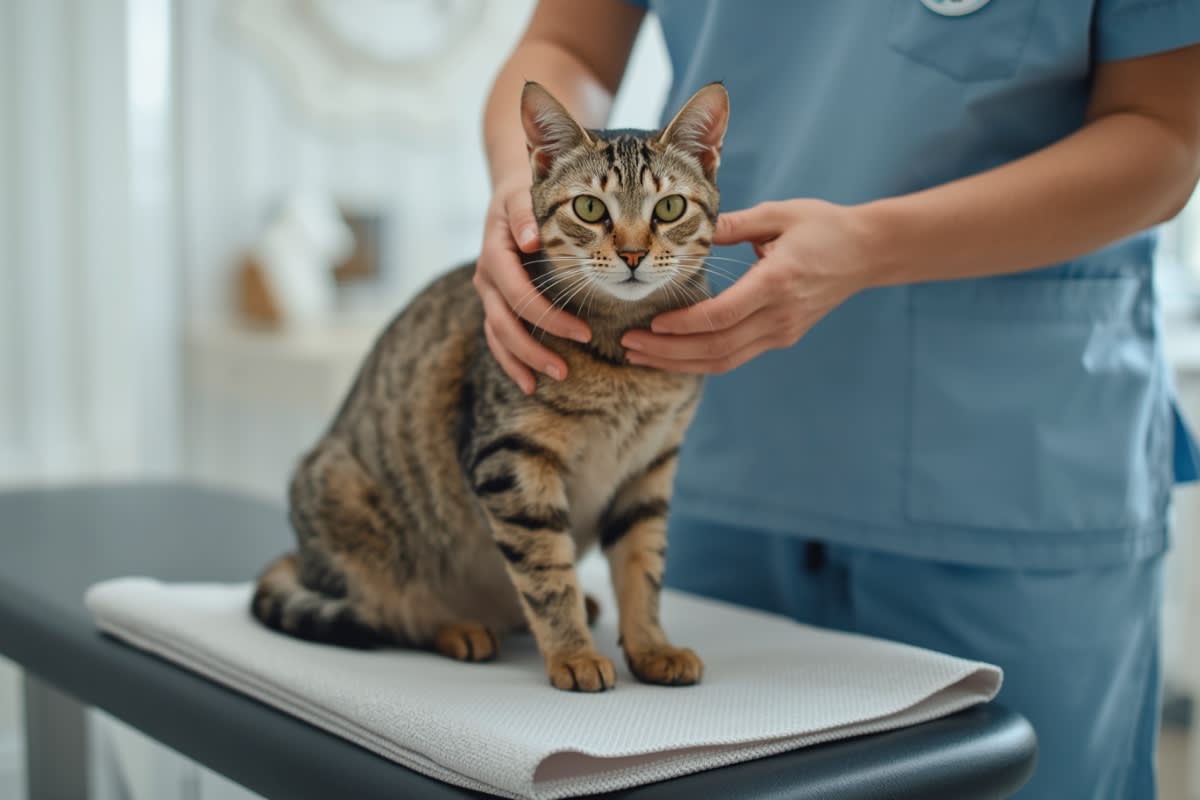
Quick checklist: call your vet if zoomies come with any of these
- Weight loss, a bigger appetite or more drinking, especially in a cat over 8 to 10 years old
- Skin rippling along the back, attacks on the tail, or episodes triggered by touch
- Crying, straining or repeated visits to the litter box
- Confusion, staring at walls or crying at night in a senior cat
- Vomiting, diarrhea, or a sudden change in personality
If your cat is also hiding more than usual, our guide to cat hiding behavior and when to worry explains which combinations of signs need attention.
The One Week Zoomies Log
"My cat is a bit hyper lately" is hard for a vet to work with, especially when cat zoomies are only part of the picture. A short log turns a vague worry into useful information, and it often shows a pattern you did not notice. Copy this table into a notebook or your phone and fill it in for seven days.
| Day | Time of episode | How long | What happened just before | Anything unusual |
|---|---|---|---|---|
| Example | 4:50 a.m. | About 1 minute | Woke up, used the litter box | None, normal stool |
| Day 1 | ||||
| Day 2 | ||||
| Day 3 |
Alongside the log, note your cat's weight if you can (weigh yourself holding the cat, then subtract your own weight), how much food disappears each day, and how much water. For an older cat, a short phone video of an episode is often the most valuable thing you can bring to the appointment. A log that shows the same calm pattern every day is reassuring too. It tells you the zoomies are simply part of who your cat is.
How to Calm Night Zoomies
You cannot remove a cat's need to run, and you should not try. The goal is to move the energy to a time that suits the whole household. This routine works for most healthy cats within one to two weeks.
Step 1: Play the hunt, about 30 minutes before bed
Use a wand toy and copy real prey: let it hide, creep along the floor, then dart away. Let your cat stalk, chase and finally catch it. Ten to fifteen minutes is usually enough, ending with a successful catch rather than an abrupt stop. Laser pointers can leave cats frustrated because there is nothing to catch, so if you use one, finish on a real toy.
Step 2: Feed right after the catch
In nature the sequence is hunt, catch, eat, groom, sleep. Serving the last meal of the day right after play completes that cycle, and a satisfied cat is far more likely to settle. If your cat wakes you early because of hunger, a timed feeder that opens before dawn can help.
Step 3: Add daytime outlets
Puzzle feeders, a window perch with a view of birds, cardboard boxes and short play sessions when you are home all reduce the energy left over at night. Our list of activities to keep your cat mentally stimulated has many easy ideas. Interestingly, a 2021 study from the University of Exeter found that just five to ten minutes of daily object play with the owner reduced the number of prey animals outdoor cats brought home by 25%, a good sign of how much play satisfies the hunting drive.
Step 4: Do not reward the 3 a.m. race
Getting up, talking to your cat or feeding them during a night episode teaches them that zoomies make things happen. Stay in bed and stay quiet. Never punish a cat for zoomies, which only adds stress and can make night activity worse. If your cat seems tense rather than playful, our article on why your indoor cat is stressed may help.
Step 5: Make the race track safe
Move fragile items off shelves, tie up blind cords, and keep doors open or firmly closed so a running cat does not crash into one swinging shut.
Kittens, Adults and Seniors: What to Expect
- Kittens and young cats zoom the most, often several times a day. This is normal development and slowly fades with age.
- Adult cats usually settle into a predictable pattern, often an evening or early morning burst. Indoor only and single cats tend to zoom more than cats with outdoor access or a playmate.
- Senior cats usually zoom less, and cat zoomies become rarer with age. That is exactly why new or increasing zoomies after about age 10 are worth mentioning to your vet.
The Bottom Line
For most cats, the zoomies are joy and energy in their purest form: a predator practicing its moves in the safety of your hallway. Planned play before bed, a meal right after, and a few daytime outlets will tame most night races. Keep an eye on the pattern, though. A change in timing, a senior cat with a new burst of energy, or zoomies that come with crying, twitching skin or weight loss are your cat's way of asking for a checkup.
Now it is your turn: at what time does your cat get the zoomies, and what seems to set them off? Share it in the comments below. Your answer may help another cat owner who is wide awake at 3 a.m.
Sources & References
- Cornell Feline Health Center. Hyperthyroidism in Cats. Cornell University College of Veterinary Medicine.
- Cornell Feline Health Center. Hyperesthesia Syndrome. Cornell University College of Veterinary Medicine.
- Cornell Feline Health Center. Cognitive Dysfunction. Cornell University College of Veterinary Medicine.
- Cornell Feline Health Center. Feline Lower Urinary Tract Disease. Cornell University College of Veterinary Medicine.
- Ellis SLH, Rodan I, Carney HC, et al. AAFP and ISFM Feline Environmental Needs Guidelines. Journal of Feline Medicine and Surgery, 2013.
- Cecchetti M, Crowley SL, Goodwin CED, McDonald RA. Provision of High Meat Content Food and Object Play Reduce Predation of Wild Animals by Domestic Cats Felis catus. Current Biology, 2021.
Frequently Asked Questions
Why does my cat get the zoomies at night?
Cats are naturally most active at dawn and dusk, and many sleep most of the day while their owners are out. The energy saved during the day comes out at night. Interactive play shortly before bed followed by the last meal of the day usually reduces night zoomies within one to two weeks.
Why does my cat run around after pooping?
Common explanations include relief after a bowel movement, a burst of energy after waking, and an instinct to move away from the scent. None has been proven by a study. It is usually harmless, but crying, straining, repeated trips to the box or abnormal stools suggest discomfort and need a vet check.
Are cat zoomies normal?
Yes. Short bursts of running and jumping are a normal way for cats to release energy and practice hunting, especially in kittens and young adults. What matters is change: new or increasing zoomies in an older cat, or zoomies with other signs, are worth discussing with a veterinarian.
Why is my older cat suddenly so hyper?
Sudden hyperactivity in a middle-aged or senior cat can be a sign of hyperthyroidism, especially together with weight loss, a bigger appetite and more drinking. A simple blood test can confirm it, and the condition is very treatable once diagnosed.
How long do cat zoomies last?
Most episodes last from a few seconds to a few minutes, and the cat then calms down, grooms or goes back to sleep. Episodes that go on much longer, repeat many times a day in an adult cat, or start when the back is touched deserve a closer look.
Should I stop my cat from having zoomies?
No. Zoomies meet a real need. Instead of stopping them, give that energy an outlet with daily hunting style play, puzzle feeders and climbing spots, and make the home safe by removing fragile items and securing cords. Never punish a cat for zoomies.

Related Articles
Best Cat Carriers for Anxious Cats: 6 Picks That Make Vet Visits Easier (2026)
The best cat carriers for anxious cats, chosen for top loading, stability and easy vet exams, plus a step-by-step carrier training plan for nervous cats.
8 Subtle Signs Your Cat Loves You (Even When They Act Like You're Invisible)
Stop expecting a dog's reaction. Discover the subtle signs your cat loves you, from slow blinks to biometric data, backed by 2026 behavioral science.

The Truth about Whisker Fatigue: Myths, Facts & Solutions
Discover the truth about Whisker Fatigue. We debunk the myths, analyze 2026 veterinary data, and reveal why your cat's bowl might not be the real problem.

The Ugly Truth About How to Transition Your Cat to a New Diet Without Causing a Medical Crisis
Learn the gritty reality of how to transition your cat to a new diet safely. Avoid hunger strikes, diarrhea, and vet bills with this expert rescue guide.

The 3 AM Scream: Why Do Cats Meow So Much at Night (And How to Save Your Sanity)
Exhausted? Learn exactly why cats meow so much at night. We cover biological instincts, medical red flags, and the step-by-step protocol to reclaim your sleep.

8 Reasons Why Your Indoor Cat Is Stressed, Is Your Home a Prison?
Discover 8 reasons why your indoor cat might be stressed. The gritty truth about feline anxiety and how to fix it.
Comments (0)
No comments yet. Be the first to share your thoughts!
Leave a Reply