UVB Lighting for Reptiles: Prevent Metabolic Bone Disease
Heads up: This post contains affiliate links. If you buy something through them, I earn a small commission at no extra cost to you. It keeps the lights on and the kibble bowl full. Read the full boring legal stuff here.

☀️ What You Need to Know About UVB Lighting
- UVB isn't optional lighting—it's how reptiles make vitamin D3 — without it, calcium sits in their food bowl doing absolutely nothing while their bones slowly dissolve from the inside.
- Metabolic bone disease (MBD) is 100% preventable and 100% your fault — it doesn't happen because of bad genetics or bad luck, it happens because someone skipped UVB or used the wrong bulb.
- T5 and T8 bulbs are not interchangeable — T5 bulbs produce 30-40% more UVB output than T8s, and using the wrong type leaves your reptile chronically under-exposed.
- UVB bulbs expire long before they burn out — a 12-month-old bulb still glows but produces almost zero UVB, making it completely useless.
- Most pet store "UVB starter kits" are garbage — compact coil bulbs cover a 4-inch radius, T8 bulbs in deep-dome fixtures never reach the basking spot, and nobody mentions you need to replace them every 6-12 months.
This guide explains how UVB actually works, why most setups fail, and how to prevent your lizard from slowly turning into a boneless flesh sack.
UVB for Reptiles: The Silent Thing Killing Your Lizard's Bones
UVB lighting is the thing most reptile keepers get wrong.
Not because it's complicated. Because pet stores sell it like it's optional.
"Does my bearded dragon need UVB?" is a question that shouldn't exist, but here we are.
Yes. It needs UVB. Your lizard, your tortoise, your iguana, they all need UVB.
Without it, their bones slowly soften, their jaws swell, their spines curve, and they die.
Not quickly. Slowly. Over months.
It's called metabolic bone disease, and it's entirely preventable if you just use the right bulb in the right place and replace it when it expires.
But most people don't, because nobody explained that UVB bulbs expire or that compact coil bulbs are useless or that T8 bulbs mounted 18 inches away produce zero measurable UVB at basking level.
This article covers how UVB works, why your reptile will die without it, and how to set it up correctly so you don't spend six months watching your lizard's legs bend sideways.
← Back to complete reptile care guide
What UVB Actually Does (And Why Your Reptile Dies Without It)
Reptiles can't make vitamin D3 on their own.
You can. They can't.
When UVB light (wavelengths between 290-315 nanometers) hits a reptile's skin, it converts a compound called 7-dehydrocholesterol into previtamin D3.
That gets converted into vitamin D3, which travels to the liver, then the kidneys, where it becomes calcitriol, the active form that allows calcium absorption in the gut.
Without UVB, none of that happens.
The calcium in your reptile's food just passes through unabsorbed, and the body starts pulling calcium from the bones to keep vital systems running.
That's metabolic bone disease.
Soft bones, jaw deformities, paralysis, tremors, seizures, death.
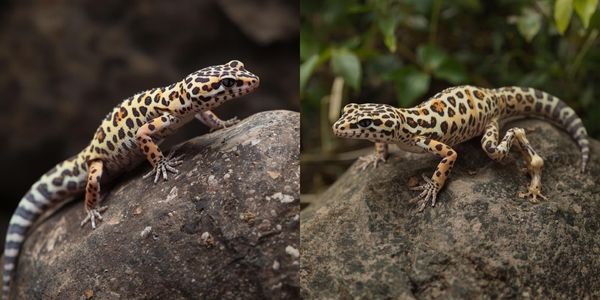
And it's not rare. It's the most common preventable disease in captive reptiles.
Why "Calcium Supplements" Don't Fix Missing UVB
Plenty of people dump calcium powder on every cricket and wonder why their bearded dragon still has rubbery legs.
Because calcium without vitamin D3 is useless.
Your reptile can't absorb dietary calcium if it doesn't have the D3 to metabolize it.
You can feed it calcium-dusted insects 24/7, and it'll still develop MBD if there's no UVB.
Oral D3 supplements exist, but they're inconsistent, easy to overdose, and don't replace natural UVB exposure.
UVB allows reptiles to self-regulate D3 production, they move in and out of UV zones as needed, which prevents both deficiency and toxicity.
Supplements don't do that.
They're a backup plan, not a replacement.
The UVB Equipment Breakdown: What Works and What's Garbage
Pet stores sell four types of UVB lighting, and only two of them work.
1. Compact/Coil UVB Bulbs: The Worst Option
These are the spiral bulbs that screw into a regular dome fixture.
They're marketed as "convenient" and "easy," which translates to "we know they're garbage, but they're impulse-buy friendly."
Why they fail:
- Effective UVB radius is about 4-6 inches, anything outside that tiny zone gets almost zero exposure
- UVB output degrades faster than linear tubes (3-6 months vs 6-12 months)
- Most produce inadequate UVB even when new
- Cannot cover the length of a standard enclosure
Compact coil bulbs are only acceptable for tiny enclosures (under 20 gallons) or low-UVB species like crested geckos.
For anything else, they're useless.
2. Linear Fluorescent Tubes (T8): The Bare Minimum
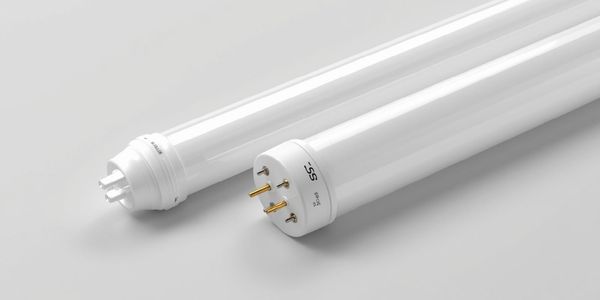
T8 tubes are the fatter fluorescent bulbs (1-inch diameter) that fit into basic light fixtures.
They produce some UVB, but not much, and only at close range.
Why they barely work:
- Lower UVB output than T5 bulbs, you need them mounted 6-10 inches from basking spot
- UVB strength drops off sharply with distance
- Require more frequent replacement (every 6-9 months)
- Not suitable for large enclosures or high-UVB species
Best for: Small enclosures (under 36 inches), low-to-moderate UVB species (leopard geckos, blue-tongue skinks, some snakes).
Useless for: Bearded dragons, uromastyx, iguanas, monitors, tortoises, anything from a desert or open habitat.
For species that genuinely only need low-to-moderate UVB, the Zoo Med ReptiSun 5.0 T8 UVB Bulb works fine in small enclosures (under 30 inches) when mounted 6-8 inches from the basking spot.
It's adequate for leopard geckos, blue-tongue skinks, and corn snakes, but don't convince yourself it'll work for a bearded dragon just because it's cheaper than a T5 setup.
3. Linear Fluorescent Tubes (T5): The Standard
T5 tubes are thinner (5/8-inch diameter) but produce 30-40% more UVB output than T8 bulbs.
They're what serious keepers use because they actually work.
Why they work:
- Higher UVB output allows mounting 12-18 inches from basking spot while still delivering adequate exposure
- Covers the full length of standard enclosures (24-48 inches)
- Better for tall enclosures and high-UVB species
- Longer effective lifespan (replace every 12 months)
Best for: Bearded dragons, uromastyx, monitors, iguanas, tortoises, any diurnal basking species.
T5 HO (High Output) bulbs are even stronger and necessary for species with extreme UVB requirements or very large enclosures.
Most pet store T5 bulbs are weak generic brands that degrade within 6 months. The Zoo Med ReptiSun 10.0 T5 HO UVB Bulb is the industry standard for high-UVB species like bearded dragons and uromastyx, it produces consistent output for 12 months, covers 24-48 inch enclosures, and delivers proper UVB penetration at 12-18 inches distance instead of forcing you to mount it 6 inches from your reptile's head.
That bulb is useless without a proper fixture. The Zoo Med T5 HO Terrarium Hood mounts directly on screen tops or inside enclosures, has a built-in reflector that doubles UVB output, and doesn't use cheap plastic components that warp under heat like those $15 shop-light fixtures people try to repurpose.
4. Mercury Vapor Bulbs (MVB): The Nuclear Option
MVBs produce heat, visible light, UVA, and UVB in a single bulb.
They're powerful, expensive, and only suitable for large enclosures.
Why they work (sometimes):
- All-in-one heat and UVB solution
- Long lifespan (12-18 months)
- Suitable for very large enclosures (6+ feet)
Why they fail (often):
- Produce intense heat, can overheat small enclosures
- UVB output varies wildly between brands and individual bulbs
- Expensive ($50-80 per bulb)
- Many species don't tolerate the intense UVB gradient MVBs create
MVBs are specialist equipment for people who know what they're doing.
If you're reading this article, you probably don't need one yet.
If you do need an all-in-one heat and UVB solution for a large setup, the Arcadia D3 UV Basking Lamp is a mercury vapor bulb that combines basking heat and proper UVB output without the wildly inconsistent quality of cheap MVBs.
It's expensive ($60-80) and produces serious heat, so it's only suitable for enclosures 4+ feet long, but it actually delivers measured UVB instead of pretending to.
UVB Requirements by Species: Not All Reptiles Need the Same Exposure
UVB requirements are divided into Ferguson Zones, a classification system based on how much UVB reptiles receive in their natural habitat.
Ferguson Zone 1: Cryptic/Crepuscular Species
Examples: Crested geckos, gargoyle geckos, some tree boas.
UVB needs: Minimal to none. These species are nocturnal or crepuscular (active at dawn/dusk) and naturally avoid direct sunlight.
They can synthesize some D3 from very low UVB exposure, but it's not critical if their diet includes vitamin D3.
Lighting: Optional low-output UVB (2-5% UVB bulb) or none if using D3 supplements.
Ferguson Zone 2: Partial Sun/Open Forest Species
Examples: Leopard geckos, blue-tongue skinks, corn snakes, ball pythons.
UVB needs: Low to moderate. These species bask occasionally but spend most of their time in shade or burrows.
Lighting: 5-6% UVB bulb (T8 or T5) mounted 10-12 inches from basking spot.
Ferguson Zone 3: Open Basking Species
Examples: Bearded dragons, uromastyx, some monitor lizards, Greek tortoises.
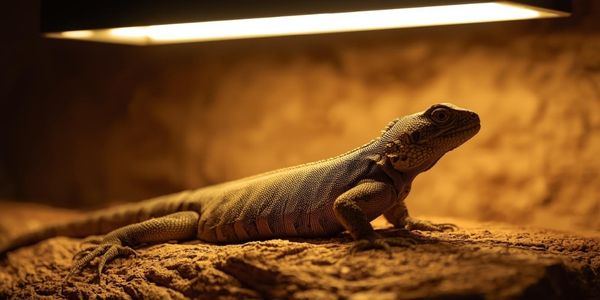
UVB needs: High. These species spend hours basking in direct sunlight and require strong UVB exposure.
Lighting: 10-12% UVB bulb (T5 or T5 HO) mounted 12-18 inches from basking spot.
Ferguson Zone 4: Extreme Basking Species
Examples: Desert iguanas, chuckwallas, spiny-tailed lizards.
UVB needs: Very high. These species live in intense desert sunlight and require maximum UVB output.
Lighting: 12-14% UVB bulb (T5 HO) or mercury vapor bulb, mounted 18-24 inches from basking spot.
Common UVB Mistakes That Cause Metabolic Bone Disease
1. Using Expired Bulbs
UVB bulbs don't burn out, they just stop producing UVB.
A 12-month-old bulb still glows, still produces heat (if it's a combo bulb), but produces almost zero measurable UVB.
Most T5 bulbs need replacement every 12 months.
T8 bulbs need replacement every 6-9 months.
Compact coils need replacement every 3-6 months.
If you can't remember when you last replaced the bulb, it's expired.
2. Mounting the Bulb Too Far Away
UVB strength decreases dramatically with distance.
A T5 bulb mounted 24 inches from the basking spot might produce half the UVB it would at 12 inches.
Measure from the bulb to where the reptile actually sits, not to the bottom of the enclosure.
3. Putting Glass or Plastic Between the Bulb and the Reptile
Glass blocks UVB.
Plastic blocks UVB.
Screen mesh reduces UVB by 30-50%.
If your UVB bulb is inside a glass terrarium lid, behind a plastic fixture cover, or blocked by thick screen mesh, your reptile is getting almost no UVB.
Mount UVB bulbs inside the enclosure or use fixtures designed for UVB transmission.
4. Using UVB as the Only Light Source
UVB bulbs produce some visible light, but not enough to simulate daylight.
Reptiles need bright full-spectrum lighting for proper behavior, feeding response, and circadian rhythm.
Pair UVB with a separate basking bulb or LED daylight fixture.
5. Assuming "Reptile Bulbs" Are All the Same
A "50-watt reptile bulb" could be:
- A basking bulb with zero UVB
- A UVB bulb with zero heat
- A combo bulb with weak UVB and weak heat
Read the label. Look for the UVB percentage (5%, 10%, 12%, etc.).
If it doesn't list a UVB percentage, it's probably not a UVB bulb.
How to Set Up UVB Lighting Correctly
Step 1: Identify your species' UVB requirements (Ferguson Zone 1-4).
Step 2: Buy the appropriate bulb (T5 for most species, T8 for low-UVB species, compact coil only if you have no other option).
Step 3: Mount the bulb at the correct distance:
- T5 10-12%: 12-18 inches from basking spot
- T8 5-6%: 6-10 inches from basking spot
- Compact coil: 4-6 inches maximum (seriously, don't use these)
Step 4: Remove any barriers between the bulb and the reptile (glass lids, plastic covers, thick mesh).
Step 5: Run UVB for 10-12 hours per day to simulate natural daylight cycles.
Step 6: Mark your calendar to replace the bulb in 6-12 months (depending on bulb type).
Step 7: Use a UVB meter ($100-150) to verify output if you want to be certain.
Or just follow manufacturer guidelines and replace bulbs on schedule.

UVB Meters: Overkill or Essential?
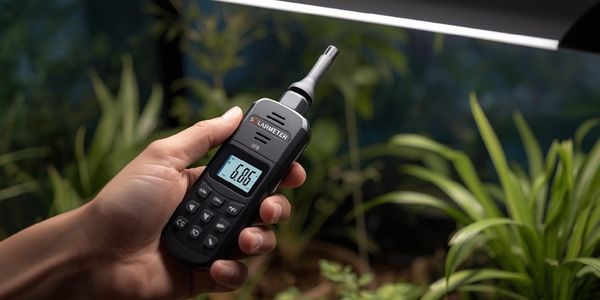
A Solarmeter 6.5 costs around $200 and measures UVB output in microwatts per square centimeter (µW/cm²).
It's the gold standard for verifying that your setup is working.
Do you need one? No.
If you're using the right bulb at the right distance and replacing it on schedule, your reptile will be fine.
But if you're troubleshooting MBD, using an unusual setup, or keeping high-value species, a UVB meter removes all guesswork.
The Solarmeter 6.5 UVB Meter costs around $200 and measures UVB output in microwatts per square centimeter, it's what professionals use to verify bulb output, diagnose weak setups, and confirm replacement schedules.
If you're spending $500+ on a reptile, another $200 to verify its lighting setup isn't working isn't unreasonable, and it pays for itself the first time it catches an expired bulb before your lizard's bones start softening.
What Metabolic Bone Disease Actually Looks Like
MBD doesn't happen overnight.
It develops over weeks to months, and early signs are easy to miss if you don't know what you're looking for.
Early symptoms:
- Reduced appetite
- Lethargy, less activity than normal
- Twitching or tremors, especially in the limbs
- Difficulty walking or climbing
Advanced symptoms:
- Swollen jaw or limbs (particularly in bearded dragons and iguanas)
- Soft, rubbery bones that bend under pressure
- Curved spine or deformed limbs
- Paralysis of the back legs
- Seizures
By the time you see bone deformities, the damage is permanent.
You can stabilize the reptile with aggressive calcium supplementation and UVB correction, but the skeletal damage doesn't reverse.
Prevention is the only real treatment.
Final Thoughts: UVB Is Not Negotiable
If you're keeping a diurnal reptile and you don't have UVB, you're watching it slowly develop a fatal disease.
That's not dramatic. That's just what happens.
UVB isn't expensive. A T5 bulb costs $30-40 and lasts a year.
A fixture costs $40-60 and lasts indefinitely.
The only reason reptiles still get MBD in captivity is because people either don't know better or assume their reptile is the magical exception that doesn't need what every other member of its species needs.
It's not.
Just buy the right bulb, mount it correctly, and replace it when it expires.
🐾 Frequently Asked Questions
Q How long do UVB bulbs last before they need to be replaced?
Most UVB bulbs need replacement every 6-12 months depending on type, even though they still glow and look fine. T5 bulbs typically last 12 months before UVB output drops below effective levels. T8 bulbs need replacement every 6-9 months. Compact coil bulbs degrade fastest and should be replaced every 3-6 months. The visible light doesn't fade, but the UVB radiation, the part your reptile actually needs, drops to near zero long before the bulb burns out. Write the installation date on the bulb with a marker so you remember when it's time to swap it. Running an expired UVB bulb is the same as running no UVB at all, and your reptile will develop metabolic bone disease either way.
Q Can I just give my bearded dragon vitamin D3 supplements instead of using UVB?
You can, but it's a terrible idea. Oral D3 supplements are inconsistent, easy to overdose (which causes toxicity), and don't allow reptiles to self-regulate production like natural UVB does. When a reptile has access to UVB, it moves in and out of the light zone as needed, too much exposure, it retreats to shade; too little, it basks longer. This built-in regulation prevents both deficiency and overdose. With oral supplements, you're guessing at the right dose, and if you're wrong in either direction, you're causing problems. UVB also provides other health benefits beyond D3 synthesis, including improved behavior, appetite, and immune function. Supplements are a backup plan for emergencies or species that genuinely don't need UVB, not a replacement for proper lighting.
Q What's the difference between T5 and T8 UVB bulbs and which one should I use?
T5 bulbs are thinner (5/8-inch diameter) and produce 30-40% more UVB output than T8 bulbs (1-inch diameter). T5s can be mounted 12-18 inches from the basking spot and still deliver adequate UVB, making them better for tall enclosures and high-UVB species like bearded dragons, uromastyx, and monitors. T8 bulbs have lower output and must be mounted 6-10 inches from the basking spot, which limits their usefulness to small enclosures and low-UVB species like leopard geckos or blue-tongue skinks. For most diurnal basking reptiles, T5 is the standard. The only time you'd use T8 is if you have a very small enclosure or a species with minimal UVB requirements. T5 HO (high output) bulbs are even stronger and necessary for species with extreme UVB needs or very large setups.
Q Why does my leopard gecko have soft bones if I'm using a UVB bulb?
Either the bulb is expired, mounted too far away, blocked by glass or plastic, or it's a compact coil bulb that was useless from day one. UVB bulbs lose effectiveness long before they stop glowing, if you can't remember when you installed it, it's expired. Check the distance: a T8 bulb needs to be 6-10 inches from where the gecko sits, not 18 inches away behind a glass lid. Glass blocks UVB completely, so if your bulb is outside the enclosure shining through a glass top, your gecko is getting zero exposure. Compact coil bulbs have a 4-6 inch effective radius and can't cover a standard enclosure. Also verify you're using the right bulb type, some "reptile bulbs" are just basking lamps with no UVB at all. If all that checks out and the gecko still has soft bones, add calcium with D3 supplements while you troubleshoot the lighting setup.
Q Do nocturnal reptiles like crested geckos need UVB lighting?
Nocturnal and crepuscular species (active at dawn/dusk) have minimal UVB requirements because they naturally avoid direct sunlight. Crested geckos, gargoyle geckos, and some nocturnal snakes fall into Ferguson Zone 1, meaning they can survive on dietary vitamin D3 without UVB. However, recent research shows that even low-level UVB exposure benefits these species by improving bone density, appetite, and breeding success. If you're keeping cresties or similar species, you can either use a low-output UVB bulb (2-5% UVB) mounted far from basking areas, or skip UVB entirely and rely on high-quality calcium supplements with D3. Either approach works, but UVB is probably better long-term. What you absolutely shouldn't do is use high-output UVB on nocturnal species, they'll avoid it and become stressed.

📖 Related Articles
7 Ways to Socialize a Guinea Pig: The 2026 Guide
💬 Comments (0)
No comments yet. Be the first to share your thoughts! 👇
✍️ Leave a Reply