Exotics & Reptiles Care Guide: Complete Husbandry Essentials
Heads up: This post contains affiliate links. If you buy something through them, I earn a small commission at no extra cost to you. It keeps the lights on and the kibble bowl full. Read the full boring legal stuff here.
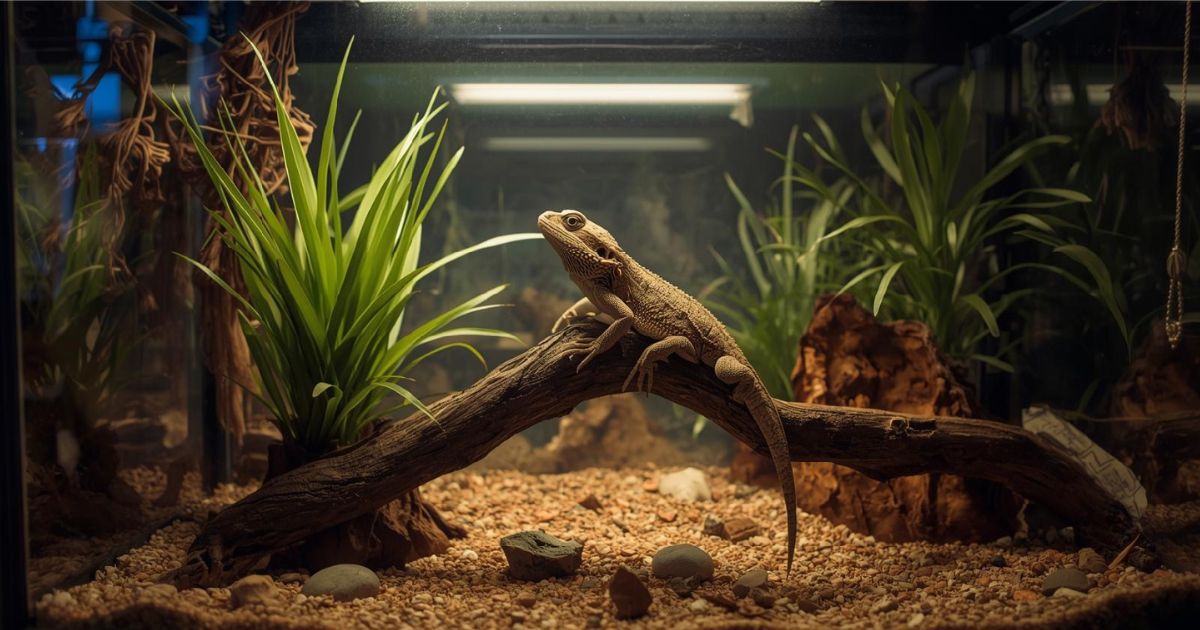
The Unromantic Truth About Pet Reptiles
Reptiles are marketed like living desk ornaments: silent, compact, "easy" pets you can keep in a glass box while you get on with your life. The pitch is that they're cheaper than dogs, quieter than cats, and perfectly suited to people who want a pet without the fuss.
That pitch leaves out the part where most of them die slowly and quietly from preventable husbandry screw-ups that nobody noticed until it was too late to fix.
Dogs drop hints with barking and cats escalate to peeing on your pillow, but reptiles just… stop thriving. They don't scream when their bones are dissolving or their lungs are filling with fluid. They sit under the wrong bulb in the wrong tank with the wrong food until their kidneys fail or their spine warps. The pet store doesn't mention that bit when they sell you a "starter kit" and a care sheet written by someone who's never kept the species past six months.
This guide exists to do what the starter kit never will: spell out, in painful detail, what it actually takes to keep a reptile alive and well for the decade or two you've just signed up for.
Want a pretty accessory? Buy a lamp. Want a reptile? Read this first.
Reptiles Are Not Tiny Dragons in a Box
Mammals come with an internal furnace. Reptiles don't. They're ectothermic: walking biological hardware that outsources temperature regulation to whatever idiot is in charge of the thermostat. That's you, by the way.
When you keep a reptile, you are not decorating a shelf. You are running a life‑support system. Every choice you make about glass size, heat, light, and diet translates directly into the animal's immune function, digestion, and lifespan. Miss the mark often enough and you don't get a "kinda unhappy" reptile. You get a slow‑motion crash you only notice when it's too late to fix.
Let's get the four pillars of not-killing-your-reptile out of the way.
Pillar One: Enclosure & Environment – Your Tank Is a Life Support System
Most people buy whatever tank the shop had next to the reptile and call it a day. That's how you end up with a bearded dragon in a glorified shoebox and a ball python in a bare glass crypt wondering why it never comes out.
Size: The Pet Store Lied To You
Those "suitable for life" labels on tiny enclosures are optimistic fiction. The reptile doesn't magically stop growing just because your shelf space ran out.
- Bearded dragon: Think minimum 40‑gallon breeder, and that's the floor, not the ideal.
- Ball python: Enough floor space to stretch and thermoregulate, not a cramped drawer with a heat mat.
- Leopard gecko: Horizontal space and actual hides, not a hot Tupperware with sand.
- Crested gecko: Vertical space with branches and plants, not a sterile glass column.
When your enclosure seems "convenient" for your furniture layout, it's probably inconvenient for the animal's spine and stress levels.
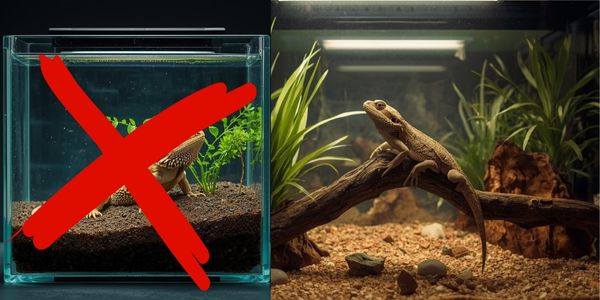
Arboreal, Terrestrial, Aquatic: Pick the Right Battlefield
Different body plans mean different worlds to recreate:
- Arboreal (crested geckos, chameleons): Need climbing structure, foliage, vertical height, and decent humidity. Floor space is almost irrelevant; they're not walking, they're leaping and clinging.
- Terrestrial (leopard geckos, bearded dragons): Need stable floor area, hides, and clear warm/cool zones. Forcing them to live in vertical display cases is aesthetics over welfare.
- Aquatic / semi‑aquatic (turtles): Need water depth, basking platforms, and filtration that doesn't give up after a week of turtle sludge.
The cage should look like a tiny version of where the species actually evolved to exist; otherwise, you're already off target.

Substrate: What They Stand On Can Kill Them
The pet shop loves loose sand because it looks "natural" and sells fast. The reptile loves it right up until it's choking on an impaction that costs more to fix than the entire setup.
- Desert doesn't mean "bag of calcium sand from aisle five."
- Jungle doesn't mean slimey, mold‑friendly soil with no drainage.
- Some species do best on solid surfaces with textured grip; others need bioactive setups with drainage and clean‑up crews.
Substrate that can clog a gut, rot a belly, or harbor parasites shouldn't be used just because the bag had a lizard picture on it.
Complete guide to reptile enclosures and habitat setup →
Hides, Clutter, and the Glass Coffin Problem
A bare enclosure looks "minimalist" to humans and like a panic room with glass walls to the animal. Reptiles need cover to feel secure. Constant visibility is not enrichment; it's surveillance.
- At least two hides: warm side and cool side, minimum.
- Visual barriers: cork, plants, branches, rocks.
- Climbable structure for arboreal species; solid retreats for burrowers.
Complete visibility from every angle all the time means the animal is probably living in permanent stress mode.
🛒 Recommended Product: REPTIZOO Magnetic Reptile Hide Cave
Every reptile needs proper hides, not the cheap plastic domes that barely fit a hatchling.
The REPTIZOO 3-in-1 Magnetic Attraction Cave provides natural hiding, shedding assistance, and even egg-laying space for breeding setups.
Available in small, medium, and large sizes, it's designed to actually accommodate your reptile's full body, not just its head.
The magnetic design keeps humidity chambers secure without toppling.
Rated 4.5+ stars by thousands of keepers who finally understand that proper hides reduce stress more than any "calming spray" ever will.
Pillar Two: Heat & Thermoregulation – You're Playing God With a Thermostat
You don't set "one good temperature" and call it done. Reptiles need gradients: a warm basking zone to ramp up metabolism and a cooler zone to retreat to when they've had enough.
"Room Temperature" Is Just Slow Hypothermia
Most living rooms hover somewhere between 18–22°C (64–72°F). That's "mildly chilly" for you and "struggling to digest anything" for a lot of reptiles.
Typical ballpark (and yes, you still check species‑specific care sheets):
- Basking area: often 30–40°C (86–104°F), depending on species.
- Cool side: 22–26°C (72–79°F).
- Night drop: a controlled 3–6°C (5–10°F) drop, not "let's see what the house does."
Too cold and digestion stalls; parasites and bacteria throw a party. Too hot and you cook the animal from the inside out.
Heating Methods: Tools vs Fire Hazards
Common options, none of which should be trusted naked:
- Under‑tank heaters / heat mats – Fine for some terrestrial species when regulated, but useless for arboreal animals and a burn risk without a thermostat.
- Ceramic heat emitters (CHE) – Decent for ambient warmth, invisible to the eye, great for night heat when controlled correctly.
- Basking lamps – Provide light + heat together, good for diurnal lizards. Also great at starting fires when you cheap out on fixtures.
- Radiant heat panels / heat tape – More advanced options, fine when installed properly with controls.
A heater plugging directly into the wall without a thermostat is basically a reptile crematorium with extra steps.
Reptile heating systems compared: thermostats, fire hazards, and fake warmth →
🛒 Essential Product: Inkbird ITC-308 Digital Thermostat
Stop gambling with your reptile's life using unregulated heat sources.
The Inkbird ITC-308 is consistently rated as the most accurate and reliable thermostat in the under-$60 range. With dual heating and cooling outlets, temperature accuracy within ±1°F, and a waterproof probe option, it's used by hobbyists and professional breeders alike.
The WiFi version (ITC-308-WiFi) lets you monitor temps remotely.
Over 15,000+ verified 5-star reviews from keepers who stopped replacing crispy heat mats and started sleeping at night.
Thermostats & Monitoring: Non‑Negotiable
"Feels warm" is not a metric. Your fingers are not a calibration tool.
You need:
- At least one good thermostat on any non‑self‑regulating heat source.
- Digital probe thermometers on both the hot and cool side.
- Infrared temp gun to actually check surface temps like a grown‑up.
Flying blind without knowing your basking spot and cool side temperatures is a recipe for disaster nobody should find surprising when things go bad.
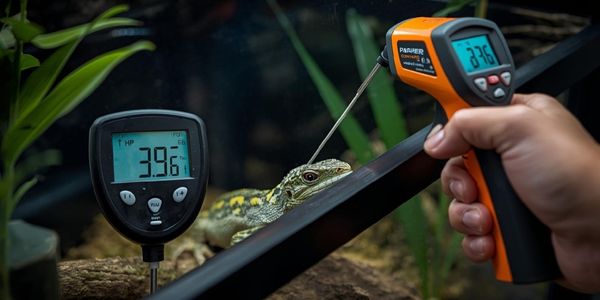
🛒 Monitoring Must-Have: Etekcity Infrared Thermometer Gun
Digital probe thermometers only measure ambient air; they have no idea what temperature your bearded dragon is actually basking at.
The Etekcity Infrared Thermometer Gun reads surface temps from -50°C to 450°C (-58°F to 842°F) in under a second.
Point, click, know. Essential for checking basking rock temps, heat mat surfaces, and thermal gradients throughout the enclosure.
Rated 4.6+ stars with over 50,000 reviews. Not labeled "for human use" because the FDA is weird about that, but it's the exact same tech used in professional reptile facilities worldwide.
What "Proper Monitoring" Actually Looks Like
You need redundancy. One thermometer is a single point of failure.
- Basking spot temp gun reading - Check surface temp where the animal actually sits.
- Ambient air temp on cool side - Digital probe at animal height, not ceiling height.
- Daily checks - Not "whenever I remember." Daily.
- Backup thermometer - Because the first one will eventually lie to you.
A thermometer reading 35°C while your bearded dragon is glass-surfing and gasping means your thermometer is wrong or placed wrong. Trust behavior over cheap electronics.
Common monitoring failures:
- Thermometer stuck to glass (measures glass temp, not air temp)
- Probe dangling in midair (measures nothing useful)
- Batteries dead for three weeks before you noticed
- "Feels about right" replacing actual data
🛒 Dual Monitoring: REPTI ZOO Digital Thermometer Hygrometer
Track both temperature and humidity in one device.
The REPTI ZOO Digital Thermometer Hygrometer features an LED display, long-lasting battery, waterproof probe, and alarm functions that alert you when levels drift out of safe ranges. The probe is thin enough to route through screen tops without gaps.
4.5+ star rating from keepers who stopped guessing and started measuring. Comes with suction cup mounting and reads both Fahrenheit and Celsius.
Pillar Three: UVB & Lighting – The Slow Bone Rot Everyone Ignores
Metabolic bone disease doesn't arrive like a horror movie jump scare. It creeps up while the animal looks "fine," right up until the moment its skeleton gives up.
UVB is not optional background decoration. It's the difference between "thriving" and "slow calcium collapse."
What UVB Actually Does (Translated Into Human)
UVB helps reptiles synthesize vitamin D₃, which lets them use calcium. No UVB or proper D₃ = calcium doesn't get into bones properly = bones go soft, jaws swell, spines warp, everything hurts and then breaks.
So when someone says, "My dragon doesn't have UVB but he seems okay," what they mean is "the damage hasn't surfaced visibly yet."

UVB for reptiles: the silent thing killing your lizard's bones →
UVB Hardware: The Bulb Rack of Shame
Useful rule of thumb:
- T5 HO linear UVB tubes – Strong, efficient, actually useful over decent distances.
- T8 tubes – Weaker, shorter range, sometimes usable when distances are right.
- Compact / coil UVB bulbs – Often marketing theatre; most setups with these are under‑lit and over‑confident.
Then you factor in:
- Distance from bulb to basking spot.
- Mesh vs open fixtures (mesh blocks a chunk of UVB).
- Replacement schedule (output drops long before the bulb "looks" dead).
Buying the cheapest "UVB reptile bulb" on Amazon and never replacing it isn't saving money. You're deferring the bill to the vet.
🛒 Gold Standard: Zoo Med ReptiSun T5 HO 10.0 UVB + Fixture
This is the combo used and recommended by zoos, veterinarians, and professional breeders worldwide.
The Zoo Med ReptiSun T5 HO 10.0 UVB bulb provides twice the UVB output of standard bulbs, made in Germany to strict quality standards.
Pair it with the Zoo Med T5 HO Terrarium Hood featuring a highly polished reflector that increases lamp efficiency. Available in 24", 36", and 48" lengths. Replace the bulb every 12 months even though it still glows, UVB output degrades long before visible light does.
Combined 4.7+ star rating across 20,000+ reviews.
Pillar Four: Diet, Hydration, and Slow‑Motion Starvation
Reptiles don't whine when their diet is garbage. They eat what you give them, until their liver, kidneys, or bones fail. Then everyone acts surprised.
Herbivore, Insectivore, Carnivore: Stop Free‑Styling
You don't feed an iguana like a beardie, and you don't feed a ball python like a leopard gecko.
- Herbivores / omnivores (e.g., bearded dragons as adults, some skinks):
- Heavy on leafy greens and varied veg.
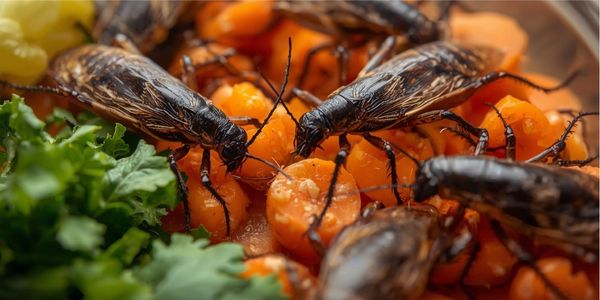
- Insects as a component, not a permanent "all you can eat" roach buffet.
- Insectivores (leopard geckos, many geckos, small lizards):
- Need gut‑loaded, dusted insects; un-fed crickets are basically crunchy styrofoam.
- Carnivores (most snakes):
- Appropriately sized whole prey at proper intervals, not random dead mice whenever you remember.
Over‑feeding is common, especially in snakes. Under‑feeding on actual nutrients is also common, especially when the diet is whatever the local pet store had on sale.
Feeder insects: gut-loading, dusting, and why your crickets are empty calories →
Supplementation: Dusting Isn't Decoration
Gut-loaded insects dusted with calcium + D3 sounds like overkill until you understand what wild reptiles actually eat vs. what your captive-bred roaches provide.
Basic schedule for most insectivores:
- Calcium without D3 - Most feedings (assuming proper UVB is present)
- Calcium with D3 - 1-2x per week when UVB is questionable, less when UVB is strong
- Multivitamin - 1x per week, not daily (over-supplementation is real)
Feeding un-dusted crickets because "they're already nutritious" means you're feeding moving husks that contribute protein and almost nothing else.
Gut-loading isn't optional: Feed your feeders actual food 24-48 hours before feeding them out. Starved insects are empty calories with legs.
🛒 Calcium Foundation: Zoo Med Repti Calcium with D3
Not all calcium is created equal.
Zoo Med Repti Calcium with D3 uses ultra-fine precipitated calcium carbonate (not ground oyster shells) for superior bioavailability. Phosphorus-free formula with safe levels of vitamin D3 for supplementing 1-2x per week alongside UVB lighting. Used and trusted by zoos and veterinarians for over 30 years.
4.7+ stars across 8,000+ reviews from keepers who understand that cheap calcium powder from sketchy brands is false economy when your lizard's skeleton is on the line.
🛒 Complete Nutrition: Rep-Cal Herptivite Multivitamin
Calcium alone isn't enough.
The Rep-Cal Herptivite Multivitamin with Beta Carotene provides essential vitamins, minerals, and amino acids in a powder form that actually sticks to feeders. Contains beta-carotene (safe vitamin A precursor) plus trace minerals often deficient in captive diets.
Use once weekly alongside your calcium schedule.
4.6+ stars from thousands of breeders and hobbyists. Comes in the iconic blue bottle that's been in reptile rooms since before compact UVB bulbs existed.
Hydration: The Silent Failure
Hydration isn't just "is there a water bowl?"
- Arboreal, humidity‑loving species may barely use bowls but rely on misting and ambient humidity.
- Desert species still need access to water; "desert" doesn't mean "never drinks."
- Improper humidity wrecks shedding, respiratory health, and hydration all in one go.
Smugly saying "I mist a lot" while ignoring actual humidity readings doesn't work. Buy a hygrometer. Then you'll have data instead of vibes.
🛒 Water Dish Done Right: Exo Terra Reptile Water Dish
Most water dishes are either too small, too tippy, or made from materials that grow bacteria colonies.
The Exo Terra Reptile Water Dish is made from food-grade resin with a realistic rock appearance, smooth non-porous interior, and built-in safety steps to prevent drowning of small reptiles or feeder insects. Heavy enough that larger reptiles can't easily flip it. Available in multiple sizes.
4.6+ stars from keepers who got tired of dumping soaked substrate out of flimsy plastic bowls twice a week.
Species Snapshots: Should You Even Own This Animal?
Consider this the part of the pet shop brochure they tore out.
Bearded Dragons: The "Beginner" Dragon That Isn't
- Interactive, charismatic, and about as cheap to maintain as a small, solar‑powered dog with a heat fetish.
- Need large enclosures, strong UVB, and varied diets.
- Vet visits and lighting replacements are not optional.
Balking at the idea of replacing a UVB tube every 6–12 months? You aren't ready for 10–15 years of lizard maintenance.
Bearded dragon care: the brutally honest beginner's guide →
Ball Pythons: The Anxious Introvert with Food Issues
- Docile, chilled, and legendarily prone to going off their food whenever the moon looks at them funny.
- Need secure hides, proper humidity, and a stable environment.
- People panic‑feed them into obesity or starve them into vet emergencies.
Can't emotionally handle a snake voluntarily fasting for weeks while still being fine? Pick something less psychologically sadistic.
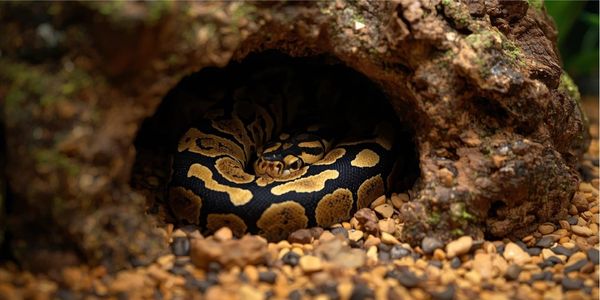
Ball python care: stop freezing, burning, and starving your snake →
Leopard Geckos: "Beginner" Doesn't Mean "Ignore It in a Drawer"
- Small, hardy, and often treated like a decorative rock with eyelids.
- Need proper floor temps, appropriate substrate, and actual hides.
- "No UVB needed" gets thrown around as an excuse to never evaluate whether the setup is actually good.
Planning to keep it in a dim rack because "that's what breeders do"? Ask yourself whether you're running a breeding operation or you just like cheap plastic tubs.
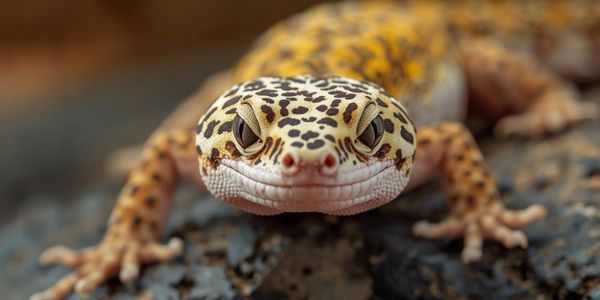
Leopard gecko care: low‑maintenance, not no‑maintenance →
Crested Geckos: Humidity, Mold, and Good Intentions
- Cute as hell, sticky as velcro, marketed as zero‑effort apartment geckos.
- Need humidity cycles, vertical space, and clean, sane bioactive or semi‑bioactive setups.
- They're not houseplants; you can't just "spray sometimes and hope."
Already overwater your actual houseplants? Maybe start there before you graduate to geckos that need their own microclimate.
Crested gecko care: humidity, rotting plants, and everything else you'll ignore →
Common Health Trainwrecks You Can Actually Prevent
Almost every "mysterious" reptile illness traces back to one or more of the four pillars being ignored.
Metabolic Bone Disease (MBD)
Cause: Garbage UVB + poor calcium support.
Symptoms: Soft jaw, swollen limbs, tremors, deformities, fractures doing basic movements.
Reality: By the time you notice it, you're doing damage control, not prevention.
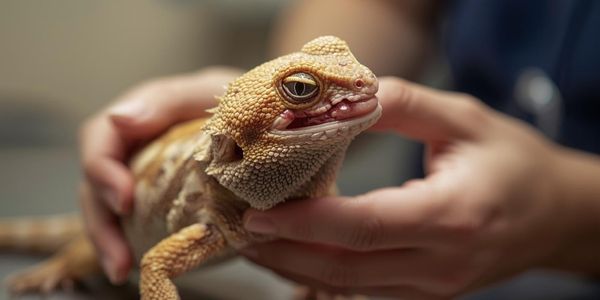
Metabolic bone disease in reptiles: prevention & treatment →
Respiratory Infections
Cause: Wrong temps, wrong humidity, wrong ventilation.
Symptoms: Wheezing, open‑mouth breathing, bubbles at the nose, lethargy, refusal to eat.
Reality: "He's just a bit wheezy" is how people narrate their way into expensive antibiotic courses.
Reptile respiratory infections: symptoms, treatment, and when it's already too late →
Impaction
Cause: Loose substrates + low temps + poor diet + dehydration = gut concrete.
Symptoms: Straining, no feces, lethargy, bloating, hindlimb weakness.
Reality: "He loves digging in sand" is not as cute when you're scheduling emergency x‑rays.
Reptile impaction: causes, symptoms, & emergency care →
Parasites
Cause: Wild‑caught animals, unquarantined tankmates, filthy enclosures, feeder contamination.
Symptoms: Weight loss, runny feces, visible mites/ticks, general "off" behavior.
Reality: You don't solve this with more paper towel changes and vibes; you solve it with a fecal exam and actual medication.
Internal & external parasites in reptiles: identification & treatment →
Vet Reality: Exotic Vets, Costs, and Waiting Until It's Too Late
Your dog‑and‑cat vet who "doesn't really see reptiles but will take a look" is not comforting; it's a red flag.
You need:
- An exotic vet or a clinic that explicitly lists reptiles on their site.
- A basic understanding that imaging, bloodwork, and hospitalization are all on the menu when you ignore husbandry long enough.
- Money. Tests, meds, and emergency care don't bill in exposure.
The actual cheap move is to get the setup right upfront. Paying for a proper UVB tube and a thermostat is always cheaper than spinal surgery for a lizard.
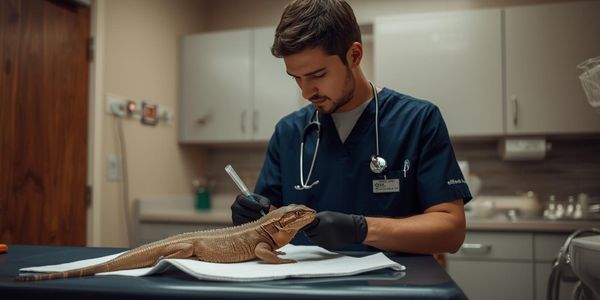
How to find & choose an exotic veterinarian →
New Owner Setup Checklist: Before You Bring the Animal Home
Reading this with a reptile already purchased and sitting in a plastic box? Yes, you did this backwards. Do better next time.
You have no business taking the animal home until this list is done:
- Enclosure of correct size, species‑appropriate (not the "starter" kit).
- Heating hardware installed, wired, and controlled by thermostats.
- UVB lighting set up, distance and photoperiod checked.
- Substrate chosen based on species, not bag design.
- Hides, branches, and clutter arranged to create both cover and gradients.
- Digital thermometers and hygrometers placed and reading sane values.
- Food supply and supplementation plan in place (gut‑loading, dusting schedule).
- Exotic vet located, with phone number saved.
- Emergency clinic identified for after‑hours disasters.
Still arguing with yourself about whether you "really" need a thermostat or UVB? The reptile doesn't need you yet. It needs someone who takes those questions seriously.
Quarantine: The Boring Thing That Prevents Expensive Disasters
Already have reptiles and you're bringing a new one home? Skipping quarantine is how you turn "one sick gecko" into "entire collection with parasites."
Minimum Quarantine Setup
- Separate room - Not "different shelf in the same room." Different air space.
- 30-90 days minimum - Longer when the animal shows any symptoms.
- Separate tools - Tongs, water dishes, hides. Don't cross-contaminate.
- Fecal exams - At least one, ideally two during quarantine period.
Handle quarantined animals last, wash hands like you're prepping for surgery, and don't get lazy because "he looks fine."
Parasites, respiratory infections, and mites don't announce themselves with fireworks. They spread quietly while you're busy being optimistic.
Seasonal Care: Winter Isn't Optional, It's Different
Your house temperature drops in winter. Your reptile's enclosure follows unless you compensate.
Winter Adjustments
- Heater wattage may need upgrading - What worked in July fails in January.
- Humidity crashes in heated homes - Your hygrometer will tell you this when you're actually checking it.
- Basking time may need extending - Shorter days mean adjusted photoperiods for some species.
- Room drafts become tank killers - Enclosures near windows or vents suddenly become temperature chaos zones.
Summer Problems
- Overheating risks - Room temp hitting 28°C+ means your basking spot can become a slow cooker.
- AC fluctuations - Don't put the enclosure in the direct path of air conditioning blasts.
- Power outages - Heatwaves kill power grids; have a backup plan (battery packs, ice packs for cooling, hand warmers for emergency heat).
Running a thermostat in summer without adjusting anything when winter hits? You're probably running too cold without realizing it.
Ethics & the Exotic Pet Trade: Just Because You Can, Doesn't Mean You Should
A lot of reptiles are cheap at the counter and ruinously expensive in suffering.
- Wild‑caught animals come with parasite payloads, stress, and guilt.
- "Rescue" situations sometimes mean "I wanted a discount project animal I can feel morally superior about while I wing the care."
- Rare morphs with known genetic issues are vanity ornaments, not sensible pets.
The uncomfortable truth: sometimes the most ethical decision is to not add another reptile to the demand stream until you've proven you can keep one properly.
This is your baseline: the minimum honest picture of what it takes to keep exotics and reptiles alive without turning your home into a slow, quiet hospice.
From here, every species‑specific guide you publish should link back to this page, and every time someone says "reptiles are easy," you can just send them here and let reality do the talking.
🐾 Frequently Asked Questions
Q Why isn't my reptile eating?
Because something in the four pillars is off: temperature, humidity, hiding spots, or stress levels. Reptiles don't hunger-strike for fun or to manipulate you into buying better crickets. They stop eating because their environment is wrong and their metabolism has downshifted into survival mode. Start with a hard audit of your basking temps (use an actual thermometer, not your hand), check your cool-side gradient, verify your hides are actually being used, and make sure the enclosure isn't sitting in a high-traffic area where the animal is on permanent alert. If you've confirmed husbandry is dialed in and the reptile still refuses food for more than two weeks, stop Googling and call an exotic vet. "Wait and see" is how you turn a fixable problem into an expensive emergency.
Q Do I really need UVB lighting and a thermostat?
If you want your reptile to have functional bones and not catch fire, yes. UVB isn't optional mood lighting, it's how reptiles synthesize vitamin D3, which is how they absorb calcium, which is how their skeletons stay intact instead of turning into soft, bendy disaster zones. Metabolic bone disease doesn't announce itself with alarms; it creeps in while your lizard "looks fine," and by the time you notice the swollen jaw or the tremors, you're managing damage, not preventing it. As for thermostats, heat sources without regulation are just fire hazards with a pet tax attached. Your heat mat or ceramic emitter doesn't know when to stop. It will keep heating until something breaks, burns, or dies. A thermostat costs $30. A house fire or a vet bill for thermal burns costs a lot more. If you're still on the fence about whether you "really" need these, you're not ready to own a reptile.
Q Can I keep two reptiles together in the same enclosure?
Usually no, and "but they seem fine" is famous last words. Most reptiles are solitary animals that tolerate each other at best and actively stress each other out at worst. Co-habbing often means one animal monopolizes the best basking spot, the prime hide, and the food, while the other one slowly declines in ways you won't notice until it's too late. You'll see them sitting near each other and assume it's companionship. It's not. It's competition for resources in a confined space. Visible aggression is the easy red flag; silent, chronic stress is the one that kills slowly. Even species that "can" be housed together (like certain geckos) need enough space, hides, and thermal zones that you're basically running two separate territories in one box. If you don't have the space, budget, or setup for that, don't do it. The animal doesn't care about your convenience. It cares about not being stressed into an early grave.
Q How long can I leave my reptile alone without supervision?
Longer than a dog, shorter than your guilt wants to believe. Reptiles don't need daily walks or litter box changes, but they do need functional life-support systems, and those systems can fail. Automated timers can handle your lights and heat for a few days, but if your heat source malfunctions, your thermostat dies, or your power goes out, your reptile doesn't have the option to fix it or move somewhere safer. A weekend trip is usually fine if your setup is rock-solid and you've tested everything in advance. A week or more? You need someone checking in—someone who knows what "normal" looks like and who will actually notice if the basking temp has crashed or the animal looks off. Reptiles are quiet when things go wrong. They don't whine, pace, or knock things over. They just sit there deteriorating, and by the time you get home and realize something's wrong, you're playing catch-up with a vet bill. Plan ahead or don't leave.
Q Is a reptile a good pet for kids?
Only if the adults in the house are the ones actually learning, setting up, and maintaining the enclosure, the heating, the UVB, and the feeding schedule. Kids can enjoy the reptile, watch it, even help with age-appropriate tasks, but they should not be the ones responsible for keeping it alive. Reptiles don't give you loud, obvious feedback when something's wrong. They don't bark, scratch at doors, or refuse to eat in dramatic ways that get attention. They quietly decline, and by the time a child realizes "something's wrong," it's usually because the animal is already in crisis. The adult has to be the one who knows what correct basking temps look like, what healthy hydration looks like, what normal behavior is versus stress behavior, and when it's time to stop guessing and call an exotic vet. If you're buying the reptile because your kid promised to take care of it, congratulations: you just bought yourself a reptile. Plan accordingly.