
Exercise for Dogs with Arthritis: Safe Activities and Gentle Home Exercises
Last updated: October 29, 2026. This article is for general information and does not replace advice from your veterinarian. How we write our articles.
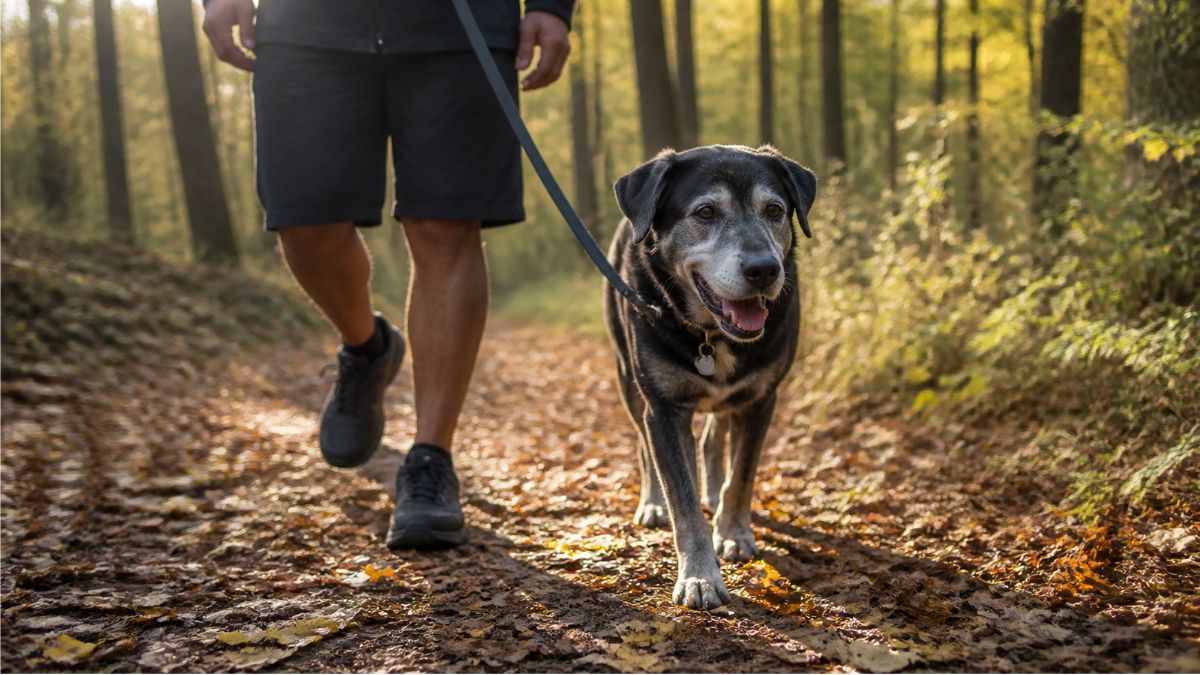
Quick answer: exercise for dogs with arthritis
- Yes, keep your dog moving. Regular, gentle exercise keeps muscles strong and joints mobile, and in one study of Labradors with hip dysplasia, dogs that exercised longer each day were less lame.
- Consistency beats intensity. Similar walks every day work better than a quiet week followed by a long weekend hike.
- Choose low-impact activities: leash walks on soft, even ground, swimming or hydrotherapy, and slow, controlled home exercises.
- Avoid high-impact play: ball chasing, jumping and sudden twists and turns.
- Watch the next morning. More stiffness or limping than usual means the day before was too much.
- Work with your vet. Exercise works best when pain is controlled and your dog is at a healthy weight.
When a dog is diagnosed with arthritis, many owners do the most natural thing: they let the dog rest. Walks get shorter, the ball goes back in the cupboard, and the dog spends more time on the sofa. It feels kind, but too much rest usually works against an arthritic dog. Muscles that support the joints get weaker, the joints get stiffer, and the extra weight that often follows puts even more load on sore hips, knees and elbows.
The international consensus guidelines for canine osteoarthritis treatment, published in 2023 by the COAST Development Group, list exercise as a core part of care at every stage of the disease, alongside weight control and pain relief (Cachon et al., 2023). The question is not whether a dog with arthritis should exercise, but how much, what kind, and how to tell when it is too much. This guide to exercise for dogs with arthritis answers those three questions, with safe activities and gentle home exercises you can discuss with your vet.
If you are not sure your dog has arthritis yet, start with our guide to the signs of arthritis in dogs, and see your vet for a diagnosis before you change your dog's routine.
Is Exercise Good for Dogs with Arthritis?
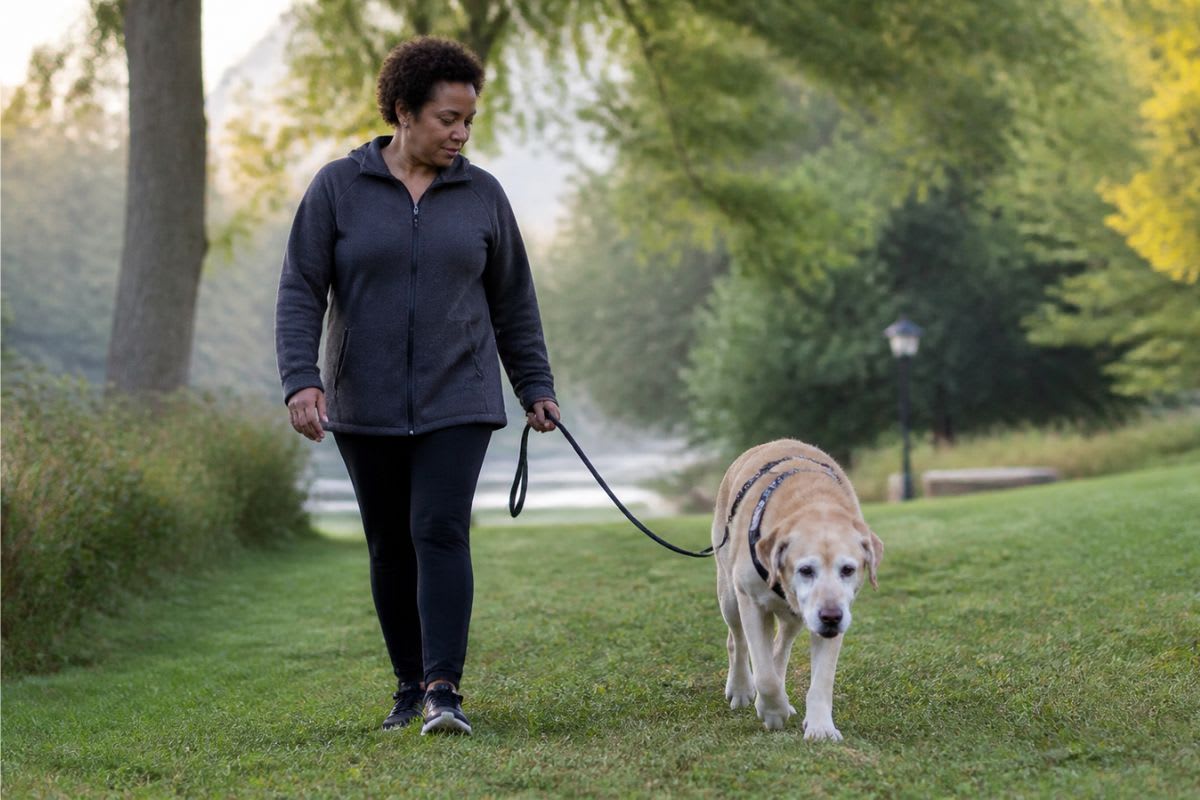
Yes. Arthritis (osteoarthritis) is a slow, progressive disease of the joint, and there is no cure. Care focuses on reducing pain and keeping the dog mobile, and regular exercise for dogs with arthritis is one of the main tools to do that.
The research in dogs points in the same direction:
- More daily exercise, less lameness. In a study of 60 Labrador Retrievers with hip dysplasia at North Carolina State University, owners reported how long their dogs exercised each day. Dogs with longer daily exercise had less severe lameness, and the link grew stronger as exercise time increased (Greene et al., 2013). A 2026 review of this study describes the comparison as more than 60 minutes a day against less than 20 minutes a day (Marcellin-Little et al., 2026). This was an observational study, so it shows an association, not proof that exercise caused the improvement, but it matches what rehabilitation specialists see.
- Exercise and weight loss work together. In a 6-month randomized trial of 29 overweight dogs with osteoarthritis in Vienna, all dogs followed a weight-loss diet. Some also did a home exercise program, others a more intensive physiotherapy program. Both groups moved better by the end, and the best results came from combining diet with intensive physiotherapy (Mlacnik et al., 2006).
The 2026 review calls therapeutic exercise the cornerstone of physical rehabilitation for dogs with osteoarthritis, because it directly addresses strength, mobility and the dog's ability to do everyday things. Arthritis is also common: the same review estimates that it affects nearly half of adult dogs, while a large UK study of dogs in general practice found that only 2.5% had a recorded osteoarthritis diagnosis in a given year, which suggests many cases go unnoticed (Anderson et al., 2018).
How Much Should You Walk a Dog with Arthritis?
There is no single right number of minutes. It depends on your dog's size, age, fitness, which joints are affected and how well the pain is controlled. What the guidelines agree on is the pattern:
- Exercise every day. The COAST guidelines ask for daily exercise with a consistent duration from day to day.
- Avoid the "weekend warrior" pattern. The 2026 review describes dogs that are mostly inactive during the week, then do strenuous exercise on weekends and show arthritis signs afterwards. Three short, steady walks every day are kinder to the joints than one long hike on Saturday.
- Split long walks. If your dog used to do one hour in one go, two or three walks of 15 to 20 minutes may suit an arthritic dog better. Your vet can help you set the starting point.
- Increase slowly. Once your dog copes well with a routine for a week or two, add a few minutes, then hold again. The guidelines stress gradual conditioning, and owners who learn to spot signs of fatigue or pain.
- Use the 24-hour check. Watch your dog the evening after a walk and the next morning. If your dog is stiffer, slower to get up or limping more than usual, the walk was too long or too hard. Go back to the previous level.
One more detail from the 2026 review: teach your dog not to pull on the lead. Lead pulling appears to reduce the quality, duration and frequency of walks. A well-fitted harness can help while you train loose-lead walking.
Safe Activities for Dogs with Arthritis
The COAST guidelines recommend avoiding high-impact activities, sudden loading of the joints and sudden changes of direction, unless a dog has been gradually conditioned for them. With that rule in mind, here is how common activities compare when you plan exercise for dogs with arthritis.
Leash Walks on Soft, Even Ground
Walking is the most common form of exercise in dogs and the easiest to control. Choose grass, packed dirt or forest paths over concrete when you can, keep a steady pace, and let your dog stop to sniff. Sniffing is low impact and keeps the walk interesting for a dog that can no longer run.
Swimming and Hydrotherapy
Water supports part of the dog's weight, so the joints can move with less load. The 2026 review explains that the two main forms work differently: swimming bends the joints more while putting very little weight on the legs, while an underwater treadmill lets the dog walk with controlled weight bearing. A rehabilitation professional can choose between them for your dog. If your dog swims outdoors, keep sessions short, use a dog life jacket for weak or older swimmers, choose an easy way in and out of the water, and dry your dog well afterwards.
Gentle Hills
Walking slowly up and down gentle slopes has been studied for its effect on joint motion, and rehabilitation programs use it to target specific joints. Keep the slope gentle and the pace slow, and leave steep or rocky climbs out of the routine.
Brain Games
Scent work, snuffle mats, food puzzles and short training sessions keep an arthritic dog busy without stressing the joints. They are a good way to fill the time that used to go to running. See our ideas for activities to keep your dog mentally stimulated.
Activities to Avoid or Limit
- Ball and frisbee chasing, with sudden sprints, stops and twists
- Jumping in and out of the car, onto the sofa or over obstacles
- Rough play with young, energetic dogs
- Long runs or bike rides alongside you
- Repeated stair climbing at speed
You do not always have to ban a favorite game. Rolling a ball along the ground for a short distance, instead of throwing it high and far, keeps the fun without the hard landings.
Gentle Home Exercises for Dogs with Arthritis
Rehabilitation programs combine static exercises, which build balance and stability, with slow dynamic exercises. The COAST guidelines recommend professional guidance, ideally from a certified rehabilitation therapist, before starting a home program, and note that many exercises can be done with items you already have at home. Ask your vet whether the exercises below suit your dog, which joints to focus on, and how many repetitions to start with.
A few rules for every exercise: work on a non-slip surface, move slowly, use treats to guide your dog, keep sessions short, and stop before your dog gets tired. Start with only a few repetitions.
1. Sit-to-Stand
Ask your dog to sit, then to stand, using a treat held just in front of the nose. Aim for a square sit, with both hind legs tucked evenly under the body, not rolled to one side. This exercise works the muscles of the hind legs and hips, the ones a dog uses to get up from the floor.
2. Slow Figure-of-Eight Walking
Walk your dog slowly in a figure of eight around two objects, such as two chairs or cones a few steps apart. The gentle turns in both directions make your dog shift weight from side to side and improve coordination.
3. Low Cavaletti Poles
Lay four to six poles or broom handles flat on the ground, spaced about one step apart for your dog. Walk your dog slowly over them on a leash. The poles make your dog lift each foot higher and bend the joints through a larger range of motion. Keep the poles on the ground at first; raising them is something to do only on professional advice.
4. Weight Shifting
With your dog standing square on a non-slip mat, use a treat to guide the head slowly to one side, then to the other, so that weight moves between the legs while the feet stay in place. This is a static exercise that builds stability and balance.
5. Slow Stairs or Gentle Inclines
If your vet agrees, walking slowly up a few steps or a gentle ramp, on a leash and one step at a time, strengthens the hind legs. The 2026 review lists stair exercises among the dynamic exercises rehabilitation programs use. Skip this one for dogs that already struggle with stairs.

Exercises for Dogs with Arthritis in the Back Legs and Hips
Many owners first notice arthritis in the back legs: a slow rise from the floor, a swaying walk, or a "bunny hop" with both hind legs moving together. The 2026 review notes that dogs with hip laxity and a high risk of hip arthritis may benefit from exercises that strengthen the gluteal and thigh muscles.
From the list above, sit-to-stand, slow inclines and low cavaletti poles put the most work on the hind legs. Keep the pace slow so your dog cannot cheat by bouncing up, and watch for a dog that shifts its weight onto the front legs, which is a sign the exercise is too hard for now.
Make Your Home Easier on Sore Joints
Exercise is only part of the day. Both the COAST guidelines and the 2026 review recommend adapting the home when a dog struggles with daily movement:
- Add traction. Hard, slippery floors make an arthritic dog slip and tense up. Rugs, mats or carpet runners on the routes your dog uses every day make a real difference.
- Use ramps rather than steps for the car, the sofa or the bed. The 2026 review notes that ramps may help more effectively than steps.
- Raise food and water bowls for large dogs that find it uncomfortable to bend down.
- Keep nails and paw hair trimmed. Long nails and hair between the pads reduce grip.
- Offer a supportive bed in a warm spot away from drafts. Compare the best orthopedic dog beds if your dog's current bed is thin or worn.
- Use a support harness with a handle to help a large dog up the stairs or into the car.
Why Weight Control Matters as Much as Exercise
Every extra pound adds load on sore joints, and losing it is one of the best-studied treatments for arthritic dogs:
- In a 16-week study of 14 obese dogs with osteoarthritis at the University of Glasgow, a calorie-restricted diet alone reduced lameness once dogs had lost about 6% of their body weight, and gait analysis confirmed the improvement from about 9% weight loss (Marshall et al., 2010).
- In a lifetime study of 48 Labrador Retrievers, dogs fed 25% less than their paired littermates lived longer and developed signs of chronic disease later (Kealy et al., 2002).
Exercise burns some calories, but for weight loss the food bowl matters more. Ask your vet for your dog's ideal weight and a feeding plan, and count treats from training sessions in the daily total.
Exercising an Arthritic Dog in Cold Weather
Many owners feel their dog is stiffer in winter. There is little research on weather and arthritis in dogs. In a European study of 810 older people with osteoarthritis, joint pain was linked to humidity, and that effect was stronger in cold weather, while day-to-day weather changes were not linked to pain (Timmermans et al., 2015). Whether this applies to dogs is not known, but a few precautions are sensible in cold, wet months:
- Start each walk slowly for the first few minutes, so your dog warms up before any faster walking.
- Choose two or three shorter walks over one long walk in the cold.
- Avoid icy paths, where a slip can cause a new injury.
- Consider a coat for short-coated, thin or older dogs.
- Dry your dog well after walks in rain or snow, and keep the bed in a warm, draft-free spot.
Signs You Are Overdoing It
Stop the session and reduce the next one if you notice:
- Limping that gets worse during or after exercise
- More stiffness than usual the next morning, or difficulty getting up
- Your dog lagging behind, sitting or lying down during the walk
- Heavy panting out of proportion to the effort
- Licking or chewing at a joint after exercise
- Reluctance to go out for the next walk
See your vet promptly if your dog stops putting weight on a leg, cries out, has a joint that suddenly swells, or seems to be getting worse despite a lighter routine. These signs can point to a new injury or to pain that needs better control.
Exercise Works Best with Pain Control
A dog in pain will not exercise well, and a dog that moves less loses muscle, which makes the pain worse. The 2022 AAHA Pain Management Guidelines recommend a proactive, multimodal approach to chronic pain, combining several treatments rather than waiting for a crisis (Gruen et al., 2022). The 2026 review adds that when joint pain is identified, non-steroidal anti-inflammatory drugs (NSAIDs) remain an effective first-line treatment, with other options when they are not enough or not safe for a particular dog.
Supplements can play a supporting role. Among them, omega-3 fatty acids from fish oil have the strongest evidence, and the COAST guidelines prioritize them over other supplements. Read our guides to fish oil for dogs and the best joint supplements for dogs to compare the options, and never give your dog human pain medication without your vet's advice, because several common human painkillers are toxic to dogs.
When to See a Rehabilitation Professional
A veterinary rehabilitation professional can assess your dog's gait, joint motion and muscle mass, and build an exercise plan with clear goals. The COAST guidelines recommend involving one when possible, and put more emphasis on referral as arthritis becomes more advanced or when a joint injury is involved. Treatments may include underwater treadmill sessions, manual therapy and a home exercise program adjusted at each visit.
In the United States, the American Association of Rehabilitation Veterinarians directory lists rehabilitation professionals by location. Your regular vet can also refer you.
The Bottom Line
Arthritis is a reason to change how your dog exercises, not a reason to stop. The best exercise for dogs with arthritis is the kind your dog can do every day without paying for it the next morning. Daily, steady, low-impact activity, a few minutes of gentle home exercises, a lean body weight and good pain control together give an arthritic dog the best chance to stay active and comfortable for years. Start small, watch how your dog feels the next morning, and adjust the plan with your vet as the seasons and your dog's needs change.
Sources & References:
- Cachon, T., et al. (2023). COAST Development Group's international consensus guidelines for the treatment of canine osteoarthritis. Frontiers in Veterinary Science, 10, 1137888.
- Marcellin-Little, D. J., et al. (2026). A proposed framework for practical multimodal management of osteoarthritis in adult dogs. Frontiers in Veterinary Science, 13, 1864824.
- Greene, L. M., Marcellin-Little, D. J., & Lascelles, B. D. (2013). Associations among exercise duration, lameness severity, and hip joint range of motion in Labrador Retrievers with hip dysplasia. Journal of the American Veterinary Medical Association, 242(11), 1528-1533.
- Mlacnik, E., et al. (2006). Effects of caloric restriction and a moderate or intense physiotherapy program for treatment of lameness in overweight dogs with osteoarthritis. Journal of the American Veterinary Medical Association, 229(11), 1756-1760.
- Marshall, W. G., et al. (2010). The effect of weight loss on lameness in obese dogs with osteoarthritis. Veterinary Research Communications, 34(3), 241-253.
- Kealy, R. D., et al. (2002). Effects of diet restriction on life span and age-related changes in dogs. Journal of the American Veterinary Medical Association, 220(9), 1315-1320.
- Anderson, K. L., et al. (2018). Prevalence, duration and risk factors for appendicular osteoarthritis in a UK dog population under primary veterinary care. Scientific Reports, 8, 5641.
- Gruen, M. E., et al. (2022). 2022 AAHA Pain Management Guidelines for Dogs and Cats. Journal of the American Animal Hospital Association, 58(2), 55-76.
- Timmermans, E. J., et al. (2015). The influence of weather conditions on joint pain in older people with osteoarthritis: results from the European Project on OSteoArthritis. Journal of Rheumatology, 42(10), 1885-1892.
- American Association of Rehabilitation Veterinarians. Find a Rehabilitation Professional.
Frequently Asked Questions
Is walking good for dogs with arthritis?
Yes. Regular, gentle walks keep the muscles that support the joints strong and help maintain joint mobility and a healthy weight. In a study of 60 Labrador Retrievers with hip dysplasia, dogs that exercised longer each day were less lame. Keep walks steady, on soft and even ground when possible, and adapt their length to how your dog feels the next day.
How long should I walk my dog with arthritis?
There is no single right length. It depends on your dog's size, fitness, affected joints and pain control. Consistency matters most: similar walks every day, often split into two or three shorter walks, rather than one long walk on the weekend. If your dog is stiffer or limps more the next morning, shorten the walks and ask your vet to help set a starting point.
Should I stop walking my dog with arthritis?
Usually not. Too much rest weakens the muscles that support the joints and makes stiffness worse. Change the type of exercise instead: shorter, slower, low-impact walks and no ball chasing or jumping. Stop and see your vet if your dog will not put weight on a leg, cries out, or gets worse despite a lighter routine.
Is swimming good for dogs with arthritis?
Swimming and hydrotherapy are useful low-impact options, because water supports part of the dog's weight. Swimming bends the joints more while putting little weight on the legs, while an underwater treadmill allows controlled weight bearing, so a rehabilitation professional can choose the best form for your dog. Keep outdoor swims short, use a dog life jacket for weak swimmers, and dry your dog well afterwards.
What exercises help dogs with arthritis in the back legs?
Slow sit-to-stand repetitions, walking up gentle inclines and stepping over low poles on the ground put the most work on the hind legs and hips. Use a non-slip surface, move slowly, start with only a few repetitions and stop before your dog tires. Ask your vet or a rehabilitation professional whether these exercises suit your dog.
Does cold weather make arthritis worse in dogs?
Many owners notice more stiffness in winter, but there is little research in dogs. In a large study of older people with osteoarthritis, joint pain was linked to humidity, and more so in cold weather. In cold months, start walks slowly, choose shorter and more frequent walks, avoid icy paths, consider a coat for short-coated dogs and keep the bed warm and away from drafts.

Related Articles

Cosequin vs Dasuquin: Which Joint Supplement Is Right for Your Dog?
Cosequin vs Dasuquin side by side: the exact amounts per tablet, what the extra ASU in Dasuquin does, dosage by weight, the cat versions, and a checklist to …
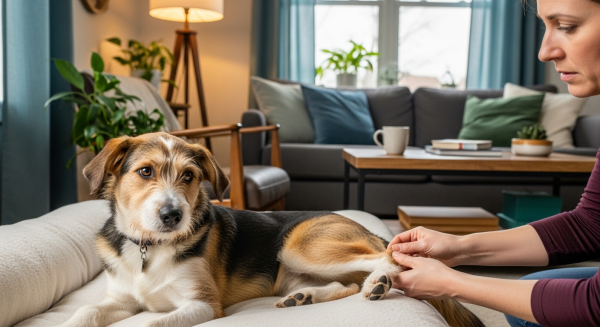
Signs of Arthritis in Dogs: How to Spot Joint Pain Before the Limp
Discover the hidden signs of arthritis in dogs before obvious limping occurs. Learn the early behavior changes, how vets diagnose it, and current treatments.

5 Best Orthopedic Dog Beds for Large Dogs & Seniors
Looking for the best orthopedic dog bed? We compared 5 options for large breeds and senior dogs by foam layers, warranty, waterproofing and support.

7 Best Dog Joint Supplements (2026): Cosequin, Dasuquin & More Compared
Cosequin, Dasuquin, Zesty Paws and 4 more dog joint supplements compared: doses, NASC seals, evidence and the best pick for large breeds and picky eaters.

Fish Oil for Dogs: Benefits, Risks and 5 Warning Signs
Fish oil for dogs: what omega-3s can do for skin and joints, how to dose by EPA and DHA with your vet, side effects, and 5 warning signs …

Homemade Dog Food for Kidney Disease: How to Make It Safe (Low Phosphorus Guide)
Thinking about homemade food for a dog with kidney disease? What a kidney diet needs to do, why none of 39 published recipes met dogs' needs, phosphorus in …
Comments (0)
No comments yet. Be the first to share your thoughts!
Leave a Reply